Influence Consumer Choices Through Behavioral Marketing

-
Last updated on: April 7, 2026
Have you ever felt like your phone reads your mind?
When ads on Google and social media perfectly match your interests and recent searches, that’s not magic – it’s behavioral marketing at work.
In this guide, you’ll learn:
- What behavioral marketing is and how it works
- Why it matters for your business
- How to implement effective behavioral marketing strategies
- Real examples you can apply today
DOWNLOAD
Want to generate more leads? (Of course you do.)
The B2B Marketer’s Toolkit collects 120+ of the best lead generation tips ever published on the Nutshell blog. Download it today!
What is behavioral marketing?
Behavioral marketing analyzes how customers interact online to deliver personalized messages and recommendations.
How it works:
- Tracks customer actions (clicks, purchases, searches)
- Uses this data to create tailored marketing messages
- Delivers content that matches individual interests and needs
Why does this matter? When customers feel understood, they engage more. Instead of generic ads, your marketing connects with what people actually want and do.
With behavioral marketing, you’ll use real data like:
- Purchase history
- Search patterns
- Website activity
- Cookie information
This targeted approach means no more wasted resources on generic campaigns that miss the mark.
Summarize with AI
What is behavioral segmentation?
Behavioral segmentation groups customers based on what they do, not just who they are.
Traditional vs. Behavioral Segmentation
Traditional segmentation looks at:
- Age, gender, income (demographics)
- Location (geography)
- Static characteristics
Behavioral segmentation focuses on:
- Purchase patterns
- Website interactions
- Past decisions and actions
- Content engagement
The key difference is that behavioral segmentation uses past actions to predict future behavior.
Real-World Example: Netflix
You watch crime thrillers → Netflix notes your viewing pattern → You receive personalized recommendations for new crime dramas and documentaries
This approach works because Netflix doesn’t just know you’re a 35-year-old in Chicago. They know you binge-watch true crime shows on Friday nights and prefer dark, suspenseful content. With behavioral marketing, Netflix drives:
- Higher engagement rates
- Longer viewing sessions
- Reduced churn
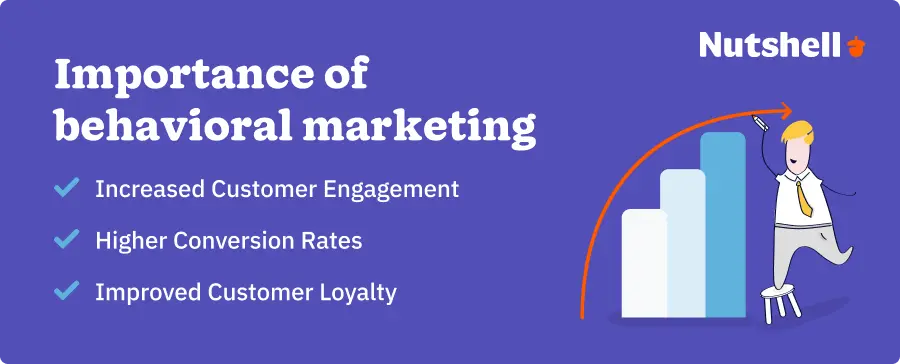
Importance of behavioral marketing

Behavioral marketing is essential for reaching your audience more effectively.
Generic marketing casts a wide net and hopes something sticks. Behavioral marketing is different—it helps you reach individuals who are already interested in what you offer.
Three key benefits of behavioral marketing
Benefit What It Means Real-World Example Increased customer engagement Your content aligns with what users actually do and like. Amazon analyzes browsing history to recommend products that match your interests. Higher conversion rates You target people already showing interest in what you offer. A shopper views Nike shoes but doesn’t buy—retargeting ads show those exact shoes later, bringing them back to complete the purchase. Improved customer loyalty Customers feel understood, building stronger long-term relationships. Sephora’s Beauty Insider program offers personalized recommendations based on previous purchases. Leave your marketing to the pros
Invest in digital marketing services from WebFX and start generating high-quality leads ASAP.
How to Implement Behavioral Marketing: 3 Proven Strategies
1. Run Targeted A/B Tests
Test different elements to see what your audience responds to best:
- Email subject lines (“Save 20%” vs. “Exclusive Offer”)
- Call-to-action buttons (“Buy Now” vs. “Get Started”)
- Promotion types (percentage off vs. free shipping)
- Content formats (video vs. written guides)
Pro Tip: Test only one element at a time for clear results. Track what works, then build on your wins.
2. Personalization techniques
After conducting behavioral segmentation, consider developing personalized campaigns.
This could include setting up automations that trigger a specific email to be sent after a particular action is completed.
Examples include welcome emails for new subscribers, abandoned cart follow-up emails, personalized discounts, and loyalty benefits.
3. Retargeting campaigns
Utilizing retargeting campaigns as part of your behavioral marketing strategy allows you to display ads to users who have previously interacted with your brand. This could include users who have visited your website or social media platforms.
These ads are designed to remind users of their interest in the brand or product and encourage them to complete their purchase. By leveraging user behavior data, this strategy aims to re-engage potential customers and prompt them to take the desired action.
FAQs
-
1. Can small businesses use behavioral marketing effectively?
Yes. Small businesses can start with basic behavioral marketing using affordable tools like email platforms and CRM systems. Focus on simple tactics like abandoned cart emails, purchase history segmentation, and website behavior tracking. You don’t need enterprise budgets—start small with one or two automated campaigns and scale as you see results.
-
2. How do CRMs support behavioral marketing?
CRMs centralize customer data from multiple touchpoints, automatically segment audiences based on behaviors, and trigger personalized campaigns when specific actions occur. For example, Nutshell tracks email opens, website visits, and purchase history to help you send the right message at the right time—without manual work.
-
3. Does behavioral marketing work for B2B companies?
Absolutely. B2B behavioral marketing tracks engagement with content downloads, webinar attendance, email interactions, and product usage. Since B2B sales cycles are longer with multiple decision-makers, behavioral data helps you identify sales-ready leads and personalize outreach based on where prospects are in their buying journey.
-
4. What metrics should I track to measure behavioral marketing success?
Track email open rates, click-through rates, conversion rates by segment, customer lifetime value, and engagement scores. Monitor how different behavioral segments perform compared to broad campaigns. Most importantly, measure revenue impact—behavioral marketing should increase sales from targeted segments versus generic outreach.
-
5. What’s the difference between behavioral marketing and behavioral targeting?
Behavioral marketing is the overall strategy of using customer behavior data to personalize all marketing efforts. Behavioral targeting is a specific tactic within that strategy—using behavior data to show relevant ads to specific audiences. Think of targeting as one tool in your broader behavioral marketing toolkit.
Enhance your behavioral marketing strategy with Nutshell Campaigns
Email marketing gives you the tools to enhance behavioral marketing through automated email sequences triggered by specific customer behaviors. Leveraging these automations can ensure timely and relevant communication with your audience.
With email marketing, you can create personalized content and audience segmentation based on CRM data. This way, you’re able to make your marketing efforts targeted and effective. The platform also provides insights into customer behaviors and campaign performance, helping refine strategies to align with audience preferences and actions.
Just sign up for our 14-day free trial to get started with your behavioral marketing strategy!
ONE TEAM. ONE TOOL.
Powerful email marketing, minus the headaches
Nutshell Campaigns plugs directly into your CRM data, so you can create highly targeted audience segments, track the impact of your emails in real-time, and manage all your communications out of a single tool. Get started for free!
BACK TO TOPWritten byReady to try
Nutshell for Free?Thank you! Your submission has been received!Oops! Something went wrong while submitting the form.
Real Estate Marketing: Using Tech to Build Your Brand (With Maryann Palazzolo)
Published on: November 10, 2022Sales Performance Reviews: 9 Tips to Make Them Valuable

Published on: November 10, 2022Highly Effective Strategies for Elevating Sales Team Performance
Published on: November 10, 2022What Are the Top 3 Go-To-Market Strategies?
Published on: November 10, 2022Join 30,000+ other sales and marketing professionals. Subscribe to our Sell to Win newsletter!

- Product
- Nutshell Overview
CRM & Sales
Our powerful and easy-to-use flagship product.Marketing
Email marketing, forms, landing pages, and more.Engagement
Your omni-channel inbox in your CRM.Prospecting
Prospect for new leads and new contacts in your CRM.Quotes & Invoices
Quickly create quotes & invoices in your CRM.
AI
See why Nutshell is the leading AI CRM.Integrations
Connect to Google/Microsoft and over 5,000 Apps.
ReportingCreate reports and forecasts in an instant.CRM Advisor
Get a dedicated point of contact to get the most out of Nutshell.Partner Marketplace
Find trusted partners to help optimize your Nutshell CRM.
- Pricing
Nutshell AI
- Resources
- Contact Us
Contact Sales
Send us your questions or book a 1-on-1 demo.Join a Demo
Join a group demo for a general overview of Nutshell.
Contact Support
Contact our support team via live chat in app or via email.Become a Partner
Refer businesses to Nutshell & earn commissions.
Contact Marketing
Questions about our website or our marketing opportunities?Careers
Join our growing team! See current openings.