Top Lead Magnet Ideas and Examples to Boost Your Lead Generation

-

Key Takeaways
- Great lead magnets aren’t just flashy—they’re genuinely useful, solving a specific problem your audience cares about in exchange for their contact info.
- From templates and guides to quizzes and calculators, the most effective assets are highly targeted and built to move leads deeper into your funnel.
- The takeaway? If you want better leads, offer better value—create content your prospects would pay for, then give it away thoughtfully.
If you’re running a small to medium-sized business, you already know the challenge: how do you capture contact information from potential customers without a massive marketing budget or a team of designers? The answer lies in lead magnets—valuable resources you offer in exchange for an email address.
Lead magnets have become the cornerstone of digital marketing strategy. According to recent research, 91% of marketers rank lead generation as their number one priority, yet 61% say generating traffic and leads remains their biggest challenge. The good news? Lead magnets can boost signup rates by 155% on desktop and 102% on mobile when implemented correctly.
But here’s what most businesses get wrong: they think lead magnets require expensive design resources, complex technical setup, or weeks of content creation. That’s simply not true. The most effective lead magnets solve a specific problem for your audience quickly and clearly—and you can create them with the resources you already have.
In this guide, you’ll discover proven lead magnet formats that work for businesses of all sizes, real-world examples from companies like yours, and practical guidance for creating lead magnets without breaking the bank or overwhelming your small team.
Table of Contents
- What is a lead magnet?
- Why lead magnets matter in 2026
- Interactive and digital lead magnets
- Video-based lead magnets
- Industry-specific lead magnet examples
- Lead magnet creation tools and resources for small businesses
- How to measure lead magnet performance
- Common lead magnet mistakes to avoid
- Creating effective lead magnets on a small business budget
- Ideas and examples of good lead magnets
- How to boost lead magnet conversion rates
- Frequently asked questions
What is a lead magnet?
A lead magnet is a free resource you offer potential customers in exchange for their contact information, typically an email address. It’s a value-for-value exchange: your prospect gets something immediately useful, and you gain permission to continue the conversation through email marketing.
Think of a lead magnet as the digital equivalent of giving out free samples at a farmers market. Just as a taste of artisan cheese can turn a passerby into a paying customer, a well-crafted lead magnet transforms anonymous website visitors into qualified leads you can nurture toward a purchase decision.
Effective lead magnets share three essential characteristics. First, they address a specific problem your ideal customer is actively experiencing right now—not a general topic, but a precise pain point they’re motivated to solve. Second, they deliver immediate value without requiring a significant time investment. Your prospect should be able to consume and apply your lead magnet within minutes or hours, not days or weeks. Third, they naturally connect to your paid offering. The best lead magnets solve one piece of a larger puzzle, positioning your product or service as the complete solution.
For small to medium-sized businesses, lead magnets serve a particularly important role. They level the playing field against competitors with larger advertising budgets by capturing interest at the exact moment someone is researching solutions. A manufacturing company might offer a cost comparison calculator. A consulting firm might provide an assessment tool. A SaaS company might give away templates that demonstrate their platform’s value. The format varies, but the principle remains constant: provide genuine value first, and the right prospects will want to learn more.

Summarize this content with AI:
Why lead magnets matter in 2026
Lead generation drives business growth
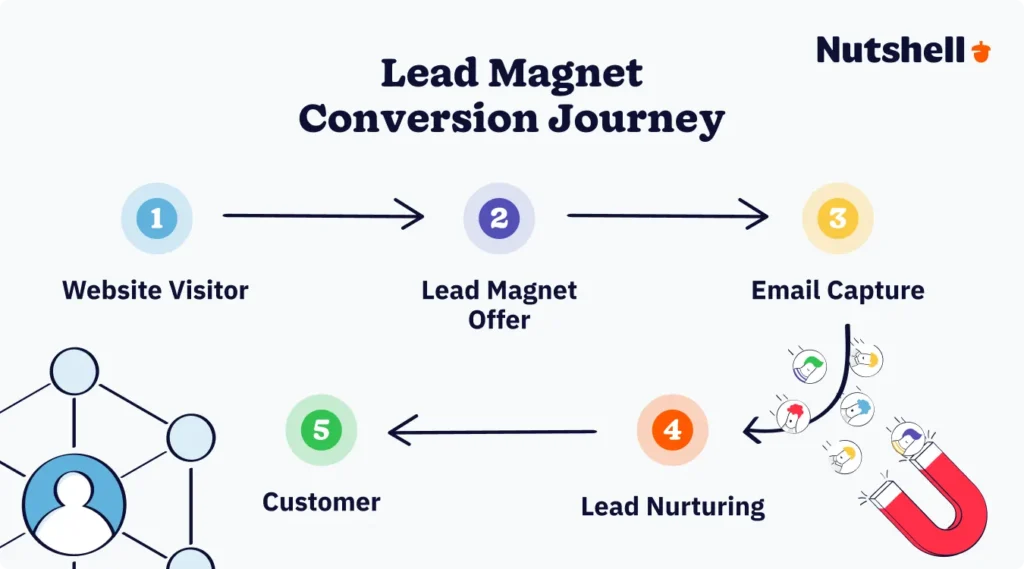
The numbers tell a clear story about why lead magnets deserve your attention. Research shows that 91% of marketers rank lead generation as their number one priority, yet 61% say generating traffic and leads remains their biggest challenge. This gap between importance and execution creates a massive opportunity for businesses that get lead magnets right.
The financial commitment businesses make to lead generation reflects its central role in growth strategy. According to 2025 data, 53% of marketers spend half or more of their marketing budget on lead generation activities. These aren’t casual experiments—companies are betting their marketing success on the ability to consistently attract and convert qualified prospects.
Content marketing has emerged as one of the most effective lead generation channels. Eighty percent of B2B companies now use content marketing specifically for lead generation, and the results justify this focus: content marketing generates three times more leads than traditional outbound marketing approaches like cold calling or purchased lists. Lead magnets sit at the heart of this content strategy, providing the mechanism that transforms readers into leads.
The shift to privacy-first marketing
The digital marketing landscape is fundamentally changing as privacy regulations tighten and third-party cookies disappear. In this environment, lead magnets become your primary vehicle for collecting what’s known as zero-party data—information that customers intentionally and proactively share with you.
Unlike data scraped from browsing behavior or purchased from third-party brokers, zero-party data comes with built-in permission and trust. When someone downloads your lead magnet, they’re making a conscious decision to enter your ecosystem. This voluntary exchange creates a stronger foundation for the relationship than any form of interruptive advertising.
This shift makes your email list one of your most valuable business assets. While social media algorithms can change overnight and ad costs can spike without warning, the email addresses you collect through lead magnets represent a marketing channel you own and control. Seventy-five percent of B2B marketers use email newsletters for lead nurturing specifically because email provides direct, unmediated access to prospects.
AI is changing what works
Artificial intelligence and personalization technologies are transforming customer expectations around relevant content. Research indicates that 80% of customers are more likely to make a purchase when brands offer personalized experiences.
For lead magnets, this means the generic ebook era is ending. Interactive lead magnets powered by AI—quizzes that adapt based on responses, calculators that provide personalized results, assessments that deliver customized recommendations—are delivering four times higher conversion rates than static PDFs. These tools provide the personalized experience customers now expect while collecting valuable data about prospect needs and priorities.
The formats gaining traction reflect this personalization trend. Video-based lead magnets like on-demand webinars and tutorial series are becoming baseline expectations in B2B marketing. Interactive tools that provide instant value are outperforming downloadable documents. The winners in 2025 aren’t necessarily spending more—they’re creating lead magnets that feel custom-built for each prospect’s specific situation.
Email nurturing converts leads to customers
Capturing an email address is only the beginning. The real value of lead magnets appears in what happens next: strategic email nurturing that guides prospects from initial interest to purchase decision.
The data on landing pages and email effectiveness reinforces this point. Sixty-eight percent of B2B businesses use dedicated landing pages to capture new leads, and conversion optimization research shows that multi-step forms outperform single-step forms by 84%, converting at 5.64% compared to 3.07%. These aren’t minor differences—they represent the gap between lead generation systems that fuel business growth and those that waste marketing budget.
The email addresses you collect through lead magnets feed directly into your CRM and marketing automation systems, allowing you to segment prospects based on their interests and behavior. Someone who downloads a beginner’s guide needs different follow-up content than someone who requests an ROI calculator. Lead magnets provide the initial data point that makes this intelligent segmentation possible, enabling you to send the right message to the right person at the right time.
Interactive and digital lead magnets
Why interactive lead magnets outperform static content
The shift from downloadable PDFs to interactive digital experiences represents one of the most significant trends in lead generation. The reason is straightforward: interactive content provides immediate, personalized value in a way that static documents simply cannot match.
AI-powered interactive lead magnets deliver four times higher conversion rates than traditional PDFs and generate 10 times more return visits to your website. These aren’t marginal improvements—they represent a fundamental shift in what prospects expect and respond to.
Interactive lead magnets also solve a key problem for small businesses: differentiation. Thousands of companies offer ebooks and whitepapers, but a well-designed calculator or assessment tool specific to your industry becomes a unique asset that competitors can’t easily replicate. The investment in creating interactive content pays dividends through both higher conversion rates and stronger competitive positioning.
Quizzes and assessments
Quizzes and assessments work because they tap into two powerful psychological drivers: self-discovery and personalized recommendations. When someone takes a quiz titled “What’s Your Sales Process Efficiency Score?” or “Which CRM Solution Matches Your Business Model?”, they’re not just passively consuming information—they’re actively engaging with content that reflects their specific situation.
The format naturally qualifies leads as well. Quiz responses reveal prospect priorities, pain points, and readiness to buy. Someone who scores low on an efficiency assessment and indicates they’re frustrated with current processes is a much warmer lead than someone casually browsing your blog. This qualification happens automatically as part of the experience, providing valuable sales intelligence your team can use for follow-up.
Creation approach for small businesses: You don’t need custom software to create effective quizzes. Platforms like Typeform, Jotform, and Google Forms all support branching logic that delivers personalized results based on responses. Start with five to seven questions that assess a specific challenge your product addresses. Provide a scorecard or recommendation at the end, delivered via email after the prospect submits their contact information. Total creation time: four to six hours for your first quiz.
Budget consideration: Quiz platforms range from free (Google Forms with limited branching) to $25 to $35 per month for professional tools with advanced features. Most small businesses find the mid-tier option provides everything they need without breaking the budget.
Calculators and tools
Calculators provide instant value that prospects can’t get anywhere else: personalized numbers specific to their business situation. An ROI calculator that shows potential savings from implementing your solution. A pricing estimator that helps prospects budget for your category of product. A timeline calculator that sets realistic expectations for achieving specific results.
The power of calculators lies in their specificity. Instead of claiming “our customers typically save 30%,” a calculator lets each prospect input their own numbers and see their specific potential savings. This personalization makes the value proposition tangible in a way that case studies and testimonials cannot match.
Real-world example: Submagic, a video captioning platform, faced a common small business challenge: stagnant traffic growth and expensive developer time at $500 per day. Instead of investing months building product features, they shifted strategy to create interactive free tools—specifically, AI-powered utilities that provided immediate value related to their core offering.
The results validated the interactive approach: Submagic grew from minimal traffic to 150,000 daily visitors in just 10 months. More importantly, they tracked $300,000 in annual recurring revenue directly attributed to their lead magnet funnel, and saw a 120% increase in purchases from users who started with the free tools. The key insight: interactive tools that solve one specific problem dramatically outperform comprehensive static resources that try to address everything.
Creation approach: Simple calculators can be built using Google Sheets or Excel with basic formulas, then embedded on a landing page using tools like SheetDB or Coefficient. More sophisticated calculators might require platforms like Outgrow, Calconic, or Involve.me. Focus on calculators that use readily available numbers your prospects already know—don’t require complex data gathering as a prerequisite.
Budget consideration: Spreadsheet-based calculators cost nothing but your time. Dedicated calculator platforms range from $25 per month for basic features to $95 per month for advanced customization and integrations. Start simple and upgrade only when conversion data justifies the investment.
Assessments and scorecards
Assessments differ from quizzes in that they evaluate performance against established benchmarks. A “Sales Team Performance Assessment” might compare a prospect’s metrics against industry averages. A “Website Conversion Audit” could identify specific gaps in their current online presence. The scorecard format provides both a clear picture of the current state and a roadmap for improvement—with your product or service positioned as the solution.
The assessment format works particularly well for complex, considered purchases where prospects need to build internal consensus. A detailed scorecard gives your champion the data they need to make the case to stakeholders. It transforms your sales conversation from “here’s what we offer” to “here’s where you stand and specifically how we can help.”
Creation approach: Design a 10 to 15 question assessment covering key performance indicators in your domain. Assign point values to responses and create three to five scoring tiers (e.g., “Needs Attention: 0-30 points”, “Developing: 31-60 points”, “Strong: 61-85 points”, “Excellent: 86-100 points”). Provide specific recommendations for each tier, with your solution featured as the path to improvement.
Budget consideration: Assessment tools can use the same platforms as quizzes. The additional investment is primarily time spent developing meaningful benchmarks and tier-specific recommendations rather than software costs.
Free trials and interactive demos
For software and SaaS businesses, the product itself can serve as the lead magnet. A time-limited free trial or an interactive demo that showcases core features provides hands-on experience that no amount of marketing content can replicate.
The key distinction: your trial or demo must provide genuine value without requiring extensive setup or onboarding. If prospects need to watch three tutorial videos before they can accomplish anything meaningful, you’ve created friction rather than value. The best free trials are designed for quick wins—users should achieve a meaningful result within their first 15 minutes.
Creation approach: If you’re not ready for full product access, consider a limited-feature sandbox or a “demo environment” pre-loaded with sample data. Platforms like Storylane and Navattic allow you to create interactive product tours without building separate demo infrastructure. The goal is to let prospects experience the “aha moment” your product provides without the implementation burden.
Budget consideration: Product trials require existing software, so the marginal cost is infrastructure and support rather than new tools. Interactive demo platforms typically start at $500 to 1,000 per month for small businesses, making them viable only after simpler lead magnets have proven the concept.
The interactive imperative for small businesses
If you’re operating with limited marketing resources, interactive lead magnets deserve serious consideration. While they require more upfront investment than writing an ebook, they typically generate higher conversion rates and provide better lead qualification data. One well-built calculator can outperform a dozen static PDF downloads.
Start with the simplest interactive format that addresses your audience’s most pressing question. Test it against your current lead magnets. Measure not just conversion rates but lead quality and downstream sales impact. For most small businesses, the data will show that interactive beats static—and that the extra effort is worth the results.
Video-based lead magnets
Why video lead magnets work
Video content creates a level of connection and trust that text-based resources struggle to match. When prospects can see and hear a real person explaining concepts, demonstrating solutions, or sharing insights, it humanizes your brand in a way that written content cannot replicate.
The format also addresses a fundamental challenge for busy professionals: consumption convenience. A 15-minute video can be watched during lunch, commuted with (audio only), or consumed in fragments across multiple sessions. For complex topics, video allows you to show rather than just tell—demonstrating software interfaces, walking through processes visually, or using screen sharing to make abstract concepts concrete.
Video-based lead magnets are becoming baseline expectations in B2B marketing in 2025. The businesses seeing the strongest results aren’t necessarily producing broadcast-quality content. They’re creating authentic, information-dense videos that respect their audience’s time and intelligence.
On-demand webinars
Live webinars have been a B2B marketing staple for years, but on-demand webinar recordings serve as powerful lead magnets that work around the clock. The strategy: record a 30 to 45 minute presentation addressing a significant challenge your audience faces, then gate the recording behind an email capture form.
The most effective on-demand webinars follow a specific structure: 20% context setting and problem validation, 60% actionable strategies or insights the viewer can implement immediately, and 20% introduction to your solution as the complete answer. This ratio ensures prospects receive genuine value even if they never become customers, while naturally positioning your offering for those ready to buy.
Creation approach: You don’t need a webinar platform to create on-demand video lead magnets. Record a presentation using Zoom, Loom, or even your phone camera. Edit out dead space and mistakes using basic video editing software (even iMovie or Windows Video Editor will suffice). Host the final video on YouTube (unlisted) or Vimeo and embed it on a landing page that requires email submission to access.
Budget consideration: Zero to $15 per month if using free recording tools and YouTube hosting. $20 to $70 per month if you want professional webinar platforms like WebinarJam or Demio for better analytics and automated follow-up sequences. Most small businesses should start with the free approach and upgrade only after proving the concept generates qualified leads.
Video tutorials and how-to series
Tutorial series work exceptionally well when your product or service has an educational component. A CRM company might create a “5-Day Email Automation Crash Course” delivered as a series of short videos. A marketing agency could offer “The 30-Minute Website Audit” as a walkthrough video teaching prospects how to identify conversion issues.
The series format has a strategic advantage: it creates multiple touchpoints with prospects over several days. Instead of a single download followed by one follow-up email, a video series gives you a reason to contact leads daily as new lessons arrive. This extended engagement window allows you to build more relationship momentum before moving to a sales conversation.
Creation approach: Break a larger topic into five to seven discrete lessons, each addressing one specific subtopic or skill. Record each lesson as a standalone eight to 12 minute video. Use a simple video email platform like Bonjoro or Sendspark to deliver videos directly to subscribers’ inboxes, or set up a basic autoresponder sequence with embedded video links. The key is consistency—commit to a length and delivery schedule you can actually maintain.
Budget consideration: Recording equipment can be as simple as your smartphone with good lighting. Video hosting on Vimeo or YouTube is free. Email automation through tools like Mailchimp or MailerLite costs 0 to $20 per month for small lists. Total startup cost: under $25 per month.
Expert interview series
Interview-format content provides value while requiring less preparation than teaching-based videos. The format: you interview respected experts in your industry, asking them to share insights, strategies, or lessons learned. Each interview becomes a lead magnet, with the expert’s existing audience providing built-in promotion.
This approach works particularly well for small businesses without large existing audiences. When you interview someone with 10,000 LinkedIn followers or an established industry reputation, they’ll typically share the published interview with their network—giving you access to qualified prospects who might never have discovered you otherwise.
Creation approach: Identify five to eight respected voices in your industry. Reach out with a specific interview invitation, emphasizing the value for their audience. Conduct 30-minute interviews via Zoom with recording enabled. Edit the recording into a polished final product, create a dedicated landing page with email capture, and coordinate with your interviewee on promotion timing. Offer to provide the expert with lead magnet access for their own audience as an added incentive for participation and promotion.
Budget consideration: The primary investment is time rather than money. Zoom’s free plan allows 40-minute meetings with recording. Basic editing tools are free or inexpensive. The real cost is the relationship-building effort to secure interesting guests and the coordination required to execute professional interviews.
Mini video courses
Video courses represent the most ambitious video-based lead magnet format, but they also provide the highest perceived value. A well-structured five to eight lesson course addressing a complete topic becomes a substantial resource that prospects will actively seek out and share.
The course format works best when you have a proprietary methodology, framework, or process that you can teach in a structured way. The progression should be logical—each lesson building on previous ones to create a complete learning journey. By the end, participants should have acquired a new skill or implemented a complete system, with your product or service positioned as the professional-grade solution for those wanting to take things further.
Creation approach: Outline your course structure first, ensuring each lesson has a clear objective and deliverable. Record all lessons before launching to ensure consistency in format and quality. Use a simple course platform like Teachable, Thinkific, or even a private YouTube playlist with sequential unlocking. Gate the course behind email registration, then deliver lesson access over one to two weeks to maintain engagement.
Budget consideration: Course platforms range from free (YouTube private playlists, Google Classroom) to $39 to $99 per month for professional platforms with better analytics and student management. The larger investment is content creation time—budget 15 to 25 hours to script, record, edit, and publish a quality five-lesson course.
The production quality trap
Many small businesses never create video lead magnets because they assume they need expensive equipment, professional editing, or broadcast-quality production values. This is a costly misconception.
Your prospects care far more about the value of the information you’re sharing than the polish of your production. A smartphone video with good lighting and clear audio that teaches something genuinely useful will outperform a professionally produced video that provides superficial information. Start with the content quality and accept that production quality can improve over time as you validate the format and refine your approach.
The key technical requirements are simpler than you think: decent lighting (natural window light or a $30 ring light), clear audio (your computer′s built−in microphone or an external USB microphone), and a stable camera position (a phone tripod costs $15). Everything beyond these basics is optimization, not requirement.
Industry-specific lead magnet examples
Lead magnets that work for one industry often fail completely in another. A generic “10 Business Growth Tips” ebook appeals to no one specifically, while “The Commercial HVAC Estimating Worksheet” speaks directly to the exact challenges mechanical contractors face daily. The most effective lead magnets reflect deep understanding of specific industry pain points, terminology, and decision-making processes.
Professional services (consulting, agencies, law firms)
Professional service businesses sell expertise and trust, making assessment-style lead magnets particularly effective. A “Marketing Maturity Assessment” for agencies, a “Financial Health Scorecard” for accounting firms, or a “Legal Compliance Checklist” for law offices serves double duty: providing immediate value to prospects while demonstrating your expertise and judgment.
Frameworks and templates also resonate strongly with professional service audiences. A consulting firm might offer “The Strategic Planning Canvas We Use With Fortune 500 Clients” or “The Project Scoping Template That Prevents Scope Creep.” These resources showcase your methodology while giving prospects a taste of your thinking before they write a check.
The key for professional services: your lead magnet should demonstrate the quality of your thinking and approach. Prospects are evaluating whether you’re smart enough, experienced enough, and strategic enough to deserve their trust and budget. A superficial or generic lead magnet suggests superficial or generic service delivery.
Manufacturing and distribution
Manufacturing and distribution businesses benefit from highly tactical, numbers-focused lead magnets. An “Equipment ROI Calculator” that helps prospects evaluate machinery purchases. A “Freight Cost Comparison Tool” for distributors. An “Inventory Turnover Optimization Worksheet” for warehouse operations.
Case studies formatted as detailed implementation guides work exceptionally well in manufacturing contexts. “How ABC Manufacturing Reduced Setup Time by 40%: Complete Implementation Guide” provides both proof of your capabilities and a roadmap prospects can use immediately. The specificity matters—the more detailed and technical your lead magnet, the more credibility you build with engineering and operations decision-makers.
Compliance and safety resources also generate strong engagement in manufacturing industries. Checklists for regulatory compliance, safety audit templates, or maintenance schedule builders address pain points every manufacturing operation experiences while positioning your company as a knowledgeable partner.
Real estate and property management
Real estate professionals succeed with lead magnets addressing specific transaction types or property categories. A residential agent might offer “The First-Time Buyer’s Neighborhood Comparison Worksheet” or “The Home Selling Timeline: What to Expect Month by Month.” Commercial real estate brokers could provide “The Investment Property Cash Flow Calculator” or “The Lease Negotiation Checklist for Tenants.”
Property managers benefit from operational tools: “The Tenant Screening Scorecard,” “The Emergency Maintenance Response Plan Template,” or “The Rent Increase Communication Template for Difficult Conversations.” These resources solve immediate problems while demonstrating your systems and professionalism.
The most effective real estate lead magnets are geographically specific when possible. “The Downtown Phoenix Neighborhood Guide for Young Professionals” will always outperform “How to Choose the Right Neighborhood” because it provides local expertise that prospects cannot get from national real estate websites.
Technology and SaaS
SaaS companies have a unique advantage: the product itself can serve as a lead magnet through free trials or freemium tiers. But complementary lead magnets still play an important role in attracting prospects who aren’t ready to try software yet.
Technical guides and best practices documentation work well for B2B SaaS. A project management tool might offer “The Remote Team Productivity Playbook.” A CRM platform could provide “The Sales Process Mapping Worksheet.” An analytics tool might publish “The Marketing Metrics Dashboard Template.” These resources attract prospects researching solutions in your category before they’re ready to evaluate specific products.
Integration guides and migration checklists also generate qualified leads for SaaS businesses. “How to Migrate from [Competitor] to [Your Product] Without Losing Data” targets high-intent prospects actively considering a switch. “The Complete Integration Guide: Connecting Your Sales and Marketing Stack” demonstrates your platform’s versatility while attracting technically sophisticated buyers.
Healthcare and wellness
Healthcare and wellness businesses must navigate privacy regulations carefully, but assessment-style lead magnets work exceptionally well in these industries. A “Chronic Pain Self-Assessment” for a physical therapy practice. A “Mental Health Screening Questionnaire” for a counseling center. A “Workplace Wellness Readiness Assessment” for corporate wellness providers.
Educational content addressing common patient questions also generates strong engagement. “Understanding Your Lab Results: A Patient’s Guide” from a functional medicine practice. “The Parent’s Guide to Recognizing Learning Differences” from an educational therapist. “The Complete Pre-Surgery Preparation Checklist” from a surgical center. These resources build trust by demonstrating both expertise and empathy.
Meal plans, exercise routines, and symptom trackers work well for wellness-focused businesses. A nutritionist might offer “The 7-Day Anti-Inflammatory Meal Plan with Shopping List.” A fitness studio could provide “The 30-Day Home Workout Program for Busy Professionals.” The key is providing resources detailed enough to deliver real value while naturally leading to the conclusion that professional guidance accelerates results.
Nonprofit and education
Nonprofit organizations succeed with lead magnets that combine mission-driven content with practical resources. A donor acquisition lead magnet might be “The Complete Grant Writing Template Library” targeting development professionals. A volunteer recruitment resource could be “The Volunteer Onboarding Handbook Template” for other nonprofits.
Educational institutions benefit from decision-support tools. “The College Selection Comparison Worksheet” for a university. “The Career Path Assessment for High School Students” for a vocational school. “The Training ROI Calculator” for a corporate education provider. These tools help prospects navigate complex decisions while positioning your institution as a helpful guide rather than just another option competing for their attention.
Impact reports and research findings also serve as effective lead magnets for mission-driven organizations. Prospects who care about your cause want to see evidence, data, and stories demonstrating real-world impact. A detailed annual impact report gated behind email capture attracts supporters who are genuinely invested in your work.
Construction and home services
Construction and home services businesses thrive with lead magnets that help prospects make purchasing decisions in complex categories. A general contractor might offer “The Kitchen Remodel Cost Estimator” or “The Home Addition Planning Guide and Timeline.” An HVAC company could provide “The HVAC System Sizing Calculator” or “The Furnace vs. Heat Pump Decision Guide.”
Maintenance checklists and seasonal guides work well for ongoing service businesses. “The Fall Home Maintenance Checklist” from a handyman service. “The Pool Opening and Closing Checklists” from a pool maintenance company. “The Landscape Maintenance Calendar for Your Region” from a landscaping business. These resources provide immediate value while keeping your company top of mind when service needs arise.
Before-and-after portfolios formatted as case study collections generate strong engagement in visually-oriented industries. “10 Kitchen Transformations Under $30K” or “Small Bathroom Renovations: Complete Project Breakdowns” showcase your work while helping prospects envision possibilities for their own projects.
The pattern across industries
Despite surface differences, the most effective industry-specific lead magnets share common characteristics. They use the language and terminology of the industry rather than generic marketing speak. They address the specific pain points and decision criteria relevant to that industry’s buying process. They demonstrate genuine expertise through specificity and depth rather than broad generalizations. And they connect naturally to your paid offering as the next logical step for prospects who want professional help implementing what they’ve learned.
When creating your industry-specific lead magnet, resist the temptation to make it appealing to everyone. The narrower and more specific your focus, the more valuable it becomes to your true target audience—and the more effectively it qualifies leads for your sales team.
Lead magnet creation tools and resources for small businesses
Creating professional lead magnets doesn’t require an enterprise software budget or a design degree. The tools available to small businesses today range from completely free to remarkably affordable, with the primary investment being your time and strategic thinking rather than your wallet.
Document and PDF creation
For traditional downloadable lead magnets like ebooks, guides, checklists, and templates, you have several cost-effective options. Google Docs and Microsoft Word (part of Microsoft 365 subscriptions many businesses already have) can create perfectly functional PDF lead magnets at zero additional cost. The key is using built-in templates and focusing on clear, scannable formatting rather than trying to match the design quality of a graphic design agency.
For businesses wanting more design flexibility without hiring a designer, Canva has become the standard tool. Canva’s free tier provides access to thousands of templates specifically designed for ebooks, workbooks, checklists, and reports. The drag-and-drop interface requires no design experience, and the template library means you’re not starting from a blank page. Canva Pro ($15 per month) adds brand kit features that ensure consistent colors, fonts, and logos across all your marketing materials.
Google Slides and PowerPoint also work surprisingly well for creating visual lead magnets. The slide-based format naturally creates scannable, digestible chunks of information. You can design your content as slides, then export as PDF. This approach works particularly well for checklists, worksheets, and templated resources where each page addresses one discrete item or step.
Design templates and graphics
Even if you’re not a designer, your lead magnets need visual appeal to be taken seriously. Fortunately, stock photo sites and template marketplaces have made professional visuals accessible to small budgets.
Unsplash, Pexels, and Pixabay provide high-quality stock photography at zero cost. These aren’t leftover images from paid sites—they’re legitimate professional photography released under licenses that allow commercial use. For most small business lead magnets, free stock photos provide everything you need.
Creative Market and Envato Elements offer templates for virtually any lead magnet format you might create: ebook templates, workbook layouts, checklist designs, presentation templates. Individual templates on Creative Market typically cost $15 to 30, while Envato Elements provides unlimited downloads for $33 per month. If you’re creating multiple lead magnets, the subscription quickly pays for itself.
Icons and graphic elements from sites like Flaticon (free with attribution, or $10 per month for attribution-free use) add visual interest without requiring design skills. A simple checklist becomes more scannable and professional-looking with icons beside each item. A process diagram becomes clearer with arrows and shapes from a pre-built icon set.
Interactive content builders
For quizzes, calculators, and assessments, dedicated platforms handle the technical complexity while keeping costs manageable for small businesses.
Typeform ($25 per month for Basic plan) and Jotform ($34 per month for Bronze plan) provide form builders with logic branching, making it possible to create sophisticated quizzes and assessments without coding. Both integrate with email marketing platforms to automatically add leads to your CRM.
For more sophisticated calculators and interactive tools, platforms like Outgrow ($25 per month for Freelancer plan) and Involve.me ($29 per month for Starter plan) provide dedicated calculator builders with professional templates. These platforms include analytics showing which questions prospects answer and how they interact with your tool—valuable data for understanding your audience.
The free alternative for simple calculators: create your logic in Google Sheets, make it accessible via a published link, and embed it on your website using free services like Sheet.best or SheetDB. This approach requires more technical comfort but costs nothing beyond your time.
Video creation and hosting
Video content requires different tools but similar budget-consciousness. For recording, Zoom’s free plan allows 40-minute meetings with recording—plenty for most interview-style content or short tutorials. Loom ($8 per month for Creator plan) specializes in screen recordings with webcam overlay, perfect for software demonstrations or presentation-style content.
Your smartphone camera is likely higher quality than you think. An iPhone from the last five years or most Android flagship phones shoot video that’s perfectly acceptable for B2B marketing content. Pair your phone with a $15 tripod and a $30 ring light, and you have a complete video studio for under $50.
For editing, iMovie (free on Mac) and Windows Video Editor (free on Windows) provide basic cutting, trimming, and transition tools—everything you need for most business video content. More sophisticated free options like DaVinci Resolve offer professional-grade features if you’re willing to invest time learning the interface.
Video hosting comes down to two main choices: YouTube (free but public unless you pay for YouTube Premium) or Vimeo (free for basic, $7 per month for Plus plan with more privacy controls). For lead magnets, Vimeo’s privacy settings make it easier to gate content behind email capture forms while YouTube’s search presence helps with discoverability if you’re using video for top-of-funnel awareness.
Landing page and email capture
Your lead magnet needs a dedicated landing page with an email capture form. While you could build this on your main website, dedicated landing page tools often provide better conversion optimization and simpler setup.
Carrd ($19 per year) creates simple, fast−loading single−page websites perfect for lead magnet landing pages. The interface is straightforward, the templates are clean, and the price is hard to beat. For businesses wanting more sophistication, Leadpages ($37 per month) and Unbounce ($90 per month) provide A/B testing, analytics, and conversion optimization features.
The free alternative: many email marketing platforms include basic landing page builders. Mailchimp, MailerLite, and ConvertKit all let you create simple lead capture pages within their systems. If you’re already paying for email marketing software, check whether it includes landing page functionality before buying a separate tool.
For email marketing itself, you’ll need a platform to deliver lead magnets and follow up with nurture sequences. MailerLite (free up to 1,000 subscribers, then $10 per month), Mailchimp (free up to 500 subscribers, then $13 per month), and Sender (free up to 2,500 subscribers, then $15 per month) all provide email automation capabilities sufficient for small business lead magnet funnels.
Real cost breakdown for a complete system
Here’s what a functional lead magnet system actually costs for a small business:
Bare-bones budget (0 to $15/month):
- Design: Google Docs + Canva Free + free stock photos
- Landing page: Email platform’s built-in landing page builder
- Email marketing: Free tier of MailerLite or Sender
- Total: 0 to $15 per month
Professional setup ($45 to $90/month):
- Design: Canva Pro ($15/month) + Creative Market templates ($20 one-time average)
- Interactive content: Typeform or Involve.me ($25 – $29/month)
- Landing pages: Leadpages or Carrd ($19/year to $37/month)
- Email marketing: MailerLite, Mailchimp, or ConvertKit paid tier ($10 – $30/month)
- Total: $45 to $90 per month
These are not enterprise budgets. A successful lead magnet system costs less than most businesses spend on a single month of paid advertising, yet it builds an asset that generates leads continuously without ongoing ad spend.
The create-once, use-forever principle
The best aspect of lead magnet economics: you create the asset once, and it works for you indefinitely. Unlike paid advertising where costs accrue with every click, a lead magnet generates its 1,000th lead at the same cost as its first: zero marginal cost per conversion.
This economics favor small businesses willing to invest upfront time creating genuinely valuable resources. A law firm that spends 20 hours creating a comprehensive legal checklist has an asset that can generate qualified leads for years. A manufacturing company that builds a detailed ROI calculator creates a differentiator that continues working while competitors are still running generic ads.
The implication: it’s worth investing time and attention to make your lead magnet genuinely excellent. The difference in ongoing results between a mediocre lead magnet and an exceptional one is massive, yet the creation cost difference is often just a few additional hours of thoughtful work.
Get more tips to grow your small business
Join our 200K+ subscribers to learn more about how to grow your small business with exclusive marketing strategies, tips, and ideas from the top-rated experts at WebFX.
How to measure lead magnet performance
Creating a lead magnet is only half the strategy. Understanding whether it’s actually working—and how to make it work better—requires tracking the right metrics and knowing what the numbers mean.
The metrics that actually matter
Most businesses track too many metrics or the wrong ones entirely. You need four key measurements to understand lead magnet performance.
Conversion rate tells you what percentage of landing page visitors provide their email address to access your lead magnet. Calculate this by dividing email captures by total landing page visits. For cold traffic (people who’ve never heard of you), conversion rates of 10% to 30% indicate a lead magnet with good market fit. For warm traffic (people from your website, social media, or email list), expect 25% to 50% conversion rates. Below these ranges suggests your lead magnet isn’t compelling enough or your landing page needs optimization.
Lead quality score measures how well your lead magnet attracts your ideal customers versus tire-kickers and unqualified prospects. Track what percentage of lead magnet subscribers eventually request sales conversations, schedule demos, or become customers. If your conversion rate is high but lead quality is low—lots of downloads but few serious prospects—your lead magnet topic may be too tangential to your actual offering. The best lead magnets generate fewer total leads than generic offers, but a higher percentage become customers.
Email engagement metrics reveal whether your lead magnet is attracting people genuinely interested in your expertise. Track open rates and click-through rates for your post-download nurture emails. Open rates of 20% to 35% suggest reasonable engagement. Click-through rates of 2% to 5% indicate your follow-up content resonates. Significantly lower numbers mean either your lead magnet attracted the wrong audience or your follow-up emails aren’t relevant to what they downloaded.
Revenue attribution is the ultimate measure: how much revenue can you directly trace back to customers who entered through this specific lead magnet? Most CRM systems allow you to tag contacts by initial source. Track how many lead magnet subscribers eventually become customers and what their total customer value amounts to. A lead magnet that generates 100 emails monthly with 5% customer conversion and 5,000 average customer value produces 25,000 in monthly attributed revenue. This calculation tells you exactly how much your lead magnet is worth to your business.
Setting up measurement infrastructure
Effective measurement requires connecting your systems so data flows from lead capture through to customer conversion. At minimum, you need these connections established.
Your landing page tool must integrate with your email marketing platform so new subscribers are automatically added to your list and tagged appropriately. The tag matters—you need to know which specific lead magnet each subscriber downloaded so you can segment follow-up communications and measure performance by asset.
Your email marketing platform should connect to your CRM so subscribers automatically become CRM contacts when they show buying intent—requesting a demo, asking a question, or clicking multiple emails. This connection ensures your sales team has visibility into the content each prospect engaged with before reaching out.
Your CRM must track original source through the entire customer lifecycle. When a deal closes, you should be able to see whether that customer originally came from a specific lead magnet six months ago. This closed-loop attribution tells you which lead magnets produce actual revenue rather than just email addresses.
A simple measurement dashboard
You don’t need fancy business intelligence software to track lead magnet performance. A basic spreadsheet updated monthly tells you everything you need to know. Create columns for these data points by lead magnet:
- Month and year
- Landing page visitors
- Email captures
- Conversion rate (calculated)
- Sales conversations initiated
- Lead-to-conversation rate (calculated)
- Customers acquired
- Total customer value
- Revenue per visitor (calculated)
This dashboard quickly reveals which lead magnets are working and which need attention. A lead magnet with high conversion but low revenue per visitor might need better follow-up sequences. One with low conversion but high revenue per visitor might just need better promotion to drive more traffic. The data tells you where to focus optimization effort.
The testing mindset
Lead magnet optimization is not a one-and-done exercise. The most successful businesses treat lead magnets as living assets that improve continuously based on performance data.
One newsletter operator documented a compelling testing experiment that illustrates this principle. Despite receiving mixed advice from experts—some insisting lead magnets were essential, others claiming they were outdated—this operator decided to test systematically rather than rely on opinions. The result: 1,400% subscriber growth after implementing and refining a lead magnet strategy based on their specific audience’s response patterns. The key insight wasn’t that lead magnets universally work or don’t work, but that testing with your specific audience reveals what works for your business.
Start with monthly performance reviews. Pull your dashboard data and ask these questions: Which lead magnets are generating the most qualified leads? Which ones have the highest revenue per visitor? Where are people dropping off—before downloading or after receiving the lead magnet? What patterns do you see in the leads who become customers versus those who don’t?
Based on this analysis, implement one change per month and measure the impact. Test different headlines on your landing page. Try different lead magnet topics addressing adjacent pain points. Experiment with follow-up email sequences of different lengths and content focuses. Change one variable at a time so you can isolate what drives improvement.
A/B testing becomes worthwhile once you’re generating at least 100 landing page visits per week. Below that traffic level, results take too long to reach statistical significance. Instead, make sequential changes and compare month-over-month performance. The goal isn’t scientific precision—it’s directional insight that guides your next move.
When to optimize vs. when to pivot
Performance data tells you not just how to improve but when to abandon an approach that isn’t working. Knowing the difference between an asset that needs optimization and one that needs replacement saves enormous time and frustration.
Optimize when you have decent traffic but low conversion rates. This signals your lead magnet topic resonates enough to attract visitors, but something about your landing page, offer presentation, or deliverable isn’t compelling enough to convert. Test new headlines, rewrite your landing page copy, redesign the opt-in form placement, or enhance the lead magnet itself by adding more value.
Optimize when conversion rates are strong but lead quality is poor. This means your lead magnet attracts interest but from the wrong audience. Adjust your follow-up email sequence to qualify leads more aggressively. Add friction to your opt-in process—require more information or ask qualifying questions—to filter out casual browsers. Consider adding a “this is for you if…” section on your landing page that helps wrong-fit prospects self-select out.
Pivot when you can’t get traffic to your lead magnet landing page despite promotion efforts. This signals weak market demand for the specific topic or angle you’ve chosen. No amount of landing page optimization fixes a fundamentally uninteresting offer. Create a new lead magnet addressing a different pain point or the same pain point from a different angle.
Pivot when lead quality is consistently poor despite optimization attempts. If your lead magnet attracts people who never engage beyond the initial download—they don’t open follow-up emails, don’t visit your website, and certainly don’t become customers—you’ve created something interesting but irrelevant to your actual business. Build a new lead magnet with a stronger connection to your paid offering.
The decision framework is straightforward: optimize when the fundamentals are working but results could be better. Pivot when the fundamentals aren’t working and optimization is just rearranging deck chairs. Trust your data to tell you which situation you’re facing.
Common lead magnet mistakes to avoid
Even with the best intentions, businesses make predictable mistakes that undermine lead magnet performance. Recognizing these patterns helps you avoid them in your own strategy.
1. Creating generic, non-specific lead magnets
The most common mistake is offering a lead magnet so broad it appeals to everyone generally and no one specifically. “10 Business Growth Tips” could apply to any industry, any business size, any situation—which means it creates no urgency for any particular prospect. Compare that to “The Equipment Financing Decision Framework for Small Manufacturers”—immediately relevant to a specific audience facing a specific decision.
The fix: narrow your focus until your lead magnet addresses one specific pain point for one specific audience segment. You can always create multiple targeted lead magnets for different segments. One focused asset outperforms three generic ones every single time.
2. Making the lead magnet too long or complex
Businesses often equate value with volume, creating 50-page ebooks when a five-page guide would be more useful. Your prospect wants the fastest path to solving their problem, not the most comprehensive treatment of the topic. A 50-page ebook sits unread while a two-page checklist gets implemented immediately.
The fix: ruthlessly cut anything that doesn’t directly help your prospect solve the specific problem you’re addressing. If you have substantial content, consider breaking it into a series of shorter, focused lead magnets rather than one overwhelming resource. Think “just enough to be useful” rather than “everything we know about this topic.”
3. No clear next step after download
Many businesses put enormous effort into creating the lead magnet and driving downloads, then fail to guide subscribers toward the next action. The welcome email says “thanks for downloading” and then… nothing. Or the follow-up sequence shares more free content without ever mentioning how to work with you.
The fix: design your entire funnel, not just the lead magnet. Before you create anything, answer these questions: What happens immediately after someone downloads? What email sequence do they enter? What’s the next logical step toward becoming a customer? Your lead magnet is the first touch in a relationship, not a destination in itself.
4. Requiring too much information upfront
The longer your opt-in form, the fewer conversions you’ll get. Asking for first name, last name, company name, phone number, company size, industry, and role might give your sales team more information, but it also dramatically increases friction. Every additional form field reduces conversion rates by an average of 5% to 10%.
The fix: ask only for email address initially, or at most email and first name. You can gather additional qualifying information through your welcome survey, progressive profiling in your follow-up emails, or on a sales call with genuinely interested prospects. Get the email first, then deepen the relationship progressively.
5. Gating information that should be freely available
Some businesses gate basic, introductory information that prospects need just to understand whether the topic is relevant to them. Requiring an email address to access your pricing information, basic product descriptions, or fundamental how-to content creates frustration rather than value exchange.
The fix: reserve lead magnets for genuinely valuable, actionable resources that go beyond basic information. Your blog should answer fundamental questions freely. Your lead magnets should provide templates, tools, frameworks, or in-depth guides that require investment to create and deliver meaningful value. If you wouldn’t feel good paying for the resource yourself, don’t gate it.
6. Ignoring mobile experience
Many lead magnets are created on desktop computers and never tested on mobile devices, where 50% to 60% of traffic often occurs. PDFs with tiny text that requires zooming. Landing pages with forms that don’t render properly on phone screens. Video content that loads slowly on mobile connections.
The fix: test everything on your phone before launching. View your landing page on mobile. Download your lead magnet on your phone and try to read or use it. Watch your video on a mobile connection. If the experience is frustrating for you, it’s frustrating for your prospects. Optimize for mobile-first since that’s where most engagement happens.
7. Creating a lead magnet disconnected from your actual offer
Some businesses create lead magnets around popular, high-traffic topics rather than topics directly related to their product or service. A CRM company offering “10 LinkedIn Growth Strategies” might generate downloads, but those subscribers aren’t primed to buy CRM software. There’s no natural bridge from the lead magnet topic to the eventual sales conversation.
The fix: ensure your lead magnet addresses a problem that your product or service solves, or a step in the process that leads logically to your solution. The best lead magnets make your paid offering the obvious next step for prospects who get value from the free resource.
8. No promotion strategy
Creating a great lead magnet and adding it to your website is not a marketing strategy. Without active promotion, even exceptional lead magnets generate minimal downloads. Traffic doesn’t magically appear because you built something valuable.
The fix: develop a multi-channel promotion plan. Feature your lead magnet prominently on your homepage and relevant service pages. Create blog posts that naturally lead to your lead magnet as a next step. Share it across your social media channels with context explaining who it’s for and what problem it solves. Mention it in your email newsletter. Include it in your email signature. Test paid promotion with small budgets to accelerate initial traction. The effort you put into promotion should match the effort you put into creation.
9. Set-it-and-forget-it mentality
Many businesses launch a lead magnet, see some initial downloads, then never revisit it. Meanwhile, statistics become outdated, examples grow stale, tools mentioned get discontinued, and the content gradually becomes less relevant and useful.
The fix: schedule quarterly reviews of all your lead magnets. Update statistics annually at minimum. Refresh examples to reflect current market conditions. Test whether the topic still resonates with your audience or whether new pain points have emerged. The best lead magnets evolve continuously based on performance data and changing audience needs.
10. Forgetting the ultimate goal
The point of a lead magnet is not to collect email addresses—it’s to generate customers. It’s easy to get excited about high conversion rates and growing subscriber lists while losing sight of whether those subscribers eventually buy from you.
The fix: track the complete funnel from download through customer conversion. Measure revenue per lead magnet subscriber, not just total downloads. If a lead magnet generates 1,000 subscribers who never buy, it’s less valuable than one generating 100 subscribers with 10% customer conversion. Optimize for business outcomes, not vanity metrics.
Creating effective lead magnets on a small business budget
Budget concerns stop more small businesses from creating lead magnets than any other factor. The assumption that effective lead generation requires expensive designers, developers, or tools is simply wrong. What matters is strategic thinking and execution, not production budget.
The time-vs-money trade-off
Every business faces this fundamental choice: invest time creating lead magnets yourself, or invest money hiring someone to create them for you. Neither approach is inherently better—the right choice depends on your specific constraints and capabilities.
The DIY approach requires 10 to 25 hours to create a quality lead magnet, depending on format and complexity. A simple checklist might take six to eight hours from concept to launch. A comprehensive ebook could require 20 to 30 hours. An interactive calculator might need 15 to 20 hours including testing. If your time is your most constrained resource, this investment might be prohibitive.
The outsourcing approach costs anywhere from $500 to $5,000 depending on complexity and provider. Freelance designers on Upwork or Fiverr might create a basic lead magnet for $300 to $800. Specialized lead magnet creation agencies charge $2,000 to $5,000 for comprehensive strategy, creation, and landing page setup. If you have more capital than time, outsourcing can accelerate your timeline dramatically.
The hybrid approach—doing the strategic thinking and content creation yourself while outsourcing specific tasks like design or technical setup—often provides the best balance. You invest your expertise where it matters most (understanding your audience and crafting valuable content) while paying for specialized skills you lack (professional design or interactive functionality).
Budget allocation framework
If you’re starting from zero, here’s how to allocate a limited budget across the components that matter most.
0 to $50 total budget: Create a simple but valuable PDF resource using Google Docs or Canva Free. Use free stock photos from Unsplash. Build a landing page using your email platform’s free landing page builder. Promote exclusively through owned channels—your website, email list, and social media. This approach costs nothing but time and can absolutely generate qualified leads if your content is genuinely useful.
$100 to $300 total budget: Upgrade to Canva Pro for better templates and brand consistency ($15/month). Purchase one premium template from Creative Market for a professional starting point($15 to $30 one−time). Invest in Carrdora basic Leadpages subscription for better landing pages ($19/year to $37/month). Use remaining budget for a small paid traffic test on LinkedIn or Facebook to accelerate initial results($50 to $100 in ad spend). This tier produces noticeably more professional results without breaking the bank.
$500 to $1,000 total budget: Hire a freelance designer for professional layout and graphics ($300 to $500). Invest in an interactive content platform like Typeform or Involve.me for more sophisticated lead magnets ($25 to $35/month for several months). Set up proper landing page software with A/B testing capabilities ($37 to $90/month). Allocate $200 to $300 for paid promotion to drive initial traffic and validate your offer. This budget level produces assets that compete with much larger companies.
The key insight: you don’t need the $500 − $1,000 budget to start. Begin with the 0 − $50 approach, validate that your lead magnet topic resonates with your audience, then reinvest some of the revenue from customers you acquire to upgrade your assets. Perfect execution with a small budget beats hesitation waiting for a larger one.
Cost-effective creation strategies by format
Different lead magnet formats have vastly different cost profiles. Choosing wisely based on your budget constraints matters.
PDFs and downloadables are the most budget-friendly option. Total cost: 0 to $50 if you create content and design yourself using free tools, or $300 to $800 if you outsource to a freelance designer. These lead magnets work best when your expertise and insights are the primary value, not sophisticated interactivity.
Video content requires minimal financial investment if you have a smartphone and natural window light. Total cost: 0 to $100 for basic equipment (tripod and microphone), plus hosting (0 to $15/month). The time investment is higher—plan for two to three hours per finished video minute when you include scripting, recording, and editing. But the perceived value is also higher, making video a smart choice for service businesses selling expertise.
Interactive content (quizzes, calculators, assessments) requires platform subscriptions but creates significant differentiation. Total cost: $25 to $95 per month for platforms plus 15 to 25 hours of setup time. Start with the simplest version that provides value, then enhance based on usage data. Don’t build complex branching logic until you’ve proven people actually complete your basic quiz.
Templates and worksheets offer an excellent budget-to-value ratio. Total cost: 0 to $50 if created in Google Sheets or Canva, or $200 to $500 if you hire someone to create a polished, branded template. Because templates are immediately actionable, prospects perceive high value even when production costs are minimal. This makes them ideal for budget-conscious businesses.
The DIY vs. outsource decision
Certain elements of lead magnet creation should almost always be handled internally, while others are often worth outsourcing even on tight budgets.
Always do yourself: strategy and positioning (what pain point to address, who your audience is, what your unique angle should be), core content creation (the actual information, insights, and value you’re providing), and connection to your sales process (how the lead magnet feeds into your customer journey). These require deep business knowledge that no freelancer can replicate.
Consider outsourcing: graphic design and layout (unless you enjoy design and have an eye for aesthetics), technical implementation of interactive elements (coding calculators or complex integrations), video editing (if you’re comfortable recording but hate editing), and paid advertising setup and management (if you’re testing paid promotion for the first time).
The decision often comes down to opportunity cost. If spending eight hours learning Canva means not spending eight hours on sales calls that close $10,000 in business, pay someone $400 to design your lead magnet. If you’re between projects with available time, investing that time in skill development makes sense. Be honest about what your time is worth and make the economically rational choice.
The repurposing strategy for maximum ROI
The most budget-efficient approach is creating one substantial piece of content, then extracting multiple lead magnets from it rather than starting from scratch each time.
Record an hour-long presentation on your area of expertise. That single recording becomes: an on-demand webinar lead magnet (the full recording), a short video series lead magnet (split into six 10-minute segments), a written guide lead magnet (transcript edited into a readable format), a checklist lead magnet (key points extracted into actionable steps), and multiple blog posts (each major topic becomes its own article). You’ve created five distinct lead magnets from one hour of recording time.
Write a comprehensive guide on a topic central to your business. That document becomes: an ebook lead magnet (the full guide with formatting), a template or worksheet lead magnet (the practical tools extracted), a multi-part email course (each chapter becomes one lesson), an infographic lead magnet (key statistics and insights visualized), and a quiz or assessment lead magnet (concepts turned into evaluation questions). One 20-hour writing investment produces six different lead magnet assets.
This approach also solves the “I don’t know what to create” problem. Start with your most substantial piece of content—your signature methodology, your most comprehensive offering, your deepest expertise—then extract smaller, focused pieces that each serve as standalone lead magnets. You’re not creating from scratch; you’re reformatting and restructuring what you already know.
Leveraging existing assets
Most businesses already have content that could become lead magnets with minimal additional investment. Review what you’ve already created before starting from zero.
That detailed proposal template you send prospective clients? Remove company-specific information and offer it as “The [Your Industry] Project Scope Template.” That spreadsheet you use to calculate ROI for customers? Clean it up and offer it as a calculator lead magnet. Those onboarding documents you send new customers? Adapt them into a guide for prospects evaluating solutions in your category. The training materials you use to onboard new employees? Reformat them into a tutorial or how-to guide for your audience.
This asset mining approach often surfaces your most valuable lead magnets because these materials have been refined through actual use. They’ve solved real problems for real people. That proven utility translates directly to perceived value when you offer them as lead magnets.
The time investment is minimal—usually just editing for audience and branding rather than creating from scratch. Yet the resulting lead magnets often outperform those you create specifically for marketing purposes because they’re rooted in genuine utility rather than content marketing theory.
Ideas and examples of good lead magnets
A lead magnet should be a relevant, valuable, and enticing resource that motivates potential customers to share their contact information. It’s crucial to ensure that your lead magnets are targeted and tailored to your audience’s needs. The point of using lead magnets is to capture the details of website visitors who have shown interest in your brand and nurture them toward becoming paying customers.
Here are a few elements that make a lead magnet good and effective, along with examples:
High perceived value and compelling benefit
A good lead magnet provides genuine value to your target audience by addressing a specific problem or answering a key question. It should offer a solution that resonates with their needs and interests.
Good lead magnet examples: downloadable eBooks, exclusive webinars, or useful templates.
Quick and easy to access and consume
A lead magnet should be a resource that leads can access within seconds of providing their contact information and one that offers quick value. If accessing the resource requires too many steps, leads may lose interest.
Additionally, the resource should not be too time-consuming—people want fast answers. For instance, they may be hesitant to share their contact details for a 100-page document they’re unlikely to read.
Good lead magnet examples: A short 5-minute video or a 1-page cheat sheet. For a call-to-action (CTA), a simple ‘Download Now’ button with minimal fields to fill in is ideal.
Actionable and practical
In today’s fast-paced environment, people are pressed for time. Your lead magnets need to provide immediate and actionable insights that leads can apply right away.
Good lead magnet example: A step-by-step guide or short downloadable slide deck presentation.
Aligned with your sales funnel
Besides giving visitors the answers to their questions, lead magnets should also be aligned to your sales funnel and effectively get the contact information of valuable leads. The lead magnet should align with your offerings and guide potential customers toward the next step in your sales funnel.
Good lead magnet example: A free trial or free demo of your product.
Exclusivity
People love feeling special and gaining access to something exclusive. A lead magnet that is presented as an exclusive or insider offer can significantly enhance its appeal.
Good lead magnet example: An invitation to a private group or a members-only resource.
How to boost lead magnet conversion rates
You may have a valuable lead magnet, like a helpful downloadable document or a useful template, but if website visitors aren’t tempted to provide their contact details to access it, it doesn’t matter how great the resource is, it won’t benefit you. Ultimately, the success of your lead magnet depends on its conversion rate.
To boost lead magnet conversion rates, consider the following strategies:
- Use high-converting design: Your lead magnet’s design should be visually appealing, with attractive images that grab attention. Keep the design clean and straightforward, ensuring it’s clear what action you want the visitor to take.
- Mobile optimization: Given that most people browse the web on mobile devices, make sure your landing page and opt-in form are just as engaging and user-friendly on mobile as they are on desktop.
- Optimize your landing page: Keep your landing page clear, concise, and focused. Highlight the value of the lead magnet and why it’s worth exchanging their contact information. Ensure your CTA stands out and is easy to understand.
- Create a sense of urgency: Use countdown timers or time-sensitive language to create urgency. Encouraging visitors to act quickly can increase conversions significantly.
- Segment your lead magnets: Tailor your lead magnets based on the visitor’s interests and behavior. For example, someone who visited a product page may be more interested in a demo or case study, while a blog reader might prefer a checklist or guide.
- Consider the lead magnet location: Position your lead magnet where it will be most noticeable. This could be at the top of your website, as a popup after a visitor spends some time on the site, or as an exit-intent popup when they’re about to leave.
- Conduct A/B testing: Regularly test different versions of your landing page, CTAs, and forms to see which combination drives the highest conversion rates. Monitor key metrics such as conversion rates, bounce rates, and time spent on the page to identify areas for improvement.
Level up your lead nurturing with Nutshell
Lead magnets aren’t magic—they’re strategic tools that work when they address genuine problems for the right people. The businesses seeing real results aren’t necessarily the ones with the biggest budgets or fanciest designs. They’re the ones who deeply understand their audience’s pain points and create resources that provide immediate, practical value.
You now have everything you need to create lead magnets that generate qualified leads: proven formats, budget-friendly tools, industry-specific examples, and measurement frameworks. The question isn’t whether lead magnets work—the data confirms they do. The question is whether you’ll implement what you’ve learned.
Start simple. Choose one pain point your ideal customers experience before they’re ready to buy from you. Create one focused resource addressing that specific problem. Set up a basic landing page with email capture. Promote it consistently. Measure results. Refine based on data.
When it comes to tracking interactions with leads and doing the right things to move them down the funnel, having the right tools can make all the difference for your business. Nutshell CRM makes it easy to track every lead and interaction, whether you’re designing email campaigns and landing pages, engaging through web chat and SMS, or focusing on the sales essentials like contact management, sales automation, meeting scheduling, and pipeline customization.
Want to see how Nutshell can help you track and convert more leads? Start your free 14-day trial today!
Frequently asked questions about lead magnets
-
1. What is a lead magnet?
A lead magnet is a free, valuable resource you offer to potential customers in exchange for their contact information, typically an email address. It could be a downloadable guide, template, checklist, video tutorial, or interactive tool that helps solve a specific problem your audience faces. The goal is to start a relationship by providing immediate value, positioning your business as a helpful expert, and gaining permission to continue the conversation through email marketing.
-
2. How effective are lead magnets?
Lead magnets are highly effective when properly executed. Research shows they can boost email signup rates by 155% on desktop and 102% on mobile compared to generic newsletter signups. Fifty percent of marketers report that lead magnets increase their conversion rates. The effectiveness varies significantly based on how well your lead magnet addresses a genuine pain point for your specific audience. A highly targeted lead magnet addressing a pressing problem for a narrow audience will always outperform a generic resource trying to appeal to everyone.
-
3. What makes a good lead magnet?
Good lead magnets share three essential characteristics. First, they address one specific problem for one specific audience—not general tips, but focused solutions to precise challenges. Second, they deliver immediate value that prospects can consume and apply quickly, ideally within minutes or hours rather than requiring days to implement. Third, they connect naturally to your paid offering, solving one piece of a larger puzzle that your product or service completes. Good lead magnets also have a clear title that communicates the benefit, require minimal time investment from prospects, and are easy to consume in their preferred format.
-
4. How do I create a lead magnet on a tight budget?
Start with formats that require minimal financial investment: checklists, templates, worksheets, or short guides created using free tools like Google Docs or Canva. Focus your budget on content quality rather than design sophistication—a simple but genuinely useful resource outperforms a beautifully designed generic one. Use free stock photos from Unsplash or Pexels for visuals. Build your landing page using the free builder included with most email marketing platforms. Promote through owned channels (your website, social media, email signature) rather than paid advertising initially. The total cost can be zero dollars beyond your time if you create and implement everything yourself.
-
5. What’s the best format for a lead magnet?
The best format depends on your audience’s preferences and the type of problem you’re solving. Visual, step-by-step processes work well as checklists or infographics. Complex calculations benefit from interactive calculators or spreadsheet tools. Strategic frameworks work best as guides or templates. Skill development suits video tutorials or mini-courses. Test different formats with your specific audience rather than assuming one format universally outperforms others. That said, interactive lead magnets (quizzes, calculators, assessments) currently generate four times higher conversion rates than static PDFs, making them worth considering if you have the capability to create them.
-
6. How long should a lead magnet be?
Shorter is almost always better. Your lead magnet should be exactly long enough to solve the specific problem you’re addressing and not one page longer. Most effective lead magnets are consumable in 5 to 15 minutes—a two to five page checklist, a 10 to 15 minute video, a five-question assessment. Resist the temptation to create 50-page comprehensive guides when a five-page focused resource would be more useful. Prospects want the fastest path to solving their problem, not an exhaustive treatment of every related topic. Think “just enough to be useful” rather than “everything we know.” A practical rule: if your lead magnet feels overwhelming to create, it’s probably overwhelming to consume. Simplify ruthlessly.
-
7. How do I know if my lead magnet is working?
Track four key metrics: landing page conversion rate (percentage of visitors who download), lead quality (percentage who eventually request sales conversations or become customers), email engagement (open and click rates for follow-up emails), and revenue attribution (total customer value from leads who came through this lead magnet). A working lead magnet shows conversion rates of 10% to 30% for cold traffic or 25% to 50% for warm traffic, email open rates above 20%, and clear revenue attribution showing downloads eventually convert to customers. If you’re getting downloads but no customer conversions, your lead magnet topic may be too disconnected from your actual offering.
-
8. Should I create multiple lead magnets or focus on one?
Start with one excellent lead magnet addressing your audience’s most pressing pain point. Perfect it, promote it consistently for at least three months, and measure results before creating additional options. One highly relevant lead magnet promoted effectively will outperform five mediocre ones competing for attention. Only after your first lead magnet proves it generates qualified leads should you create additional ones targeting different audience segments, pain points, or stages of the buyer journey. Multiple lead magnets make sense once you have the systems, promotion strategy, and measurement infrastructure working smoothly for your first one.
-
9. How often should I update my lead magnet?
Review performance quarterly and refresh content annually at minimum. Update statistics, examples, and references yearly to maintain relevance and credibility. If performance metrics decline significantly (conversion rate drops, lead quality decreases), investigate whether your lead magnet topic remains relevant to your audience’s current priorities rather than simply increasing promotion. Market conditions and audience priorities shift—your lead magnet should evolve accordingly. That said, a genuinely useful lead magnet on a timeless topic (frameworks, templates, processes) may need only minor updates for several years. Let performance data guide your update schedule rather than following arbitrary timelines.
-
10. Can I use the same lead magnet for different audience segments?
While you technically can, you shouldn’t. Segment-specific lead magnets generate significantly better results than generic ones attempting to serve multiple audiences. If you serve different industries, create variations addressing each segment’s unique challenges. A CRM lead magnet for real estate agents should differ from one targeting manufacturers, even though both might ultimately buy your CRM. The investment in creating tailored resources pays off through higher conversion rates, better lead quality, and more effective sales conversations. Generic positioning attracts no one specifically, while focused positioning magnetizes your ideal customers.
BACK TO TOP Written by
Ready to try
Nutshell for Free?Thank you! Your submission has been received!Oops! Something went wrong while submitting the form.

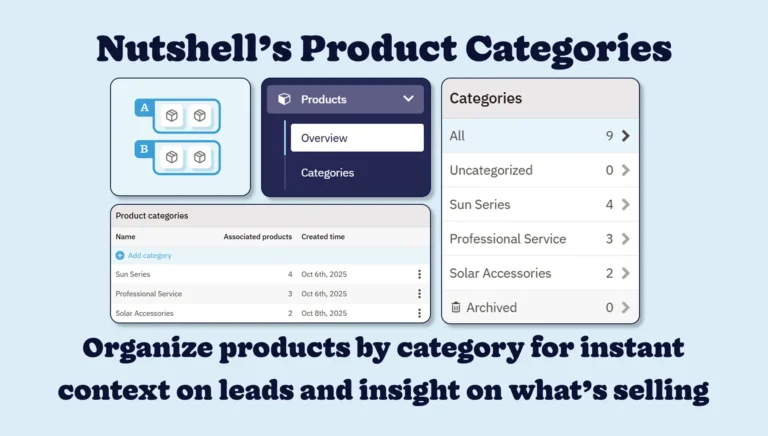
Organize, Analyze, and Sell Faster With Product Categories in Nutshell
Published on: October 9, 2025
The 13 Best Sales Management Software Tools to Help Your Team Sell Smarter
Published on: November 14, 2022
Highly Effective Strategies for Elevating Sales Team Performance
Published on: November 10, 2022Establishing a System for CRM Data Entry and Management
Published on: April 11, 2023Introducing Nutshell Forms Spam Prevention
Published on: April 22, 2024Join 30,000+ other sales and marketing professionals. Subscribe to our Sell to Win newsletter!