Skip to main content ↓

The Best B2B CRM Software for 2025

Nutshell - the best B2B CRM software for sales teams

Are you a business-to-business (B2B) company looking to level up your sales with a customer relationship management (CRM) platform? You’re in luck because we have the ultimate list of the best CRM’s for B2B in 2025!

Keep reading to see our top picks! 

Best B2B CRMs at a Glance

  1. Nutshell (4.6/5): Best for growing B2B sales teams (5-50 reps) seeking an affordable, easy-to-use CRM with strong automation and excellent support
  2. Zoho (4.5/5): Best for enterprise B2B companies needing advanced analytics, deep customization, and complex workflow automation
  3. Pipedrive (4.4/5): Best for sales-focused B2B teams prioritizing visual pipeline management, mobile access, and activity-based selling
  4. Zeeg (4.2/5): Best for B2B companies with heavy meeting-based sales cycles needing integrated scheduling and automatic lead capture
  5. Freshsales (4.1/5): Best for mid-market B2B companies wanting industry-specific lead segmentation and targeting capabilities
  6. Copper (4.0/5): Best for B2B companies already invested in Google Workspace ecosystem seeking seamless integration
  7. Insightly (3.8/5): Best for B2B service companies needing integrated project management alongside CRM functionality

P.S. Are you someone who likes to stay up to date with the latest sales and marketing trends? We thought so. Sign up for our free Sell to Win newsletter to get expert sales and marketing advice sent straight to your inbox!

Table of Contents


What is B2B CRM software?

B2B customer relationship management (CRM) tools are a type of software that helps business-to-business companies manage their communication and relationships with their customers, potential customers, and other contacts. CRMs can assist with sales, marketing, and customer support, including features like contact data management, sales automation, and reporting.

How we selected the best B2B CRMs

To compile this list of the best B2B CRM software, we evaluated platforms based on a rigorous set of criteria designed to identify solutions that truly serve B2B companies’ unique needs.

We assessed each CRM across eight key dimensions:

  • Ease of use: Intuitive interface with minimal learning curve for sales teams
  • Feature richness: Comprehensive CRM capabilities including contact management, sales automation, reporting, analytics, and integration options
  • B2B-specific functionality: Support for complex sales cycles, multiple stakeholders per deal, account-based selling, and tools for managing multiple contacts
  • Pricing & value: Transparent pricing with clear ROI for small to mid-sized businesses
  • Integration capabilities: Seamless connectivity with popular B2B business tools
  • Customer support: Quality of support resources
  • Mobile experience: Robust mobile app that allows sales teams to access and update CRM data from the field
  • Scalability: Ability to grow with your business without requiring a complete system overhaul

We specifically focused on platforms that deliver strong value for small to mid-sized B2B businesses (typically 5-100 sales reps) while also serving enterprise needs. We excluded CRMs that require expensive consulting for implementation or that are overly complex for typical B2B sales teams.

Key features of B2B CRM software

With the endless CRM options out there, it’s important to know which ones will work best for your business. The best CRMs for B2B must-have features such as:

  • Contact management: As you collect leads and customers, CRM contact management helps you keep an organized and easily accessible database.
  • Sales automation: B2B sales processes often involve tedious, yet necessary, tasks that take important time from a sales rep’s day– automation in CRM software helps solve this problem.
  • Reporting and analytics: You can’t improve what you don’t measure. CRM reporting in B2B is a must for finding opportunities for growth.
  • Lead scoring and prioritization: It’s important to manage your time spent on each lead by understanding which opportunities will get the most return on time investment. Customized lead scoring in CRM software allows you to do just that.
  • Integration capabilities: Whatever software you use for accounting, project management, or appointment scheduling, your CRM should fit neatly into your tech stack.

B2B CRM comparison table

B2B CRM PlatformRatingBest ForStarting PriceFree Trial
Nutshell4.6 ⭐Growing B2B sales teams (5-50 reps) seeking affordable, easy-to-use CRM with strong automation$13/user/month (annual)14 days
Zoho4.5 ⭐Enterprise B2B companies needing advanced analytics, customization, and complex workflows$12/user/month (annual)15 days
Pipedrive4.4 ⭐Sales-focused B2B teams prioritizing visual pipeline management and mobile access$14/user/month (annual)14 days
Zeeg4.2 ⭐B2B companies with heavy meeting-based sales cycles needing integrated scheduling$10/user/month (annual)14 days
Freshsales4.1 ⭐Mid-market B2B companies wanting industry-specific lead segmentation$9/user/month (annual)21 days
Copper4.0 ⭐B2B companies already invested in Google Workspace ecosystem$9/user/month (annual)14 days
Insightly3.8 ⭐B2B service companies needing integrated project management with CRM$29/user/month (annual)14 days

Best B2B CRM software: Detailed reviews

Let’s dive into our list of the best B2B CRMs, based on our in-depth research and testing.

1. Nutshell

Rating: 4.6/5
Best for growing B2B sales teams (5-50 reps) seeking an affordable, easy-to-use CRM

nutshell b2b crm homepage

Nutshell is well-known for its easy-to-use interface and hassle-free features, making it a breeze for any team to navigate and maximize their sales with every feature. With Nutshell, you can access all the best CRM features and capabilities you need in one single platform. Nutshell also functions as a sales engagement platform, tracking customer interactions to help your team sell more effectively.

  • Key features
  • Automatic lead assignment based on customizable rules
  • Custom sales process and workflow
  • Automatic lead and customer data collection
  • Personalized email messages and drip campaigns
  • Email list segmentation
  • Simple, code-free web forms for lead capture
  • In-depth, comprehensive reporting and performance tracking
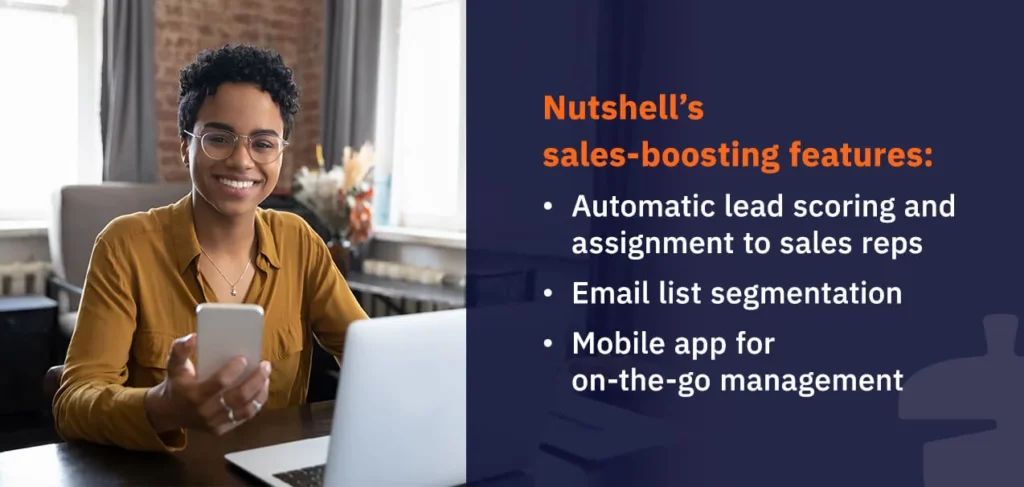
  • Mobile app for on-the-go management and updates
nutshell’s b2b crm sales boosting features

Pros

  • User-friendly interface
  • Affordable pricing that scales with your business
  • Excellent customer support
  • Strong automation features
  • All-in-one platform (sales, marketing, and engagement)

Cons

  • Smaller feature set compared to enterprise CRMs
  • Limited advanced reporting
  • No free plan

Pricing

Starting at $13 per user per month (billed annually); 14-day free trial with full feature access

Need a user-friendly CRM to boost sales and team efficiency?

Take our guided tour to explore Nutshell’s incredible features!

2. Zoho

Rating: 4.5/5
Best for enterprise B2B companies

zoho crm for business to business

Zoho is an excellent choice for B2B companies looking for detailed analytics and reporting functionalities. This platform is most popular for its artificial intelligence and sales analytics tools, helping you evaluate the success of your sales processes and strategies.

Key features

  • Advanced workflow automation
  • Visual pipeline
  • Lead scoring and management
  • Social media monitoring

Pros

  • Robust analytics and reporting capabilities
  • Highly customizable
  • Comprehensive integration ecosystem
  • Good mobile app

Cons

  • Steep learning curve
  • Interface can feel cluttered
  • Implementation may require more time and expertise

Pricing

Starting at $12 per user per month (billed annually); 15-day free trial; free plan available for up to 3 users

3. Pipedrive

Rating: 4.4/5
Best for sales-focused B2B teams prioritizing visual pipeline management

pipedrive crm for b2b

Pipedrive offers a handy mobile app and user-friendly interface, making it a great CRM for B2B companies that need to keep track of their leads and deals on the go.

Key features

  • Visual pipeline management
  • Email marketing capabilities
  • Email tracking and detailed reports
  • Sales insights and reporting
  • Mobile app for iOS and Android

Pros

  • Intuitive visual pipeline
  • Good mobile app
  • Focus on sales execution and activity tracking
  • Quick implementation

Cons

  • Limited marketing automation
  • Reporting capabilities not as advanced
  • Less customization

Pricing

Starting at $14 per user per month (billed annually); 14-day free trial available

4. Zeeg

Rating: 4.2/5
Best for B2B companies with heavy meeting-based sales cycles

Homepage of Zeeg CRM

Zeeg CRM captures every booked appointment automatically as a qualified lead in your CRM. This unique approach makes Zeeg ideal for B2B companies where meetings are the primary sales activity.

Key features

  • Advanced scheduling with calendar integration
  • Automatic lead capture from scheduled meetings
  • Smart prospect routing
  • Round-robin scheduling
  • Custom objects

Pros

  • Unique focus on meeting-based selling
  • Affordable pricing
  • Great for appointment-heavy sales models
  • Good mobile experience
  • Excellent for eliminating leads lost in scheduling

Cons

  • Smaller feature set
  • Less customization
  • Smaller user base
  • Limited integration ecosystem

Pricing

Starting at $10 per user per month (billed annually); free plan available for up to 2 users; 14-day free trial available

5. Freshsales

Rating: 4.1/5
Best for mid-market B2B companies wanting industry-specific lead segmentation

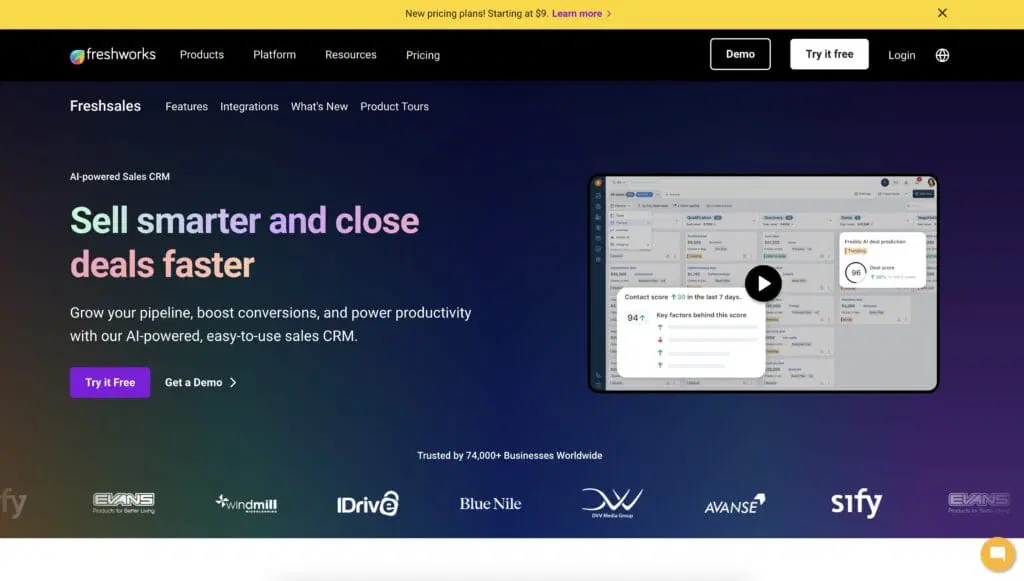
freshsales crm for email marketing

Freshsales is an excellent CRM for B2B companies looking for detailed lead segmentation and targeting solutions. With Freshsales, you can segment your leads based on their industry, making it easy to identify your high-value leads.

Key features

  • Industry-based lead segmentation
  • Location and company size segmentation
  • Marketing campaign, deal insights, and sales performance reports
  • Customized sales pipelines and workflows
  • Lead lifecycle stage tracking

Pros

  • Good lead segmentation capabilities
  • Built-in phone and email
  • User-friendly interface
  • Strong customer support

Cons

  • Interface can feel cluttered
  • Less customization
  • Limited advanced automation

Pricing

Starting at $9 per user per month (billed annually); free plan available with limited features; 21-day free trial available

6. Copper

Rating: 4/5
Best for B2B companies already invested in Google Workspace ecosystem

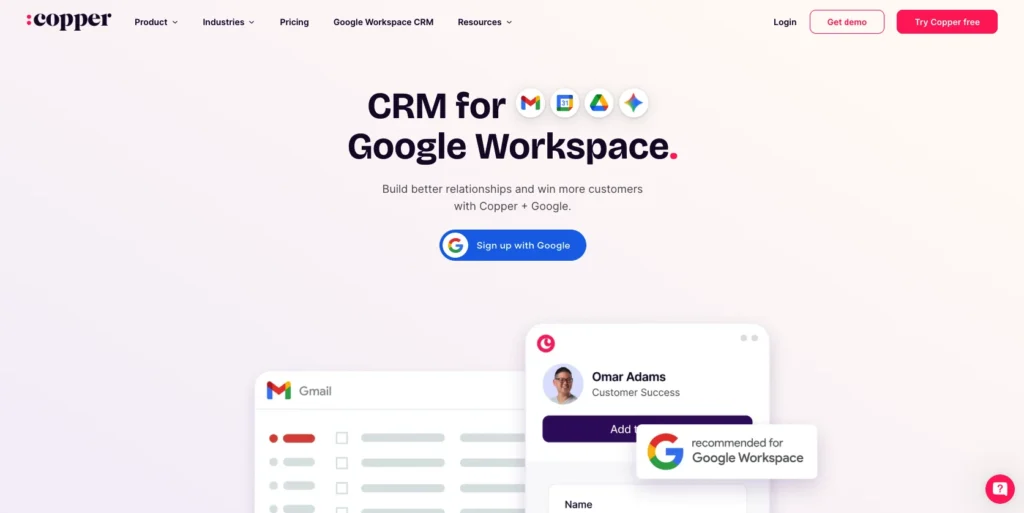
Copper Homepage

Copper seamlessly integrates with Google Workspace, making it a great fit for teams that use Google products.

Key features

  • Seamless integration with Google Workspace tools
  • Workflow automation
  • Contact organization and management
  • Project management tools
  • Mobile app for iOS and Android

Pros

  • Exceptional Google Workspace integration
  • Quick implementation
  • Good for teams already using Google products
  • Strong mobile app

Cons

  • Limited value if not using Google Workspace
  • Smaller feature set
  • Less customization

Pricing

Starting at $9 per user per month (billed annually); free plan available for up to 5 users; 14-day free trial available

7. Insightly

Rating: 3.8/5
Best for B2B service companies needing integrated project management tools

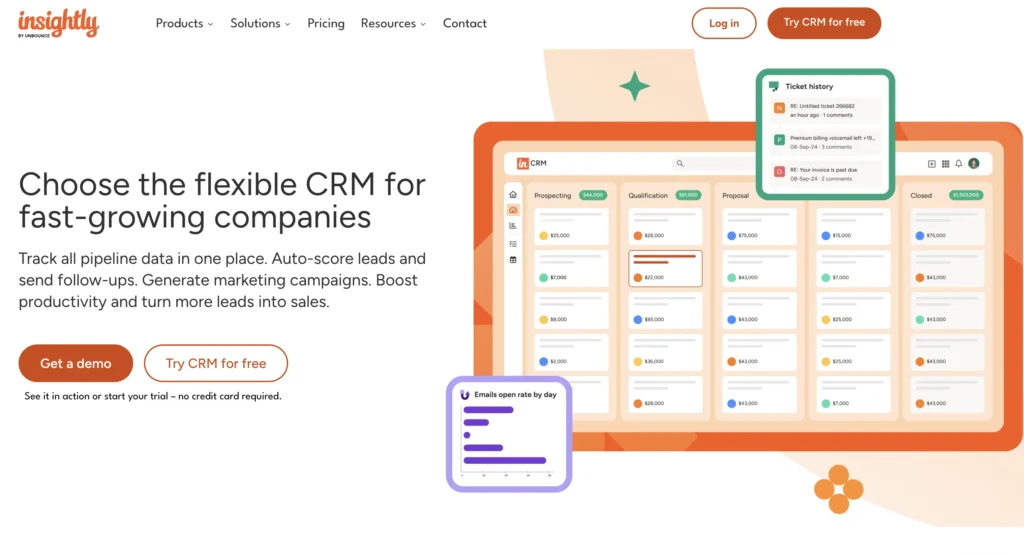
A screenshot of Insightly's homepage

Insightly comes equipped with helpful project management tools for handling projects and tasks. With Insightly, you can convert deals into ongoing projects to stay in touch with your clients throughout their journey with your company.

Key features

  • Integrated project management
  • Deal to project conversion
  • Email list segmentation
  • Email open rate tracking and engagement metrics
  • Relationship mapping and contact information syncing

Pros

  • Unique integration of CRM and project management
  • Good for service-based businesses
  • Good reporting and analytics
  • Good mobile app

Cons

  • Higher pricing
  • Steep learning curve
  • Complex interface

Pricing

Starting at $29 per user per month (billed annually); higher price point than most competitors; 14-day free trial available

Why is CRM software important for B2B companies?

CRM (Customer Relationship Management) software is important for B2B companies for several reasons:

  • Improved communication with customers: CRM software tracks every interaction you have with your customers, giving your whole team an understanding of each relationship. This background knowledge helps you communicate more effectively, increasing customer loyalty. This is especially important for B2B companies as they likely have many contacts in one business.
  • Improved sales management: B2B CRM software helps you visualize, organize, and automate your sales process. This helps you keep track of opportunities and close more deals. B2B companies can significantly benefit from these features due to the more complex B2B sales cycles.
  • Improved lead generation: Many CRMs also include marketing features, such as email marketing, that assist with generating more leads to fill your sales funnel.
  • Data-driven insights: With all your customer data in one place, you can analyze it with the built-in reporting and analytics features available in many CRMs. These analyses provide insights B2B companies can use to improve their sales and marketing processes.
  • Enhanced collaboration: CRMs enable collaboration between your sales, marketing, customer support, and other teams. All your team members can access the same data and stay updated on lead status, conversations with customers, and more.
  • Increased efficiency: Keeping your customer data and sales process organized in a CRM helps keep your team on the same page and operating efficiently. Automation features can also take time-consuming tasks off of your teams’ hands.
  • Increased sales and revenue: A well-running lead-to-customer pipeline means that your sales process is likely to make more revenue in less time.

B2B vs. B2C CRM systems

B2B companies serve other companies, while B2C involves selling directly to consumers. These markets differ in their audience, processes, products, and marketing strategies.

In B2B CRM systems, the emphasis is on efficiently managing individual leads while tracking extensive lead-specific data. This data is instrumental in predicting lead behavior and assessing their financial readiness. On the other hand, B2C CRM systems prioritize compiling data for target groups to facilitate broader analyses.

What makes the best CRM for B2B?

Needs vary from business to business, but here are a few of the most important things to look for in a B2B CRM:

  • Customization and flexibility: B2B companies often have specific processes and terminology. The best CRM systems are customizable and can align with the company’s unique workflows and needs.
  • Ease of use: When a CRM is easy to navigate and use, your team can get more value from it more quickly.
  • Scalability: A B2B CRM system should scale to accommodate growing accounts, contacts, and interactions as the B2B company expands.
  • Customer support: Even with the most intuitive CRM system, you’ll likely need customer support at some point. Look for a CRM tool that offers friendly, helpful support.  Expert assistance in data importing and onboarding is necessary to make the CRM transition as smooth as possible.
  • Integration capabilities: B2B companies often use many different tools, so it’s essential that their CRM software can integrate the other tools and systems they use.
  • Trial period: Ensure the CRM offers a free trial period to give your team enough time and space to know if it’s the right fit.
Headshot

Ready to see Nutshell in action?

Attend a live guided tour!

  • Every Monday & Wednesday at 10am ET/7am PT
  • Every Tuesday & Thursday at 3pm ET/12pm PT

Best practices for effective B2B CRM management

In the world of B2B CRM, employing effective strategies is essential to driving growth and enhancing customer satisfaction. Here are some core best practices to optimize your CRM efforts:

  • Data-driven approach: Use data analytics tools for insights. Keep your database clean and centralized.
  • Segmentation: Group customers by factors like industry and size and create tailored campaigns and strategies.
  • Customer journey mapping: Map customer interactions. Identify and improve pain points and use tech for better experiences.
  • Communication and collaboration: Foster effective communication and collaboration among departments such as sales, marketing, and customer support.
  • Automation: Invest in CRM software with automation capabilities to streamline repetitive tasks and processes.

FAQs

  • 1. What’s the difference between B2B CRM and B2C CRM?

    B2B CRM manages complex, longer sales cycles with multiple decision-makers and focuses on building relationships with other businesses. B2C CRM handles higher volumes of individual consumers with shorter, more transactional sales cycles. B2B CRMs like Nutshell offer features tailored for business sales—account-based tracking, longer pipeline stages, and tools for managing multiple contacts within one company.

  • 2. How long does it take to implement a B2B CRM?

    Implementation typically takes 1-3 months depending on your company size and complexity. Small businesses with straightforward needs can launch in 2-4 weeks, while larger organizations may need 8-12 weeks for data migration, customization, and team training. Nutshell’s user-friendly design and dedicated support team help streamline the process, so you can start seeing results faster without a lengthy learning curve.

  • 3. How much does a B2B CRM cost?

    B2B CRM pricing varies by company size and features. Small businesses typically pay $50 per user monthly, mid-sized companies spend $100 per user monthly, and enterprises may invest $150+per user monthly.. Nutshell offers transparent pricing starting at $19 per user per month with no hidden fees, making it an affordable option that scales with your business growth.

  • 4. Can a B2B CRM integrate with my existing business tools?

    Yes, most modern B2B CRMs offer extensive integrations. Nutshell connects with 500+ business tools including email platforms, calendars, marketing automation, accounting software, and project management systems. These integrations eliminate duplicate data entry and create seamless workflows between your CRM and the tools your team already uses daily, saving time and reducing errors.

  • 5. What size company needs a B2B CRM?

    Any B2B company managing customer relationships can benefit from a CRM. If you’re tracking leads in spreadsheets, missing follow-ups, or struggling to share customer information across your team, it’s time for a CRM. Nutshell works for businesses of all sizes—from solo entrepreneurs to teams of 100+—and scales as you grow without requiring a complete system overhaul.

Access the best B2B CRM software with Nutshell

Finish your search for the best CRM for B2B companies with Nutshell

Nutshell is a hassle-free CRM platform that gives you and your sales team all the tools and resources you need to generate and convert more leads so you can drive revenue while creating exceptional customer service. 

Don’t just take our word for it, though. Try Nutshell out for yourself by signing up for your free 14-day trial!

See Nutshell in action!

Try Nutshell free for 14 days or let us show you around before you dive in.

BACK TO TOP

Join 30,000+ other sales and marketing professionals. Subscribe to our Sell to Win newsletter!