Crush Your Backlink Outreach With These Tactics And Templates

-

Key takeaways
- Building backlinks isn’t just about asking—it’s about offering value first. Linking to someone’s content and then notifying them creates goodwill and increases the chances they’ll reciprocate.
- Success depends on persistence and personalization. Outreach should be tracked, tested, and refined—not blasted out generically.
- Using a CRM like Nutshell streamlines the entire process, helping teams organize contacts, automate follow-ups, and analyze what’s working to improve ROI.
Why backlinks matter in 2025 (and beyond)
The perfect website isn’t built overnight—but if it were, no one would find it. To ensure your site is discoverable, you need to optimize for search engines, and backlink outreach plays a critical role in that optimization.
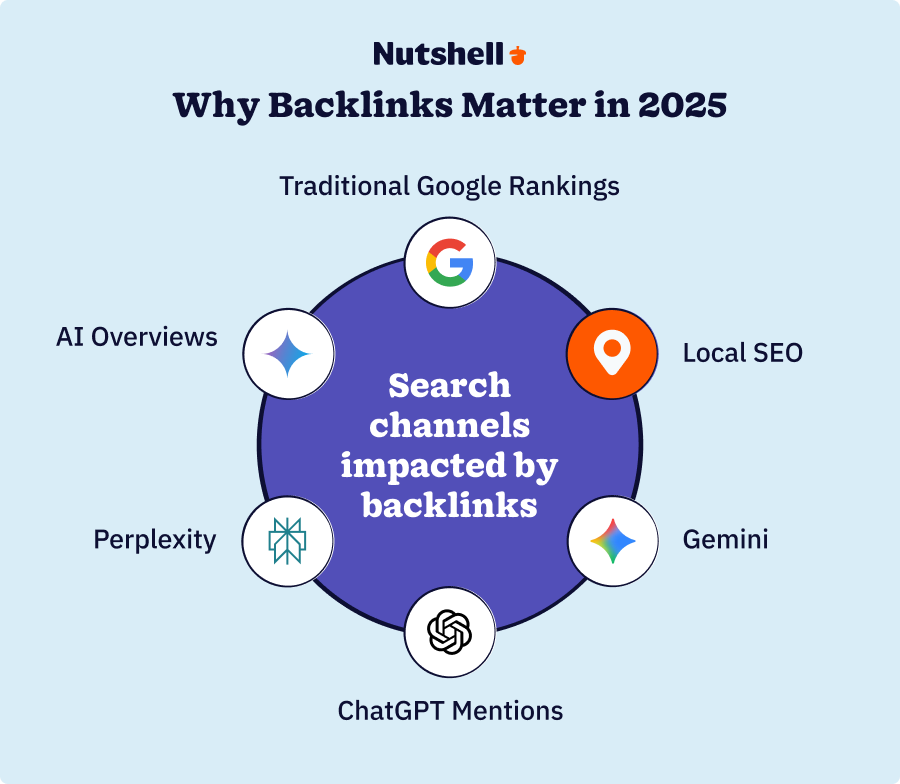
Here’s what changed in 2025: backlinks now impact visibility across *multiple* search channels, not just Google’s traditional results.
Backlinks now affect visibility in:
- Traditional Google organic search rankings
- Google AI Overviews (the AI-powered summary boxes appearing at the top of search)
- ChatGPT, Perplexity, and Gemini mentions
- Local SEO rankings
- Industry-specific search platforms
Backlinks remain one of Google’s top three ranking factors, and AI search systems rely on Google rankings to identify trustworthy sources to cite. When your site has high-quality backlinks, you’re more likely to rank well in traditional search and appear as a cited source in AI-generated responses.
The bottom line is, building backlinks isn’t just about SEO anymore—it’s about becoming the kind of authoritative source that both search engines and AI systems recommend.
It’s not aesthetics that cause a website to rank, or the name behind it, or the platform it was built on. Websites gain visibility due to reputational networks, and backlinks are the fastest way to build that reputation.
Plus, beyond organic search visibility, backlink outreach drives direct referral traffic to your site as well.
“How?” the reader asks.
“Stay tuned,” the article implores.
Table of contents
What is a backlink?
A backlink is a link from another website to yours. When reputable and quality websites with a high domain authority link to your site, search engines like Google and Bing consider your site more trustworthy. The backlinks to your site, generally speaking, are considered trust signals.
Dictionary time: “Trust signals,” broadly defined, are the evidence points that inspire confidence in your brand online. … Virtually every trust signal is a ranking factor in determining your site’s search position. – Trustsignals.com
What is backlink outreach?
Backlink outreach is the process of reaching out to other website owners, content creators, or other marketers with the goal of scoring a link from them.
Link building through outreach can be beneficial to your website’s ranking as it appears on search engine results pages. If your website gets a backlink from quality websites related to what your site is offering, Google and other search engines are more likely to give your content more visibility.
A link outreach attempt can be sending an email asking to write a guest post for their blog in return for a backlink or letting them know that a resource on your website could provide their readers more insight. This is often executed using link-building software to systematically find relevant contacts and reach out to them.
Depending on the size of your company or the department you work in, backlink outreach can be done in-house. For example, maybe your SEO team dedicates a certain amount of hours each week to cold emailing other businesses with various outreach attempts. You could also choose to outsource outreach if your budget allows for it.
Different types of backlink outreach
Backlink outreach doesn’t just refer to one technique or strategy. There are a number of ways you can get reputable websites to link back to yours and build your authority in the eyes of search engines. Here are a few of the most common types of backlink outreach marketers employ.

Why we chose these 5 tactics
We selected these five backlink outreach methods based on the latest 2025 industry research:
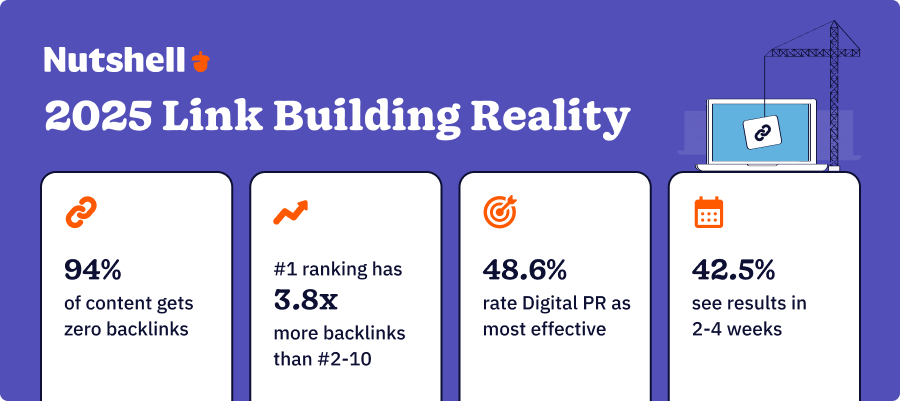
- Most effective by expert consensus: A survey of 518 SEO experts in 2025 found that 67.3% consider Digital PR the most effective link-building tactic, followed by guest posting (38.9%) and linkable assets (36.3%).
- Accessibility for SMBs: These tactics don’t require expensive agencies or specialized software to execute. Your team can execute each method with basic tools (email, research platforms like Ahrefs or Semrush, and a CRM like Nutshell).
- Proven ROI: Case studies demonstrate clear, measurable results. For example, one e-commerce company built 240 strategic backlinks using these tactics and grew monthly revenue from $350K to $1M—without changing a single page on their website.
- Speed to results: Most of these tactics show ranking impact within 2-4 weeks, with clear performance metrics visible within 6 weeks.
- Scalability: Each tactic can be executed by small teams and refined based on what’s working, making them ideal for growing companies.
Quick reference: 5 Backlink outreach tactics at-a-glance
Tactic Difficulty Timeline to Results Response Rate Best For Broken Link Building High 2-4 Weeks 8.5% Content creators targeting established websites 3-Way Link Exchange Medium 3-6 Weeks 5-8% Relationship builders in active communities Unlinked Mentions High 1-3 Weeks 10-12% Brands with existing awareness Skyscraper Technique Very High 4-8 Weeks 15%+ Competitive niches; high-stakes rankings Guest Posting High 3-6 Weeks 16% Authority & thought leadership building Note: Guest posting effectiveness has declined significantly in 2025. While still viable, only 16% of SEO experts now rate it as highly effective (down from historical dominance). Focus on quality placements on high-authority sites rather than volume.
Broken link building outreach
Best for: Teams targeting established websites with quality audiences in your niche
This approach involves scanning a website in your niche with a high domain authority for broken links. In other words, you’ll be looking for links from their site that no longer work.
The fastest way to pinpoint broken links is through an SEO tool like Ahrefs or Semrush—essential online SEO software for marketers. Essentially, you’re looking for outgoing links that return 404 pages or simply don’t lead to where they’re meant to anymore.
Look for opportunities where the website could benefit from linking to your website instead—whether to existing content or relevant content you will create before reaching out.
Once you’ve identified an opportunity that makes sense for your business and website, email it to the site owner. Let them know that the link on their page or post no longer works and that you have relevant, quality content they can link to instead.
3-way link exchange outreach
Best for: Relationship-first builders who are active in industry communities
Because Google frowns upon link swapping—linking to a website in exchange for a link back to yours—marketers have devised the three-way link exchange outreach strategy.
In essence, the method involves bringing a third party into the mix for a 3-way exchange. This way, each party benefits from a backlink to their website, but there’s no direct back-and-forth exchange between any two sites.
Social platforms like Facebook and LinkedIn include several link building groups you can join. Reaching out to others in these groups could help you find a suitable site to link to and an ideal backlink for your site’s SEO.
Unlinked mentions outreach
Best for: Brands with existing awareness looking for quick, high-impact wins
Has another website mentioned your brand or product in a blog post or on a page? If so, this creates an opportunity for you to request a backlink. The trick is to find those pages that mention your business but do not link to your website.
Ahrefs and Semrush to the rescue! Again, these two tools are integral to any solid SEO strategy, and investing in either one of them will help you and your team tremendously.
Use either Ahrefs or Semrush to identify pages that mention your brand, and use the tool’s filter to drill down to those sites that haven’t linked back to your website.
Create a list and visit the web pages you’ve identified to verify that no link exists. Then look for the contact details for the site owner so you can reach out to them.
Send the site owner a friendly email pointing out that they’ve mentioned your brand on that specific web page and asking if they’d be willing to include a link back to your website.
Skyscraper technique outreach
Best for: Competitive niches where ranking leverage is critical; teams with publishing resources
The skyscraper backlink outreach technique is very much a content-based approach.
The first step is to find an article relevant to your business and brand, often on a competitor’s website, that has attracted several high-quality backlinks. Then, you write an updated version that is better than the original and provides your audience with more value.
Finally, approach the owners of all the high-domain websites that linked to the original piece and convince them to link to your new, better piece of content instead.
Guest post backlink outreach
Best for: Authority building and thought leadership, though execution is increasingly challenging
Guest posting is a tried and true outreach strategy for backlinks when done right. This involves writing a fresh blog post specifically for a high-domain website and linking back to your site, ensuring the information provided in the post is relevant to that site’s audience.
Once again, you’ll be leaning on a tool like Ahrefs to help you identify potential websites to write for. The trick is to find websites with multiple authors, as there’s a good chance they allow outsiders to write guest posts for their site.
You’ll need to reach out to the website owner and agree on a topic that aligns with their content strategy. Once agreed upon, you can go ahead and write a quality piece that offers the site’s audience loads of useful information.
Avoid writing a salesy piece about your brand or product. The purpose of the post is to provide value to the website’s audience and then include an author bio at the end (or beginning) of the post with a link back to your website.
Note on 2025 trends: Guest posting was historically a top-tier tactic. In 2025, effectiveness has declined to just 16% according to industry research, down from its historical dominance.
This is because:
- Quality publishing sites now receive thousands of guest post pitches monthly
- Many sites have tightened guest posting acceptance standards
- Low-quality guest posting sites have proliferated, making placement less valuable
Success now depends on focusing exclusively on high-authority sites (Domain Rating 40+), niche-specific publications, and platforms with genuine audience engagement—not volume.
Digital PR: The most effective 2025 tactic (that most teams miss)
Why digital PR dominates in 2025
According to 2025 research surveying 518 SEO experts, 67.3% rate Digital PR as the most effective link-building tactic, yet only 17.7% of teams actually use it regularly. This represents a massive opportunity gap.
Digital PR practitioners generate an average of 15.58 links per month, with 33% producing 31+ quality links monthly. These aren’t just any backlinks—they’re typically high-authority editorial placements from legitimate news outlets and industry publications.
How digital PR works: The 3-step process
Step 1: Find newsworthy data or insights
Start with interesting data points:
- Conduct original research or surveys relevant to your industry
- Find trends in government data or public databases
- Interview experts and synthesize their insights
- Analyze your own customer data to reveal patterns
Step 2: Create shareable content
Package your findings as:
- A data-driven blog post with compelling visuals
- An infographic highlighting key statistics
- A report or whitepaper with findings
- An interactive tool or calculator
Step 3: Pitch to journalists and media outlets
Use tools like Cision, Muck Rack, or Pitchbox to:
- Identify journalists covering your industry
- Personalize pitches explaining why their audience cares
- Follow up within 6 hours of pitching (research shows this yields 20% higher conversion rates)
- Build relationships for ongoing coverage opportunities
Digital PR in 2025: What’s changed
- Increased competition: Journalists now receive 100+ pitches weekly. Response rates have declined to 3.43% in Q1 2024, meaning speed and relevance are critical.
- Higher standards: Media outlets are pickier about which stories they cover. Your data or insight needs to be genuinely newsworthy, not promotional.
- Better tools: AI-powered research tools make it easier to find journalists, personalize pitches, and identify trending topics worth covering.
Getting started with digital PR (Without an agency)
If budget is tight, small teams can execute digital PR in-house:
- Start with existing data: Don’t spend months on original research. Analyze your own customer data, industry trends, or compile existing research into a new angle.
- Create one standout asset: A single infographic, report, or stat-filled blog post can attract dozens of links if it’s genuinely useful.
- Build a journalist list: Use free tools like Google News alerts, Twitter lists, and industry publications to identify 20-30 journalists covering your space.
- Personalize your pitch: Spend 5 minutes reading each journalist’s recent articles. Reference a specific story and explain why your data/insight relates to their beat.
- Prioritize speed: Respond to news hooks within hours, not days. If a trend is happening, pitch within the same day.
- Track what works: Use a CRM like Nutshell to track which journalists respond, which pitches convert, and which types of stories generate the most coverage.
Journalist query platforms: HARO, Qwoted & beyond
What are journalist query platforms?
HARO (Help A Reporter Out) and similar platforms connect expert sources with journalists writing stories. Journalists post queries asking for expert quotes, and experts respond with insights. If your response is used, you typically get a backlink.
HARO platforms to use in 2025:
- Qwoted: Less saturated, better quality leads
- Featured (formerly Terkel): Paid platform focused on high-value publications
- SourceBottle: Paid platform with access to top-tier media outlets
Response rates and timelines
According to 2025 data:
- Average response rate: 20% when executing a structured process
- Time to link: Most placements publish within 1-2 weeks
- Links per month: Typically 0-1 quality link per month (variable by niche)
Why response rates vary so widely
Low response rate (5-10%):
- Generic responses that don’t match the journalist’s needs
- Responses delayed beyond the first 6 hours
- Poorly formatted or unprofessional submissions
High response rate (20%+):
- Original insights, not boilerplate answers
- Fast response within 1-6 hours of query posting
- Responses directly address the journalist’s specific question
- Use of a structured process and tracking system
The 6-hour rule
Research shows responding within the first six hours of a journalist posting a query yields 20% higher conversion rates. Why? Because journalists typically close queries within 24 hours, and they review responses in order. Being first gives you a massive advantage.
How to make this work:
- Set up email alerts for queries in your industry
- Dedicate 30 minutes each morning to responding
- Keep response templates ready (but customize each one)
- Use a CRM to track which journalists respond and which publications pick up your quotes
When HARO works well (and when it doesn’t)
HARO works best for:
- Established businesses with recognized expertise
- Niche industries with few expert sources
- B2B companies where media coverage drives credibility
- Thought leaders building personal brand authority
HARO limitations:
- Hit-or-miss results (highly dependent on niche and publication)
- Most responses don’t generate links (unlinked mentions are common)
- Limited control over publication quality
- Only a handful of relevant queries per month in most niches
- Paid platforms ($100-$500/month) offer better quality but higher cost
Best approach: Use HARO as a supplementary tactic alongside Digital PR and other methods. Don’t rely on it as your primary link-building strategy.
Backlink outreach tactics and best practices
Ready to try your hand at sending an outreach email? Keep these tactics in mind for the best possible chance of getting a response and, better yet, a backlink.
1. Understand your niche
Before you start looking for link-building opportunities, make sure you have a solid understanding of your content, your audience, and what others in your industry read and link to. With AI search becoming mainstream, understanding your niche means understanding which publications journalists and AI systems trust as authoritative sources.
A good place to start is competitor and industry association blogs and websites. Focus on websites that are cited in AI Overviews and appear in ChatGPT responses for your topic. You should also keep an eye on what others in your niche share on social media platforms like LinkedIn and Facebook.
Consider industry trends, who your direct competitors are, and what your target audience prefers. Use keyword research tools to keep your finger on the pulse of trending topics and searches.
All this information will give you a better idea of the content you should create for your website and the content and websites you should target for backlinks.
2. Don’t waste their time
Think about the person on the receiving end of your email. Unless you see that their bio lists their title as “link builder” or “backlink coordinator”, they’re probably pretty busy. Also, you’re not the only person sending cold emails on a Tuesday afternoon, so they probably have at least ten emails in their inbox, just like yours.
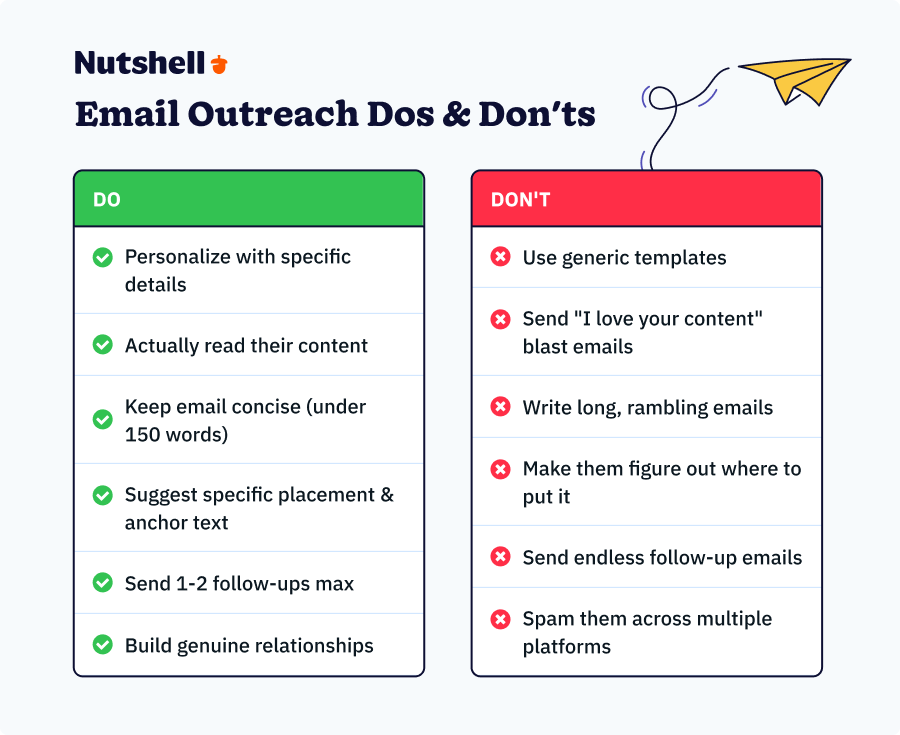
Don’t make the reader of your outreach attempt play 21 questions over the course of a long and drawn-out email chain to figure out you’re interested in a backlink. If you want the reader to say yes, give them as much information as possible upfront… without rambling. Research from 2025 shows that emails with ~150 words achieve 15X higher response rates than very short emails.
Be straightforward and purpose the article or piece of content for which you want a backlink with relevant anchor text so the reader knows exactly what you’re asking and can work to find a match for the link you’ve included. There’s a sweet spot: concise enough to read in under 30 seconds, but detailed enough to convey substance.
Because when you think about it, simply asking for someone to link to a piece of content still leaves a lot of work on your recipient’s end. They still need to find a good spot for it that contextually matches your content and then edit the website to add your link in.
A message like “I think [this piece of content] would be a great match in [this section of this article] and can be linked to with [this anchor text]” saves your recipient a ton of time because, at that point, it becomes a simple matter of yes or no, rather than where they can fit your link, and how, and why.
3. Actually read their blog
Marketers open their inbox every morning and see the words “I love your content so much…can you link my article” about 30 times a day. This sort of email will not lend itself to a backlink, and you’ve wasted their time and your time.
With AI-generated outreach becoming more common, genuine personalization stands out even more. Taking 5-10 minutes to read their recent articles and reference specific details is now one of the most powerful differentiators.
If you’ve found a place where a marketer can link your piece of content, let them know where. Does that article have a particularly well-done infographic? Let the reader know you think so. Or maybe it has an eye-opening statistic. Whatever the case may be, let the reader know you took the time to read their content and why your resource can be a great addition to it.
Otherwise, your “I love your content” line will only make them roll their eyes.
4. Get personal
Believe me when I say that the reader of your backlink outreach can smell a templated email from a mile away. I mean emails that look like:
“Hello,
I just finished reading your blog. Wow! So informative. I’d really like to partner with your company as I try to rank my content. Can you link my blog?”
Nothing will find itself in the trash folder sooner.
Instead, see if you can find out a little about the person you’re emailing (in a non-creepy way). For example, I received an outreach attempt last week from someone who told me they thought my dog, Zeke, was adorable. This means that person spent 30 seconds on my Twitter profile and saw I post multiple pictures of Zeke a week. It also means they made an effort to make a connection.
And while I personally wasn’t able to help them in their backlink attempt, I forwarded their email to my coworker who can. I knew this person wasn’t using a template on me, and I could tell they actually read the blog they were referencing. And that is what made it stand out from the other seven I had in my inbox.
Try spending a week engaging with prospects’ content before sending your outreach email. Comment on their posts, share their work, and establish familiarity. This warm outreach approach dramatically improves results.
Reminder: Don’t get too personal. If you’re not getting a response, don’t make your next move adding that person on LinkedIn and sending them more outreach there. That’s spammy.
5. Find ways to build a relationship
Try to think of your backlink outreach efforts as more than just a request and agreement to include a link. A successful link-building campaign should focus on building long-term relationships with the websites that link back to yours.
Developing and continuing to strengthen your relationship with the site owners and other key stakeholders could lead to continued link-building and backlink opportunities. You may even benefit from a partnership or other possibilities that could help your business grow.
The benefits of developing long-term professional relationships is backed by 2025 data:
- 85% of journalists surveyed in 2025 say the best way to build a relationship is simple: introduce yourself via email, even without a story to pitch
- Sites you build relationships with early tend to link to you repeatedly (not just once)
- One strong relationship with a high-authority publisher can generate 3-5 backlinks over time as they cover related topics
After someone links to you, follow up with value (share their article, reference their work in your content, invite them to collaborate). This often leads to additional linking opportunities down the road.
6. Don’t send too many follow-ups
One email is great, and one follow-up email is fine. But anything more than that, and you run the risk of coming off as needy, annoying, spammy, and unprofessional.
According to 2025 research on follow-up effectiveness:
- 1st follow-up: Increases link acquisition by 40% ✅
- 2nd follow-up: Some improvement, but diminishing returns
- 3rd+ follow-ups: Risk of being marked as spam; no additional benefit
If you’ve followed up on someone you haven’t heard back from and it’s still radio silence—that’s your answer, and it’s a no. Sending them another email that says, “Hey! Just bumping this to the top of your inbox,” is not a strategy that will land you links. The reader isn’t going to respond with “Wow, thanks! Unsure how I missed this,” and then give you a backlink.
The more professional you remain, the better, and a constant barrage of follow-ups will not get you to your backlink goal. The only place it’s going to get you is sent to the Spam folder.
Here’s our simple recommended sequence:
- Send initial email
- Wait 3-5 days
- Send single follow-up email
- If no response after 10 days total: move on to next prospect
Pro tip:Use a CRM like Nutshell to automate follow-up timing. Set reminders so you follow up when appropriate—not too soon and not too late.
A full suite of marketing tools right inside your CRM!
Maximize your CRM data with the Nutshell Marketing suite of tools, like Email marketing, SMS marketing, Landing pages, web forms, and reporting.

Backlink email templates
Ready to send your first backlink email? I know I said you shouldn’t use a template, and I stand by that.
But, at the very least, check out these examples to get inspired and have a better idea of what to say!
The “relevant article” example
Hi [Name]!
My name is [your name], and I’m the [job title] at [company]. This morning I had a chance to read your article [link/anchor text]. I particularly enjoyed the overall structure as I found it easy to read, and the infographic really helped me understand such a complicated topic.
I’ve noticed from following your blog that you often write about [topic]. We recently published a piece with a current statistic that I think would be a great addition to your article. Feel free to check it out here and let me know if you think it would be a good value add.
Thanks!
PS. Would definitely share your article on social media if you decided to include our resource!
The “benefit to our readers” example
Hey [Name], I wanted to let you know that I’m a huge fan of your blog. {More stuff about why I like their blog.}
I work on the blog over at [company] and I’m always on the lookout for articles that are relevant to our readers. Our demographic is mostly {this specific segment}, and I think that it would make sense to link to [our piece] from [your article], probably with anchor text like {relevant anchor text}.
After all, sharing similar, relevant content with our readers is our top priority. If you think there’s a better thematic match for a content swap like this, please let me know.
And, of course, please let me know which pieces you’re trying to score links for, and I’ll find a spot for them on our blog.
The “preemptive strike” example
Hello [Name], I’m the [job title] at [company], and I just wanted to let you know I’m a huge fan of the [content] piece you wrote.
In fact, I thought it was so good that I linked to it from our blog [URL]. I think it’ll be a big hit with our readers. Keep up the great work!
Also, if you’d like, you can totally feel free to share my article [URL] that I wrote about [this topic]. I think your readers might enjoy it!
How small teams can scale backlink outreach (without burnout)
If you’re a small business or solo marketer, backlink outreach can feel overwhelming. Here’s how to scale sustainably:
Focus on leverage, not volume
Instead of sending 100 cold emails, focus on:
- 10 high-authority targets where a backlink would have disproportionate impact
- 5 relationship-based opportunities (HARO, journalist contacts, community leaders)
- 2-3 recurring tactics that work for your niche (e.g., monthly Digital PR campaigns)
The result: Fewer emails, but better quality outcomes.
Automate what you can (without losing personalization)
Use a CRM like Nutshell to:
- Organize prospects by tier (high-priority, medium, low)
- Automate follow-up reminders (so you don’t forget to follow up)
- Create email templates with personalization fields (not generic templates)
- Track response rates by tactic (so you know which methods actually work for you)
- Set up smart lists to segment prospects (by industry, authority level, responsiveness)

Let’s Talk
Have a question? Need a volume discount? Send us a message or book a meeting with a Sales rep to start the conversation.

The 80/20 approach
Focus 80% of your effort on the 20% of tactics that actually work for your business:
- Analyze your outreach data quarterly
- Double down on what’s working
- Cut what isn’t
- Test new approaches incrementally
Example: If Digital PR generates 5 quality links per month with 10 hours of effort, but cold email generates 2 links per month with 8 hours of effort, shift more effort toward Digital PR.
Batch your outreach
Instead of doing outreach every day, batch it:
- Monday morning: Research and identify 20 new prospects
- Tuesday-Wednesday: Write personalized pitches
- Thursday: Send outreach
- Following Tuesday-Wednesday: Send follow-ups
This blocks focus time and is less mentally draining than piecemeal outreach.
Measure what matters
Track these metrics in your CRM:
- Response rate by tactic (which methods actually get responses?)
- Link rate by tactic (which responses turn into actual backlinks?)
- Time to link (how long between outreach and link placement?)
- Link quality (are the links driving referral traffic or ranking improvement?)
- Cost per link (time invested vs. results achieved)
Focus on tactics with the best link rate and time to link—not just response rate.
Ready, set, send
Remember that backlink outreach is a marathon, not a sprint. You may send out what feels like hundreds of emails and get very few responses. That’s okay!
Here’s a 2025 reality check:
- Average response rate is 8.5% (not 50%)
- Most results take 2-4 weeks to show in rankings
- One focused campaign can drive significant results over time
Take the time to consider what isn’t working, how you can improve, or if there’s a way you can personalize your emails a bit more. It’s all about building relationships, and remember that people can sniff out lazy outreach a mile away.
Want an easy way to manage contacts and automate cold email outreach without it becoming chaotic? With Nutshell, you can:
- Organize and segment contacts to ensure you target the right website owners with suitable backlink outreach messaging
- Create personalized email sequences to automate messaging and streamline your link building efforts
- Save outreach email templates (while still personalizing each one) to save time
- Access detailed interaction history for every website owner—see what you’ve tried, what worked, and what didn’t
- Automate follow-up reminders so you follow up at the right time (not too early, not too late)
- Track response rates and link conversion rates by tactic so you know what’s actually working for your business
- Set up smart lists for segmenting prospects (by industry, authority level, responsiveness, etc.)
The result: You transform scattered, overwhelming outreach into a systematic, scalable strategy that actually delivers ROI.
Not a Nutshell customer yet? Give our full suite of features a try free of charge when you sign up for a 14-day trial—no credit card required.
FAQs
-
1. What is a realistic response rate for backlink outreach emails?
The average response rate for backlink outreach emails is around 8.5%, according to industry research. Don’t get discouraged by low replies—it’s normal. Focus on improving your personalization, subject lines, and value proposition. Track your campaigns in a CRM to identify what’s working and refine your approach over time.
-
2. How many follow-up emails should you send in a backlink outreach campaign?
Send 2-3 follow-up emails spaced 3-5 days apart. Research shows a single follow-up can increase link acquisition by 40%. Most people stop after one email, but persistence pays off—just keep your tone polite and helpful. Use a CRM like Nutshell to automate follow-ups and track responses without overwhelming prospects.
-
3. How long does it typically take to get a backlink after sending an outreach email?
The average time from initial outreach to securing a backlink is 8 days. Many website owners don’t respond immediately, so patience is key. Track your campaigns for at least two weeks before moving on. A CRM helps you monitor response times and set reminders so you don’t lose track of promising opportunities.
-
4. Should you build relationships on social media before sending backlink outreach emails?
Yes—61.7% of successful link builders use social media for outreach. Engaging with prospects on LinkedIn or Twitter before emailing builds trust and familiarity, leading to 22% more links per month. Comment on their posts, share their content, and establish a connection first. This “warm outreach” approach significantly improves response rates.
-
5. Can you use a CRM to manage backlink outreach campaigns?
Absolutely. A CRM like Nutshell streamlines your entire backlink outreach process. Organize and segment contacts, create personalized email sequences, automate follow-ups, and track every interaction in one place. You’ll save time, avoid duplicate outreach, and easily identify which tactics drive results—turning scattered efforts into a systematic, scalable strategy.
Want to kick the tires a bit?
No problem. To see if Nutshell is the right choice for your sales team, start a 14-day free trial today!
BACK TO TOP Written by
Mara Calvello ContributorEdited by
Will Gordon Sr. Director of MarketingReviewed by
Andy Fowler Co-FounderReady to try
Nutshell for Free?Thank you! Your submission has been received!Oops! Something went wrong while submitting the form.



The Challenges of Transitioning From Spreadsheets to CRM for Sales and Marketing Teams
Published on: March 18, 2026

Sales Performance Reviews: 9 Tips to Make Them Valuable
Published on: November 10, 2022Best Simple CRMs: 9 Easy-to-Use Solutions Your Team Will Actually Use
Published on: October 10, 2025Join 30,000+ other sales and marketing professionals. Subscribe to our Sell to Win newsletter!