Email Marketing ROI: 2026 Statistics, Benchmarks, & How to Calculate

-

Quick Answer: What is email marketing ROI, and why is it important?
Email marketing ROI measures how much revenue your campaigns generate relative to what you spend on them, and it’s one of the most important metrics you can track. The average return is $36 for every $1 spent, but high-performing companies don’t just benefit from that number by accident. They know exactly what they’re spending, what they’re earning, and how to close the gap between the two.
Key takeaways
- Calculating email marketing ROI is essential for determining the profitability of your campaigns, requiring you to track all costs, measure benefits like revenue and lead value, and apply a clear formula to assess performance.
- To boost your email marketing ROI, define specific campaign goals, choose the right tools for sending, segmentation, and analytics, include clear calls to action, and deliver valuable, personalized content to your audience.
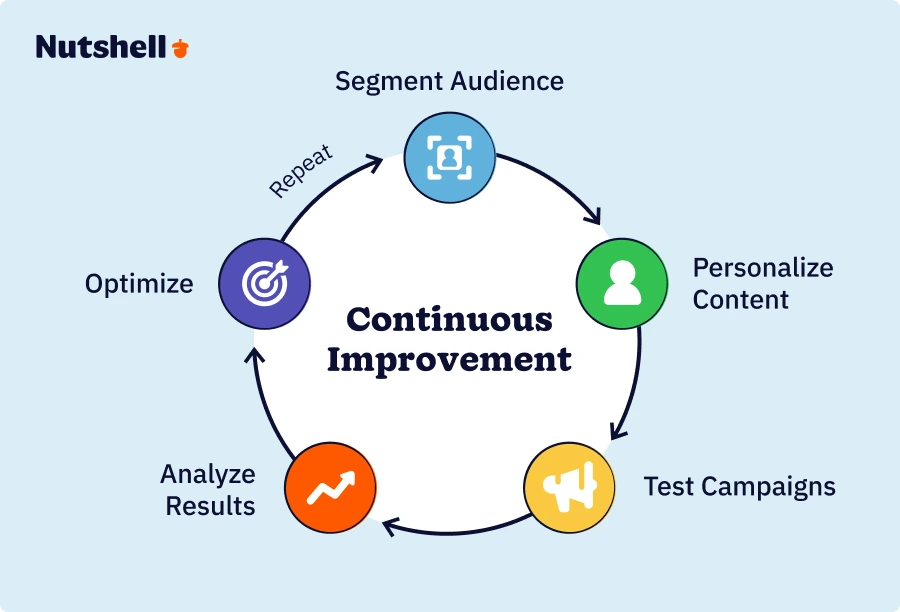
- Continuously optimize your email marketing efforts by segmenting your audience, A/B testing different elements, and monitoring key metrics like open rates, click-through rates, and conversion rates to refine your strategy and improve results.
If you’re running a small business or managing marketing for a growing B2B organization, you’ve probably heard that email marketing delivers incredible returns. The average email marketing ROI is $36 for every dollar spent—but that number hides an important truth. While 18% of companies achieve returns greater than 70:1, others struggle to break even. The difference? High-performing companies know exactly what they’re spending, what they’re earning, and how to optimize the gap between the two.
For small businesses and startups working with limited budgets and lean teams, understanding email marketing ROI isn’t just helpful—it’s essential. When every marketing dollar counts, you need to know which tactics are working and which are draining resources without delivering results.
This guide walks you through everything you need to calculate, track, and improve your email marketing ROI, including the hidden costs small businesses often miss, common mistakes that tank ROI, and proven strategies that help resource-constrained teams achieve exceptional returns.
Table of Contents
- What is email marketing ROI?
- What is the importance of measuring email marketing ROI?
- Email marketing ROI statistics for 2026
- What is a good ROI for email marketing?
- Industry-specific email marketing ROI benchmarks
- Calculating email marketing ROI
- Do I need to track email marketing ROI?
- How to calculate email marketing ROI in 4 steps
- Email marketing ROI calculator
- 6 tips for improving email marketing ROI
- Common mistakes that undermine email marketing ROI
- How one company scaled email marketing ROI with strategic optimization
- Other key metrics for email marketing
- Frequently asked questions
What is email marketing ROI?
Email marketing return on investment (ROI) is a metric that measures the profitability of your email marketing campaigns. It considers the revenue generated through your campaigns and the expenses involved to help you determine how much value your email marketing efforts are providing your business.
Industry-specific email marketing ROI benchmarks
While the average email marketing ROI sits at $36 to $42 for every dollar spent, returns vary significantly across industries. Understanding where your business falls in this spectrum helps you set realistic goals and identify whether your performance is on track.
According to 2025 research from APSIS and industry benchmarking studies, here’s what email marketing ROI looks like across major B2B and B2C sectors:
Industry Average ROI Return per $1 Spent Retail, ecommerce, and consumer goods 4,500% $45 Marketing, PR, and advertising agencies 4,200% $42 Software and technology 3,600% $36 Media, publishing, and entertainment 3,200% $32 Professional services 3,400% $34 Manufacturing and industrial 3,000% $30 Why do these differences exist? Several factors drive industry-specific ROI variations:
Transaction value: Industries selling higher-ticket items naturally see larger revenue per conversion, which inflates ROI even if conversion rates are lower.
Purchase frequency: Retail and ecommerce businesses benefit from repeat purchases, allowing them to monetize the same subscriber multiple times per year.
Sales cycle length: Professional services and B2B software companies face longer sales cycles, meaning email marketing contributions to revenue are harder to attribute and may appear lower in short-term ROI calculations.
List quality and engagement: Marketing and media companies tend to have highly engaged subscribers who opted in specifically for content, resulting in better open rates, click-through rates, and conversions.
Email sophistication: Technology and software companies typically invest more heavily in marketing automation, segmentation, and personalization, which drives higher returns.
For small to mid-sized B2B organizations, a realistic initial target is 3,000% to 3,600% ROI (or $36 to $42 per dollar spent). As you refine your segmentation, improve your automation, and build stronger relationships with your subscribers, you can work toward the 4,000% to 5,000% range that top performers achieve.
Don’t get discouraged if your current ROI is lower than these benchmarks. According to Litmus’s 2025 State of Email report, companies achieving ROI between 36:1 and 50:1 dedicate 25% to 50% of their marketing team’s time specifically to email. Organizations just starting to prioritize email marketing typically see ROI in the 10:1 to 20:1 range before optimization kicks in.
What is the importance of measuring email marketing ROI?
Measuring the ROI of your email marketing efforts helps you determine whether your strategies are successful in driving more revenue for your business and helping you meet your email marketing goals, whether it’s increasing conversion rates or generating new leads. Unless you’re continually measuring ROI, your marketing team will be in the dark about whether their actions are bringing real value—and you might be missing out on valuable opportunities.
✉️ Email marketing ROI statistics for 2026
- The average email ROI is $36 for every $1 spent
- 18% of companies achieve an email ROI greater than 70:1
- Email delivers 40x customer acquisition than social media
- Automated emails generate 30x higher returns than one-off campaigns
- A/B testing increases email marketing ROI by 83%
- Emails with personalized subject lines are 26% more likely to be opened
- Segmented campaigns can show a 760% increase in revenue
- 41% of marketers rated email as their #1 most effective channel
- The average ecommerce email ROI is 72:1
- The top 10% of email automations earn $16.96 per recipient
What is a good ROI for email marketing?
Email marketing can provide an ROI as high as 4400%, or $44 for every $1 invested.
ROI can vary considerably, however, based on factors such as the effectiveness of your strategy and content, the quality of your email list, and the goals you set for your campaigns.
Ultimately, you’ll need to consider your business’s unique needs and goals when evaluating how successful your email marketing is.
Calculating email marketing ROI
ROI is calculated by subtracting the initial value of an investment from the end value of the same investment in order to get a net return, then dividing the net return by the total costs accrued and, finally, multiplying this final figure by 100. Here’s the formula:
ROI = (Money Gained – Money Spent) / Costs x 100%
Email marketing ROI is found by applying this formula to your company’s email marketing strategy in order to discover the profitability of your efforts.
Do I need to track email marketing ROI?
Here’s a better question: why don’t you want to track email marketing ROI?
It’s an incredibly useful metric that will help you determine if your email strategy is working or not. With this information, you can adjust your approach as needed to get better results.
Here are a few benefits you’ll enjoy once you start tracking email marketing ROI:
- Better Brand Awareness: Does your target audience recognize your brand? Email marketing is one of the best ways to build a relationship with leads and customers—but only if they actually read your messages. By tracking the ROI of your campaigns, you’ll be able to tell how effective your efforts are in reaching subscribers.
- More Website Traffic: Every business wants more website traffic and a strong email marketing strategy is a fantastic way to achieve it. But how do you actually get your subscribers to click on links and visit your site? You study your ROI to understand what motivates them, then you use these tactics in all of your emails.
- Higher Revenue: Email marketing ROI tracks the value you receive in exchange for the time and money you spend building campaigns. When you know what your current ROI is, you can work to improve it, leading to higher revenue numbers.
DOWNLOAD
Want to generate more leads? Of course you do.
The B2B Marketer’s Toolkit collects 120+ of the best lead generation tips ever published on the Nutshell blog. Download it today!
How to calculate email marketing ROI in 4 steps
Ready to discover your email marketing ROI? Follow these four steps to learn how effective your current email strategies are and whether you need to change your approach:
1. Know your email marketing goals
It can be tricky to track ROI for email marketing because there are so many things you can achieve with this strategy. Better brand awareness? Check. Consistent lead nurturing? Check. More website traffic, additional sales, and higher revenue? Check, check, check.
That’s why you need to understand your goals before you start making ROI calculations.
Once you know what your email marketing tactics are trying to achieve, you’ll be able to track ROI much more accurately. This is because you’ll have a better idea of both the costs involved and the benefits achieved by your efforts.
2. Track your email marketing expenses
Next, round up every dollar spent on email over the past month, quarter, year—whatever time frame you’re looking to track email marketing ROI for. This will include:
Email marketing software
You can’t succeed at email marketing without reliable software. And most email marketing software worth your time costs money to use. Tally up the amount you’ve spent on your ESP, email analytics and design platforms, and any other kind of tool you use to send email campaigns.
Employee time and wages
Here’s where things might get a little tricky. Unless your employees work for you for free, they represent a cost that must be factored in. Make your best guess as to the number of hours your team spends on email marketing. Then, convert this number into an hourly rate.
Miscellaneous expenses
Have you spent money on anything that doesn’t fall into the two categories above but still pertains to your email marketing efforts? Make sure to include all purchased images, consulting fees, etc. in your email marketing ROI calculations.
3. Tally the benefits of email marketing
Now it’s time to calculate the value derived from your email marketing efforts.
This is easy to do if you sell products and/or services online. But remember, sales aren’t the only value that email marketing generates. Leads should be taken into consideration, too.
The easiest way to tally sales and leads generated is by using Google Analytics, especially if your ESP integrates with the Google Analytics platform. Search your Analytics dashboard to find how many sales came from an email campaign within the time period you’re tracking.
Got that done? Perfect, now dive back into Analytics and search for conversions that can be attributed to your email campaigns. For our purposes here, a conversion is anything that might lead to a future sale: viewing a product page, downloading an eBook, etc.
Next, you need to determine what each lead is worth to your company, which can be done by multiplying the value of a product or service by its conversion rate.
So, if you sell a product that costs $49 and converts at 3%, a lead would be worth $1.47.
The last thing you need to do is add up your sales revenue and the estimated lead value. Returning to our previous example, if you sold 172 products at $49 and generated 386 leads at $1.47 each, your total email marketing gain would be $8,995.42.
Powerful marketing software, minus the headaches!
Access email marketing and landing page software connected directly to your Nutshell CRM. Generate leads, organize contacts, segment audiences, track campaigns, and manage communications from a single tool!

4. Calculate your email marketing ROI
Now that you have the data, you can simply insert it into the ROI formula mentioned above. Let’s use the figures from our previous examples to illustrate the formula in action…
- First, we subtract all of our email marketing expenses for the past three months from the total gain our efforts generated: $8,995.42 – $3,125 = $5,870.42.
- Then we divide $5,870.42 by our expenses, which were $3,125. We get 1.88, which we multiply by 100% to get an email marketing ROI of 188%.
Once you know the total value derived from your email marketing efforts and what it cost you to achieve those results, pinpointing your exact ROI is pretty simple!
Email marketing ROI calculator
Maybe you hate math. Or maybe you don’t use Google Analytics and don’t have a handy dashboard to tell you about conversions and such. Either way, we have a solution!
Sleeknote has designed a special calculator to help you determine your ROI for email marketing. All you have to do is input a few details, such as how many email subscribers you have, how much your email campaigns cost, your click-through and conversion rates, etc.
Then, the calculator will spit out an accurate ROI for your efforts. Give it a try here.
6 tips for improving email marketing ROI
Once you’ve calculated your email marketing ROI, naturally, you’ll want to improve it. There are numerous things you can do to enhance your email marketing strategy. Here are some of the most useful for improving ROI.
1. Define the goal of each campaign
Before starting a campaign, ensure you’ve clearly defined its goal, whether that’s driving sales, building brand awareness, or nurturing leads. A well-defined objective will not only guide your content but also allow you to measure success accurately. By pinpointing your campaign’s purpose, you’re on the path to maximizing your ROI, as each email you send will have a clear and compelling purpose.
2. Use the right email marketing software
The backbone of any successful email marketing strategy is the software you use. It’s not just about sending emails—it’s about delivering them effectively, analyzing performance, and automating processes to save time and boost efficiency. With the right email marketing software, you’ll have the tools to create eye-catching campaigns, segment your audience intelligently, and track results effortlessly.
3. Include clear CTAs
When reading your emails, it should be clear what you want subscribers to do next, whether that’s visiting your website, shopping your online store, or signing up for a free trial.
With clear, compelling CTAs tied directly to your goals, you’re better able to track and improve your ROI.
4. Provide value in your emails
In a crowded inbox, the key to capturing your audience’s attention and loyalty is providing genuine value. Each email you send should offer something meaningful, whether it’s informative content, exclusive discounts, or personalized recommendations. By consistently delivering value, you’ll not only keep subscribers engaged but also increase the likelihood of conversions, ultimately driving a higher ROI for your email marketing efforts.
5. Segment your audience and include personalization
One size does not fit all in email marketing. To boost your ROI, segment your audience based on their preferences, behaviors, and demographics. Then, sprinkle in some personalization to make your emails feel tailor-made for each recipient. Whether it’s addressing them by name, recommending products based on their past purchases, or sending personalized offers, these efforts can significantly enhance engagement, open rates, and, ultimately, your email marketing ROI.
6. Leverage A/B testing
A/B testing is a great tool for optimizing the performance of individual emails. With it, you can test elements of your emails like subject lines and preview text, design, and copy to see which version resonates most with your audience over a set time. Your email marketing tool should give you the ability to choose what criteria determine the winning version, what percentage of your audience should receive the tests, and how long to run the test before a winning variant is declared.
Common mistakes that undermine email marketing ROI
Even businesses with solid email marketing strategies often sabotage their own ROI without realizing it. Here are the most common mistakes that prevent small businesses from achieving the returns they should be seeing—and how to fix them.
Poor list segmentation: Sending the same message to your entire list is the fastest way to tank engagement and ROI. When a software company sends product update emails to prospects who haven’t purchased yet, or when a B2B service provider sends nurture content to customers ready to buy, you’re wasting opportunities and training subscribers to ignore you.
The fix is to segment your list based on where subscribers are in the buyer’s journey, their past behavior, their industry or role, and their engagement level. According to DMA’s 2025 benchmarking data, segmented campaigns show up to 760% higher revenue than unsegmented blasts.
Neglecting list hygiene: Dead email addresses, inactive subscribers, and invalid contacts don’t just waste your sending costs—they actively harm your deliverability. When your bounce rate climbs above 2% or your engagement rates tank, email providers start routing your messages to spam folders, which destroys ROI even for your active subscribers.
Clean your list at least once per year by removing hard bounces immediately, suppressing subscribers who haven’t opened in six to 12 months, and using email verification services to catch invalid addresses before they damage your sender reputation. The short-term revenue loss from removing inactive subscribers is always outweighed by improved deliverability and engagement from your remaining list.
Weak or missing calls to action: Every email should have one clear, compelling action you want subscribers to take. When you bury your CTA at the bottom of a lengthy email, include multiple competing CTAs, or use vague language like “Learn more” instead of benefit-driven copy, you’re leaving money on the table.
Your CTA should be specific, action-oriented, and clearly communicate the value of clicking. “Download the free ROI calculator” outperforms “Click here” every time. Place your primary CTA above the fold and repeat it at the end for longer emails.
Ignoring mobile optimization: With 55% of all email opens happening on mobile devices in 2025, a poor mobile experience directly impacts your bottom line. Small text, tiny CTA buttons, images that don’t load, and layouts that break on small screens all contribute to lower click-through rates and conversions.
Use responsive email templates that adapt to screen size, keep your subject lines under 40 characters, use a minimum 14-point font size, and make CTA buttons at least 44 by 44 pixels so they’re easy to tap with a thumb.
Inconsistent sending schedule: Subscribers who hear from you once every few months forget who you are and why they subscribed, leading to low engagement and high unsubscribe rates when you finally do send. But sending too frequently without enough value burns out your list just as quickly.
Find a sustainable cadence you can maintain consistently—whether that’s weekly, biweekly, or monthly—and stick to it. Consistency builds expectations and keeps your brand top of mind without overwhelming subscribers.
Failing to test and optimize: Sending the same types of emails month after month without testing subject lines, send times, content formats, or CTAs means you’re leaving significant ROI improvements on the table. A/B testing can increase email marketing ROI by 83%, according to recent industry data.
Start with high-impact tests like subject lines and CTAs, then move to send time optimization, content length, and personalization tactics. Even small improvements compound over time when you’re sending regularly.
Not tracking the right metrics: Open rates and click-through rates matter, but they don’t tell the full ROI story. Businesses that focus exclusively on vanity metrics often miss the tactics that actually drive revenue.
Track conversion rate, revenue per email, revenue per subscriber, and list growth rate alongside your engagement metrics. These numbers connect directly to business outcomes and help you make better strategic decisions about where to invest your time.
How one company scaled email marketing ROI with strategic optimization
Real-world examples demonstrate how businesses successfully improve email marketing ROI through strategic optimization. While Nutshell customer success stories focused on CRM implementation are available, case studies specifically highlighting email marketing ROI improvements come from sister company WebFX’s client portfolio.
PaulB Parts, an automotive parts distributor, implemented a comprehensive digital marketing optimization strategy that included email marketing as a core component. By focusing on list segmentation, personalized messaging, and automated follow-up sequences, they achieved a 150% year-over-year ROI increase across their marketing channels.
The key changes that drove these results included segmenting their email list by vehicle type and purchase history, implementing automated abandoned cart sequences that recovered otherwise lost sales, personalizing product recommendations based on past purchases, optimizing email send times based on engagement patterns, and A/B testing subject lines and calls to action systematically.
“We are seeing the ROI that WebFX said they could deliver,” said a representative from PaulB Parts. The 75% year-over-year increase in conversion rate and 23% decrease in cost per lead demonstrated how strategic email marketing optimization directly impacts the bottom line.
Similarly, StockWise Auto achieved a 163% year-over-year increase in organic users and a 57% increase in organic revenue through a multichannel approach that leveraged email marketing to nurture leads generated through other channels. Their email strategy focused on delivering educational content to prospects researching inventory management solutions, then transitioning to product-focused messaging as engagement signals indicated buying intent.
“We have seen night and day results after a year of working with WebFX,” the company reported. For small businesses wondering whether ROI improvement is realistic, these examples demonstrate that systematic optimization delivers measurable results, even in competitive industries.
The common threads across successful email marketing ROI improvements include clear goals tied to business outcomes rather than vanity metrics, consistent investment in list growth and maintenance, willingness to test and iterate based on data, integration between email marketing and other channels, and patience—most significant ROI improvements happen over six to 12 months, not overnight.
Other key metrics for email marketing
While your company’s email marketing ROI is a critical measuring stick for email marketing success, there are a few other metrics you need to be tracking as well. Ultimately, all of these metrics influence revenue, though it may be to varying degrees. Tracking all of the following metrics is the best way to dive deep into how your investment is actually generating revenue:
Open rate
An email’s open rate is how frequently it’s opened by your subscribers. Open rate can tell you all sorts of things, like whether you’re writing captivating subject lines or sending your campaigns at the right time of day. But it shouldn’t be the only measurement of your email marketing success.
Click-through rate (CTR)
When more people are actually clicking through on your marketing emails, you’re probably doing something right. After all, every detail of how you craft the email—from subject line and content to design and CTAs—is chosen with a specific goal in mind.
Conversion rate
Email marketing conversion rate refers to the number of recipients who completed an action you wanted them to take compared with the total number of email recipients. Conversion rate is an essential metric for identifying the effectiveness of your campaigns and can measure actions like filling out a linked form, downloading a white paper, signing up for an event, and purchasing a product.
Bounce rate
Are your email subscriber lists clean? Bounce rate can tell you. This metric measures how many of your marketing emails return to you because they were unable to reach the sender—an issue that can be caused by numerous factors, including having outdated email addresses, your recipients aren’t opting in, or you’re being marked by email providers as a spammer.
Unsubscribe rate
You can calculate how many subscribers you’re losing by tracking unsubscribe rate. A high unsubscribe rate could mean you’re not reaching the right audience or sending valuable content, and it could result in your campaigns ending up in the spam folder.
Frequently asked questions
-
1. How long does it take to see ROI from email marketing?
Most businesses see initial engagement within 1-2 weeks, but meaningful ROI typically appears in months 2-3. Expect conversions to increase as you nurture relationships and build trust with subscribers. Long-term success requires consistent effort—think marathon, not sprint. Plan for at least 3-6 months of strategic campaigns before evaluating overall performance.
-
2. Does email marketing ROI vary by industry?
Yes, significantly. Retail and ecommerce lead with $45 return per $1 spent, followed by marketing agencies at , and media at $32. Your industry’s sales cycle, customer lifetime value, and buying behavior all impact ROI. Use industry-specific benchmarks to set realistic goals rather than comparing yourself to overall averages.
-
3. What costs should I include when calculating email marketing ROI?
Include all expenses: email service provider fees, design tools, employee time (hours spent creating and managing campaigns), purchased images or templates, consulting fees, and list management costs. Don’t forget hidden costs like A/B testing tools or CRM integrations. Accurate cost tracking ensures you’re measuring true ROI, not just surface-level returns.
-
4. How does email marketing ROI compare to other digital marketing channels?
Email marketing delivers $36−$42 for every $1 spent—significantly higher than social media advertising (2.80),paid search (2), and content marketing ($5). Email’s direct access to engaged subscribers, combined with personalization and automation capabilities, makes it the highest-ROI digital channel. That’s why 66% of marketers expect email ROI to keep growing in 2025.
-
5. Can I improve my email marketing ROI without increasing my budget?
Absolutely. Focus on optimization: segment your audience for targeted messaging (1.5x higher ROI), implement A/B testing on subject lines and CTAs (42:1 ROI vs. 23:1 without testing), use automation for abandoned cart and welcome sequences (30x higher returns), and clean your email list regularly to improve deliverability. Smart execution beats big budgets.
Boost email marketing ROI with Nutshell Marketing
Email marketing ROI is an important metric that, when used correctly, will help you boost brand awareness, drive more website traffic, and generate more revenue.
To find your ROI for email marketing, follow the four steps outlined in this post and know your goals, track your expenses, tally the value generated, and run the numbers through the ROI formula. Or just use Sleeknote’s handy ROI calculator instead.
Of course, before you calculate your email marketing ROI, you have to invest in a quality email marketing platform. If you haven’t done this yet—or can’t stand your current solution—give Nutshell a try. Our Email marketing tool puts the power to design, automate, and track email marketing campaigns back in your team’s hands—so you can generate more high-quality leads. For more tips, check out our complete guide to CRM and email marketing.
See if Nutshell is right for your organization. Sign up for a free 14-day trial today.
See Nutshell in action!
Try Nutshell free for 14 days or let us show you around before you dive in.
 BACK TO TOP
 Written by
Jacob Thomas Contributor, Sell to WinEdited by
Will Gordon Sr. Director of MarketingReviewed by
Andy Fowler Co-FounderReady to try
Nutshell for Free?Thank you! Your submission has been received!Oops! Something went wrong while submitting the form.


Unify Team Meeting Processes for Increased Productivity With Nutshell Scheduler Managed Meetings
Published on: May 16, 2025
Highly Effective Strategies for Elevating Sales Team Performance
Published on: November 10, 2022Best Microsoft CRM for 2025: Top Solutions for Microsoft 365 Users
Published on: December 22, 2025Join 30,000+ other sales and marketing professionals. Subscribe to our Sell to Win newsletter!