The Ultimate Link Building Guide for Beginners

-

Building links as a beginner – in a Nutshell
To build links as a beginner in B2B sales and marketing, create valuable, shareable content like guides or infographics, then promote it to relevant industry websites, influencers, and partners through personalized outreach. This link building guide covers essential link building techniques tips and methods to help you earn backlinks from authoritative, niche- relevant sources and boost your SEO performance.
If backlinks are “the currency of the internet,” link building is like picking money from a tree. There’s no denying it’s an essential SEO component for any business, which is why we’ve created this comprehensive link building guide—so you can more easily achieve SEO link building success.
When you want to grow your organic traffic and SEO, your strategy must include effective link building methods. Even marketers on a budget can achieve tremendous results because link building, done correctly, will let search engines know that your site is ranked just as highly as the sites that link to it.
Keep reading to learn:
- What link building is
- Why link building is important
- What a quality link looks like
- Link building tips and techniques you can use to build a robust backlink portfolio
Table of Contents
- What is link building?
- Why is link building important for SEO?
- The benefits of link building
- White hat vs. black hat link building
- What does a quality link look like?
- 22 link building strategies and techniques
- Link analysis tools
- AI powered link building tools
- Link building outreach template
- Link building for beginners FAQs
Turn website traffic into leads!
Don’t just get clicks—get leads. Nutshell’s VisitorIQ identifies the companies visiting your site so you can turn them into customers.

What is link building?
Link building is the process of generating hyperlinks from other sites that point to your own website. But before we go any further, let’s take a moment to understand these links.
An inbound link, often referred to as a backlink or external link, is an HTML hyperlink that transports internet users from one website to another. In the wise words of Moz, inbound links are the “currency of the internet” because they help define your site’s reputation and authority in the eyes of search engines.
There are many link building methods you can use, which we’ll discuss in a later section of this article. But first, let’s delve into why link building is vital for your SEO strategy.
Why is link building important for SEO?
Google’s algorithm considers numerous factors and metrics when assessing and ranking pages. But one of the most prominent elements Google’s PageRank Algorithm takes note of is how many other websites link to a page.
In fact, backlinks have been a core aspect of Google’s page ranking process from the onset and remain a primary indicator of quality content.
It’s not just about quantity, though. Google can now determine the quality of those backlinks, too. The algorithm assesses whether each link comes from a relevant, authoritative page and site and how the content creator includes these links in that page’s content.
That is why link building is such an essential SEO component and why your business should include it as part of your marketing strategy.
The benefits of link building
What’s the big deal? It’s just a link, right? The internet has billions (trillions?) of them.
Not exactly. As we discussed earlier in this link building guide, getting top-quality links is incredibly important for your site’s SEO. They let search engines know your site is reputable and drive targeted traffic to your content for free.
Search engines
As we know, search engines rely on links to determine the quality of a web page. For instance, if only spam websites link to your site (toxic backlinks), search engines will think your site is spam as well, and your rank on search engines will be atrocious.
Links help search engines rank relevant content for users in the search results. Have you ever wondered why Google displays some web pages and not others when you type a query into its search bar? It’s because Google decided those particular web pages provide valuable and trustworthy answers.
See also: How to write SEO content.
“Okay,” you’re thinking, “But how does Google determine trustworthiness?”
There are many factors search engines like Google evaluate when determining the reliability of a page, but high-quality link building is one of the most important. Google figures that if many reputable sites link to a specific piece of content, there must be a good reason—and that means the content probably deserves a higher ranking.
Targeted traffic
One of the biggest benefits of successful link building is driving targeted traffic to your website.
Let’s say you’re reading content on the Nutshell blog. You’re blown away by the quality of our writing and think to yourself, “Man, if only Nutshell wrote about [Topic]. I’d definitely read that!”
Suddenly, you notice a bit of orange text signifying a link to the content you’re interested in. You click on it immediately. After all, your favorite content creators (Nutshell) linked to the post, so it must be valuable, right?
Now you’re on a website you’ve never visited before, reading a blog post about a topic you’re highly interested in. As long as the post is well-written, there’s a good chance you’ll check out the company who wrote it, peruse their website, and even download a free eBook.
This is what we mean by targeted traffic. By acquiring quality backlinks, you can drive traffic to your website that’s already interested in what you have to say and offer.
Leave your marketing to the pros
Invest in digital marketing services from WebFX and start generating high-quality leads ASAP.

White hat vs. black hat link building
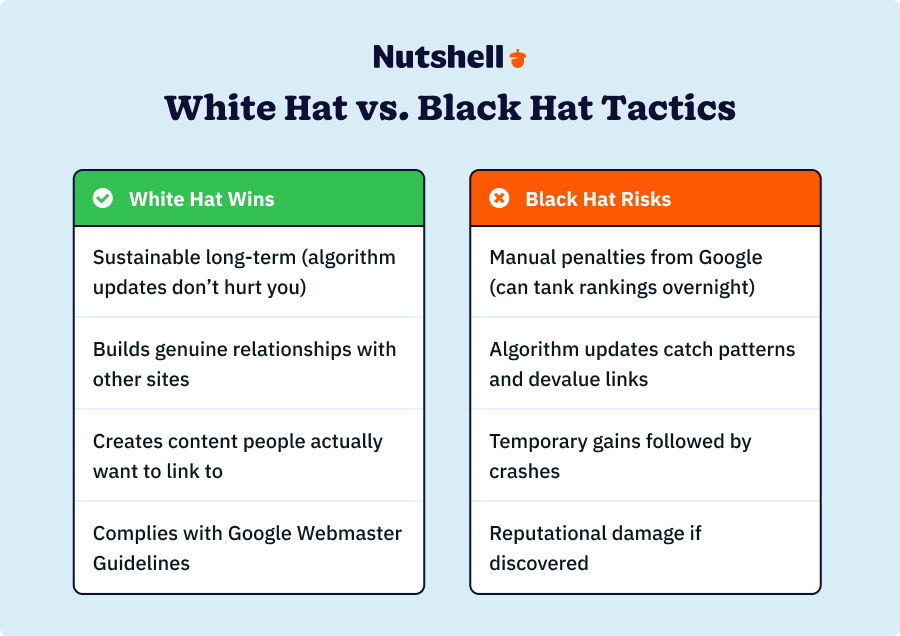
This wouldn’t be a comprehensive link building guide if we didn’t address the ethics of linking. Using methods that align with search engine guidelines is key for building high-quality links and improving your rankings.
As is the case in many aspects of life, there’s a bad, underhanded approach with every good, wholesome marketing strategy. Less reputable marketers employ deceptive black hat backlink tactics in an attempt to game the system and improve rankings.
While black hat link building may work for some over the very short term, it’s detrimental to your brand and site’s long-term survival. Content quality and relevance are often non-existent, leaving website visitors disappointed and disinclined to visit again.
Common black hat link building tactics to avoid
- Buying backlinks: Paying a site owner to link to your webpage, regardless of whether the content serves the intended audience
- Trading backlinks: Requesting backlinks in return for links to their site using low-quality guest posts that add zero value
- False backlinks: Creating numerous posts and pages online that link to one domain to artificially manipulate its ranking
- Spam backlinks: Randomly populating comment sections, widgets, or footers with links back to your domain
White hat link building: The ethical approach
White hat link building comprises creating relevant, good-quality content that other sites would want to link back to. This includes visuals, research reports, survey data, and more.
What does a quality link look like?
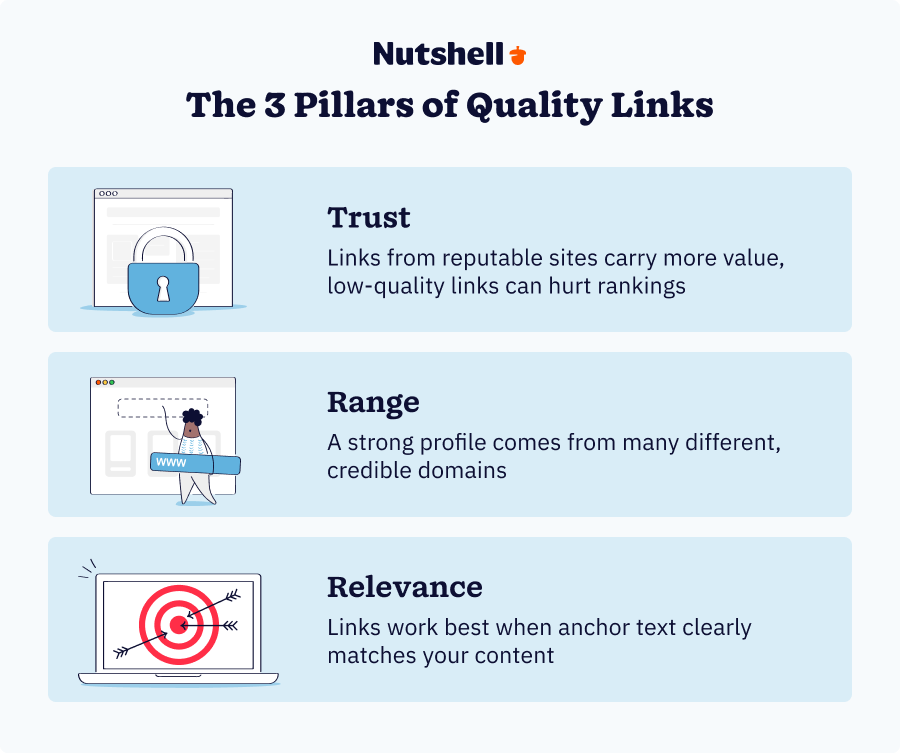
Here’s the thing: not all links are created equal. In fact, links from disreputable websites can actually harm your SEO efforts. So the question is, what does a quality link look like?
Quality, in our opinion, comes down to three things: trust, range, and relevance.
- Trust: Trust refers to the website linking to yours. Is it a website that search engines respect? If not, the link likely won’t benefit your site. It may even negatively impact it.
- Range: Range refers to the number and type of sites linking to yours. Search engines don’t want to see 1,000 web directories pointing to your site and nothing else. You’ll want to build a link profile that has a wide range of linking domains.
- Relevance: Relevance refers to the anchor text that links a web page to yours. If search engines can’t accurately determine the content of your page based on a backlink’s anchor text, they won’t value the link as highly.
When building a strong backlink portfolio for your site, you need to acquire links from a wide range of trusted website types whose anchor text reflects your linked content.
Want to generate more leads? (Of course you do.)
The B2B Marketer’s Toolkit collects 120+ of the best lead generation tips ever published on the Nutshell blog. Download it today!
22 link building strategies and techniques that boost rankings
A strong backlink portfolio is like a first-class ticket to the top of Google’s search results. But how do you actually acquire quality links? Start with these essential link building techniques!
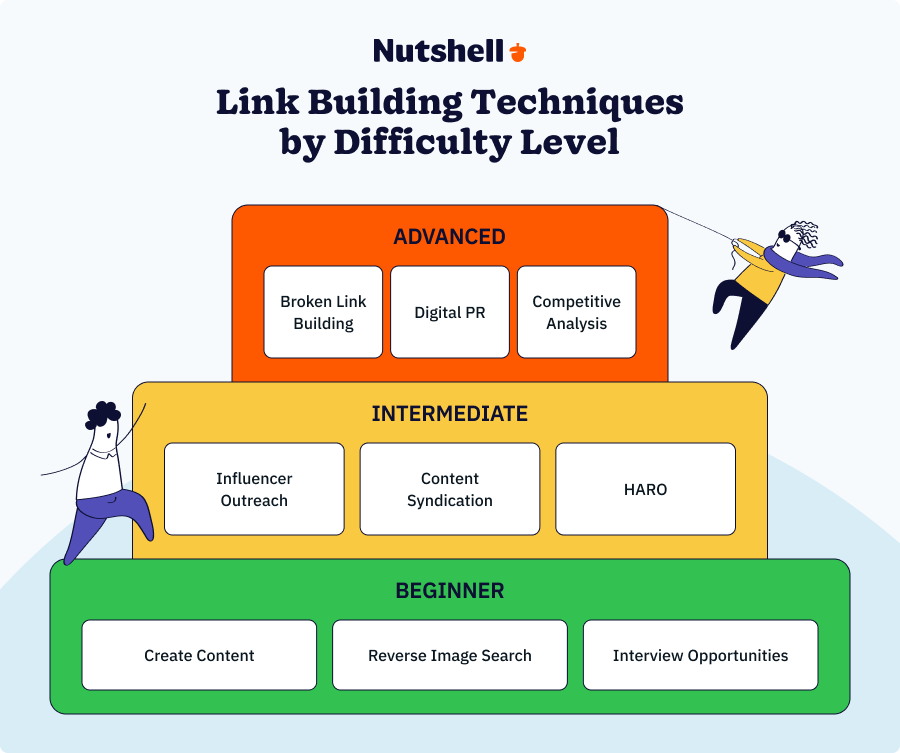
Quick wins
These techniques require minimal setup and can produce results in weeks. Perfect if you’re new to link building or working with a tight timeline.
1. Create great content
Difficulty: ⭐ Beginner
Time Investment: 10-20 hours per piece
Success Rate: High (if content is truly valuable)
Timeline to Results: 4-8 weeksMr. Bill Gates called it way back in 1996 when he wrote “Content is King.” To acquire links, create fantastic content that people will actually want to link to.
Nobody links to mediocre content. Period. Start by creating genuinely valuable assets that solve real problems for your audience:
Content types that attract links:
- In-depth guides (ultimate guides, beginner’s guides, comprehensive how-tos)
- Original research & data (surveys, studies, experiments with real data)
- Infographics & visual assets (data visualizations, process diagrams, comparison charts)
- Tools & resources (calculators, templates, checklists, templates for download)
- Case studies & real examples (before/after stories, detailed walkthroughs)
According to our research, pages with original data and visual assets attract 3x more backlinks than generic blog posts. The key is solving problems your target audience actually has—not what you think they should care about.
💡 Pro tip: Don’t just write about your industry. Create content that’s so useful other sites feel obligated to link to it as a resource. That’s earning links, not begging for them.
2. Reach out to influencers and niche leaders
Difficulty: ⭐ Beginner
Time Investment: 2-4 hours (research + outreach)
Success Rate: 5-15% (depends on personalization)
Timeline to Results: 1-4 weeksThe internet is a crowded place. More than 70 million blog posts are published monthly, and about 500 hours of footage are uploaded to YouTube every minute. To make your content stand out, you need to introduce it to people who can amplify it.
It doesn’t matter how wonderful your content is. Without a little promotion, no one will ever see it, let alonInfluencers in your niche—whether they have 5,000 followers or 500,000—are much more likely to share content from people who reach out personally than content they stumble upon randomly.
The 3-step influencer outreach process:
Step 1: Find relevant influencers
- Look for people writing about your topic (use Google: “your topic” + “blog” or “guide”)
- Check who’s already in your space: podcasters, newsletter writers, industry experts
- Use tools like BuzzSumo to see who’s getting shares in your niche
- Look at your competitors’ backlinks to see who’s linking to similar content
Step 2: Personalize your approach
- Don’t send mass emails. Read their recent work.
- Reference something specific they wrote: “I loved your post on X because Y”
- Explain why YOUR content matters to THEIR audience (not why it’s good for you)
- Keep it short—3-4 sentences max
Step 3: Make it about them, not you
- Frame it as: “I thought your readers would find this useful”
- Offer value upfront (no ask for a link first)
- Make sharing easy (give them a pre-written social post they can use)
Ready-to-customize email template:
“Hi [Name],
I came across your post on [specific topic] and really appreciated your take on [specific insight]. Your audience seems to care deeply about [related topic].
I recently created [type of content] on [topic] that digs into [specific angle your content covers]. I think your readers would find it valuable because [specific reason].
Happy to share it if you think it might fit with your content. No pressure either way!
[Your name]”
Why this works: You’re not asking for a link. You’re introducing them to content they might actually want to share. That’s a conversation, not a pitch.
💡 Pro tip: Using a CRM like Nutshell can simplify the process by giving you top-notch organization tools and marketing tools, including emailing, meetings, and calls from the platform. We suggest adding all the influencers you contact to your CRM so you can easily keep track of them and their responses.
3. Hunt for broken links
Difficulty: ⭐ Beginner
Time Investment: 3-5 hours per campaign
Success Rate: 5-10% conversion rate
Timeline to Results: 2-6 weeksBroken links are everywhere. And webmasters hate them. When you find a broken link and offer a better replacement, you’re solving a real problem—which makes your pitch way more compelling than cold outreach.
Here’s how broken link building works:
- Find relevant sites with lots of outbound links (resource pages, roundups, guides)
- Identify broken links using a checker tool (Check My Links, Broken Link Checker, or Ahrefs)
- Create better content to replace the broken resource
- Reach out with a specific, helpful message
Tools to find broken links:
- Check My Links (free Chrome extension): Simple and works for individual pages
- Ahrefs ($108+/month): Find broken links across entire competitor sites
- SEMrush ($165+/month): Comprehensive backlink and broken link analysis
- LinkMiner (free Chrome extension): Lightweight alternative to paid tools
Broken link outreach template:
Hi [Name],
I was reading your resource page on [topic] and noticed that the link to [broken resource] is returning a 404 error. Looks like that site may have gone down or moved.
I created a [type of content] on [same topic] that covers the same ground (and goes deeper into [specific angle]). If you think it would be a good replacement, I’d love for your readers to have access to it.
Let me know if you’d like me to send over the link!
[Your name]
Why this works: You’re not being selfish. You’re helping them maintain a better resource for their readers. They’ll appreciate the heads-up.
4. Reclaim lost backlinks
Difficulty: ⭐ Beginner
Time Investment: 2-3 hours (search + outreach)
Success Rate: 20-40% (high conversion, easier ask)
Timeline to Results: 1-3 weeksPeople mention your brand all the time—on blogs, in forums, in articles. But many of those mentions aren’t linked. Converting mentions into links is one of the easiest wins in link building because you’re not asking for something new. You’re asking them to complete something they almost did.
Here are some tools for finding unlinked mentions:
- Google Alerts (free): Set up alerts for your brand name
- Ahrefs ($108+/month): “Brand Mentions” report shows everywhere you’re mentioned
- SEMrush ($165+/month): Track brand mentions across the web
- Mention.com (free tier available): monitor your brand in real-time
Unlinked mention outreach template:
Hi [Name],
I came across your article on [topic] and noticed you mentioned [your brand/product]. That was great to see!
I noticed the mention wasn’t linked yet—if you’d like to add a link to our [specific resource], we think your readers might find it helpful for [specific reason].
Either way, thanks for the mention!
[Your name]
Why this works: They already think you’re worth mentioning. You’re just making that mention more useful for their readers.
Want more tips on reclaiming lost backlinks? We suggest reading this link reclamation guide for in-depth details.
5. Syndicate your content
Difficulty: ⭐ Beginner
Time Investment: 1-2 hours per piece
Success Rate: 70-90% (if platforms accept it)
Timeline to Results: 1-2 weeksContent syndication is the practice of publishing a piece of content on multiple websites. If every site that posts your blog, for example, links back to your website, you can quickly add multiple links to your backlink portfolio in a single go.
To be clear, content syndication is not the same as guest blogging, which is when you create a new post for a website other than your own. (Note: guest blogging can help you build backlinks, too, as long as you’re allowed to link to content on your web site in the blog.)
These are the best platforms for syndication:
- Medium: 100M+ monthly readers, easy setup, built-in distribution
- LinkedIn: Repurpose blog posts as articles, reach professional audience
- Dev.to (for tech content): Strong developer community
- Hashnode (for tech/dev): Actively promotes quality content
- IndustryEdge or other niche-specific syndication networks
💡Pro tip: Always republish your content with a canonical tag pointing to the original. This tells search engines which version is “official” and keeps all SEO credit on your site.
6. Set up Google Alerts & HARO for expert opportunities
Difficulty: ⭐ Beginner
Time Investment: 10 minutes setup, 30 mins/week ongoing
Success Rate: 10-20% (depends on how quickly you respond)
Timeline to Results: 1-4 weeksJournalists, bloggers, and podcast hosts constantly search for experts to quote. If you answer their requests, you get featured in their content—plus a backlink.
Here’s how to get started:
- Sign up for HARO (Help A Reporter Out / now called Connectively) — free tier available
- Set up Google Alerts for journalist request hashtags: #JournoRequest #PRRequest
- Check daily for relevant requests in your industry
- Respond fast with genuine, quotable insights (journalists work on tight deadlines)
What makes a strong HARO response:
- ✅ Answer their exact question (don’t go off-topic)
- ✅ Provide a memorable quote they can use verbatim
- ✅ Keep it concise (2-3 paragraphs max)
- ✅ Include your name, title, and URL
- ❌ Don’t pitch your product or service
- ❌ Don’t respond to everything—be selective
Example HARO response:
For: Article on “Time management for remote workers”
Quote: “The biggest mistake remote workers make is assuming that ‘always available’ means ‘always productive.’ Real productivity comes from establishing clear boundaries—specific working hours, a dedicated workspace, and the discipline to actually step away. People don’t burn out from working hard; they burn out from never stopping.”
Attribution: Sarah Chen, Productivity Coach
WorkSmart.com
[email protected]According to HARO data, responding within 2-3 hours significantly increases your chances of being quoted. This is one of the few link building tactics where speed genuinely matters.
7. Create resources pages & link roundups
Difficulty: ⭐ Beginner
Time Investment: 4-6 hours per roundup
Success Rate: Moderate (creates opportunities for future links)
Timeline to Results: 3-8 weeksWhen you create a definitive resource page or roundup of the best tools/sites/guides in your niche, people naturally link to it. Plus, you can reach out to the creators of resources you’ve featured and let them know—many will link back or share it.
Types of resource pages that earn the most links include:
- “Best tools for [profession]”
- “[Industry] resources roundup”
- “Ultimate guide to [topic] with [number] expert resources”
💡 Pro tip: Reach out to everyone featured in your roundup after publishing it. Let them know you’ve included their resource and link to the article. Many will reciprocate with links or social shares.
Intermediate
Ready for techniques that require more strategy but produce better ROI? These are your next moves once you’ve mastered the quick wins.
8. Guest posting on authoritative blog
Difficulty: ⭐⭐ Intermediate
Time Investment: 8-15 hours per post
Success Rate: 60-80% (if pitch is good)
Timeline to Results: 2-6 weeks
Average Result: 1-2 backlinks + referral trafficGuest posting is still one of the most effective link building tactics. You’re writing valuable content for someone else’s audience, and in return, you get a backlink—plus you get introduced to a new set of readers.
Here are some tips for finding guest posting opportunities:
- Use search operators:
- “write for us” [your niche]
- “guest post” [your industry]
- “become a contributor” [your topic]
- Check your competitors’ backlinks (use Ahrefs or SEMrush) to see where they’re guest posting
- Look for sites with active editorial calendars that mention guest posts
Making your pitch irresistible:
- Research the publication deeply: Read 3-5 recent posts
- Reference specific articles: “I loved your piece on X”
- Propose 2-3 specific topics: Don’t just offer “I’ll write about anything”
- Show your expertise: Include clips of previous work or your credentials
- Make it easy for them: Offer to write the post first, then pitch; give them a polished draft, not an idea
Guest posting pitch template:
Hi [Editor Name],
I’ve been following [Publication] for [X months], and your coverage of [specific topic] is the best I’ve seen in the industry. Specifically, [reference specific article] was excellent.
I’d love to contribute a guest post that would resonate with your readers. Based on your content, I think these topics might be a good fit:
- [Topic idea + brief angle that’s different from existing posts]
- [Topic idea + unique angle]
- [Topic idea + why their readers care]
I’ve written for [other publications] on similar topics ([links to 1-2 samples]). Happy to work around your editorial guidelines and timeline.
Looking forward to hearing from you!
[Your name]
💡 Pro tip: Quality over quantity. One post on an authority site with real traffic beats five posts on small blogs. Focus on sites where your target audience actually reads.
See Nutshell in action!
Try Nutshell free for 14 days or let us show you around before you dive in.

9. Digital PR & Journalist Outreach
Difficulty: ⭐⭐ Intermediate
Time Investment: 5-10 hours per campaign
Success Rate: 15-40% (highest for data-driven stories)
Timeline to Results: 2-8 weeks
Average Result: 3-15+ high-authority backlinks per successful campaignDigital PR is now the #1 link building tactic in 2025. Instead of asking for links, you’re creating newsworthy content or expert positioning that journalists naturally want to cover.
Three digital PR strategies that work include:
Strategy 1: Original Research & Data
Journalists love original data. If you conduct a survey, study, or experiment and share the findings, journalists will cite your research and link to it.
Example: Let’s say a CRM company surveyed 300 sales reps about their biggest challenges, and media outlets covering business/sales picked up the story.
Here’s how to do it:
- Run a survey (50-100+ responses minimum for credibility)
- Analyze the data for surprising insights
- Write a press release highlighting the most interesting findings
- Reach out to journalists covering your industry with the exclusive data
Strategy 2: Expert Commentary
Position yourself or your team as an expert source for journalists. When news breaks in your industry, journalists will call on you for a quote.
Here’s how to do it:
- Build a credible author profile (bios, credentials, previous media appearances)
- Join platforms like HARO, Connectively, SourceBottle where journalists seek expert quotes
- Respond to requests with quotable, newsworthy insights
- Follow up with journalists you’ve quoted—build relationships for future coverage
Strategy 3: Trending Topic Angles
When something’s trending in your industry, create content or commentary that hooks into the trend. Journalists covering the trend will link to your angle.
Example: When AI became a hot topic, a productivity tool company created a guide: “How AI Is Changing [Industry].” Industry journalists covered it.
Digital PR outreach template:
Subject: [Newsworthy Angle] — Exclusive Data/Expert Comment
Hi [Journalist Name],
I noticed you’ve been covering [trending topic/industry news]. I have something that might interest you:
[OPTION A – Data]: We just completed research on [related topic] with [X] respondents. Key finding: [surprising insight]. Data attached / available here: [link]
[OPTION B – Expert Comment]: As [credential/expertise], I have a perspective on [news angle] that might add value to your coverage: [brief insight]
[OPTION C – Exclusive Story Angle]: I’m working with [company/org] on [newsworthy initiative] that relates directly to your recent coverage of [topic]. Might be worth exploring.
Let me know if this is relevant. Happy to provide more details or connect you with [expert/data source].
[Your name]
💡 Pro tip: Timing is everything. Reach out to journalists while they’re actively covering your topic, not months later. Set up Google Alerts and monitor industry news daily.
10. Resource Page Link Building
Difficulty: ⭐⭐ Intermediate
Time Investment: 4-6 hours per campaign
Success Rate: 10-20%
Timeline to Results: 2-6 weeksResource pages (like “Best tools for designers” or “[Industry] resources”) attract tons of links because they’re comprehensive references people bookmark and link to.
Here are some ways to get links from resource pages:
- Find resource pages in your niche using search operators:
- “resources” [your industry]
- intitle:”best tools for” [your niche]
- site:[competitor].com/resources
- Create or improve your resource — make sure it’s better than what’s linked from those pages
- Email the resource page owner:
Hi [Name],
I found your excellent resource page on [topic]. I noticed you’ve included [X, Y, Z] resources.
We recently created [specific resource type] on [topic] that covers [specific angle/benefit]. I think it would be a great addition for your readers because [specific reason].
Feel free to check it out: [link]. Let me know if you’d like to add it!
[Your name]
11. Unlinked Competitor Backlinks
Difficulty: ⭐⭐ Intermediate
Time Investment: 3-5 hours per campaign
Success Rate: 5-15% (competitive, but valuable)
Timeline to Results: 2-8 weeksIf a competitor has a backlink, you can often get one too. Find sites that have linked to competitors but not you, then reach out with your angle.
How to identify opportunities:
- Use Ahrefs or SEMrush to see your top 5 competitors’ backlinks
- Filter for relevant, high-authority sites that link to them
- Check if they link to you — if not, you have an opportunity
- Create something better than what they linked to
- Reach out with your version
This only works if your content is genuinely better or different. Don’t just copy what your competitor did—add new insights, more recent data, or a unique angle.
12. Broken Link Building (Advanced Version)
Difficulty: ⭐⭐ Intermediate
Time Investment: 4-8 hours per campaign
Success Rate: 8-12%
Timeline to Results: 2-6 weeksThis is more sophisticated than the beginner broken link hunting. Target high-authority sites, create exceptional replacement content, and build relationships.
Advanced approach:
- Find high-authority resource pages (Domain Authority 50+) with broken links
- Create substantially better content than what was originally linked
- Reach out personally with a relationship-building angle, not just a link request
- Follow up strategically (most people respond to 2-3 follow-ups, not just one)
13. Podcast Guest Appearances
Difficulty: ⭐⭐ Intermediate
Time Investment: 1-2 hours (prep + interview)
Success Rate: 70-90% (podcasters usually link to guests)
Timeline to Results: 1-4 weeksPodcasts have exploded. Most podcasters link to their guests in show notes—which means instant backlinks plus exposure to a new audience.
Finding podcast opportunities:
- Google: [your industry] podcast + guest appearances
- Podyssey or Podchaser: Search by topic and find podcasts seeking guests
- LinkedIn: Search for podcast hosts in your niche, message directly
- Submit to directories: Many shows use guest submission forms
Podcast pitch template:
Hi [Host Name],
I’ve been listening to [Podcast Name] (particularly episode [X] on [topic]) and think your audience would find value in discussing [specific angle related to your expertise].
I specialize in [your expertise] and can speak to [2-3 specific topics] that would resonate with your listeners.
[Optional: I previously appeared on [other podcast] and we discussed [topic] — [link to episode].]
Let me know if this interests you!
[Your name]
💡 Pro tip: Bring data, stories, or contrarian takes. Hosts want interesting conversations, not boring pitches. Show you’ll be a great guest and they’ll promote your appearance, amplifying your reach.
14. Industry Directory & Award Submissions
Difficulty: ⭐⭐ Intermediate
Time Investment: 2-4 hours per submission
Success Rate: 50-70% (if you qualify)
Timeline to Results: 2-12 weeks (depends on award timeline)Getting listed in industry directories or winning relevant awards gets you backlinks plus credibility badges.
High-quality directories to target:
- Industry-specific directories (your professional association, trade publications)
- G2, Capterra, TrustRadius (for SaaS) — these award “Leader” status
- Best of lists in your industry
- Local business directories (if relevant)
Award submission strategy:
Most awards are free to enter. Pick 5-10 relevant ones per year and submit. Even if you don’t win, being listed as a finalist often gets you a backlink.
ADVANCED
These tactics require more sophistication and typically deliver your highest-quality backlinks. Use these once you’ve built momentum with intermediate tactics.
15. Content Marketing at Scale
Difficulty: ⭐⭐⭐ Advanced
Time Investment: 40-100+ hours per campaign
Success Rate: High (if topic is right)
Timeline to Results: 2-6 months
Average Result: 10-50+ backlinks per exceptional pieceInstead of individual posts, create a comprehensive content asset that becomes the resource in your industry. When you build something that good, links follow naturally.
What qualifies as “advanced content?” The criteria include:
- Original research studies (surveying 500+ people, conducting experiments)
- Comprehensive industry reports (50-100+ page in-depth analysis)
- Interactive tools (calculators, assessments, data visualizations)
- Documentary-style video series
Example: A marketing platform created a 10,000-word State of Marketing report with original data. It earned 200+ backlinks because it became the industry standard reference.
Here’s some extra guidance for making this work:
- Pick a topic where you have unique access to data or insights
- Invest real time & resources — this can’t look rushed
- Make it downloadable — include tracking so you can follow who’s using it
- Promote heavily — this isn’t a “build it and they will come” situation
- Update annually — keep it current so it remains the go-to resource
16. Link Insertion (Advanced Outreach)
Difficulty: ⭐⭐⭐ Advanced
Time Investment: 6-10 hours per campaign
Success Rate: 15-25%
Timeline to Results: 2-8 weeksLink insertion is asking a site to add a link to your content within an existing article—not asking for a new mention.
Why this is advanced: It requires finding specific anchor text opportunities and crafting pitches that benefit the site owner (not just you).
How to do it:
- Find relevant articles on high-authority sites that match your topic
- Identify natural places where your link could fit (helping readers, not forced)
- Create exceptional content that’s clearly better/more current than what they’re linking to
- Pitch specifically: “In your section on X, you link to [old resource]. I created [your resource] that covers the same topic but includes [new angle]. Your readers might find it helpful.”
Here’s an example of a solid link insertion pitch template:
Hi [Name],
I came across your article on [topic], and it’s really comprehensive. I particularly liked your section on [specific section].
I noticed you mention [tangentially related topic] and link to [current source]. We just published [your resource] that covers this more thoroughly with [specific addition — new data, 2025 updates, video walkthrough, etc.].
If you think it’s a better resource for your readers, I’d love for you to consider linking to it in that section.
Happy to send more details!
[Your name]
💡 Pro tip: This only works if your content is genuinely better. If they don’t see clear value for their readers, don’t bother.
17. Co-Marketing & Strategic Partnerships
Difficulty: ⭐⭐⭐ Advanced
Time Investment: 10-20+ hours per partnership
Success Rate: High (if partnership is strategic)
Timeline to Results: 1-3 monthsPartner with complementary (non-competing) companies to co-create content, co-host events, or cross-promote. You both benefit from expanded reach and authority.
Partnership ideas:
- Co-authored content: Two experts writing one comprehensive guide
- Co-hosted webinars or events: Pool your audiences
- Joint research: Collaborate on a survey or study
- Product integrations: Announce partnerships with complementary tools
Here’s a tip for a partnership linkage strategy:
When you announce a partnership, both companies link to the partnership announcement or co-created content. You also get mentions in each other’s newsletters and social media.
Example: Marketing platform A partners with analytics platform B. They create a joint guide: “The Modern Marketer’s Tech Stack.” Both link to it from their sites, promote it to their audiences, and gain from the association.
18. Building Industry Authority (Long-Term Play)
Difficulty: ⭐⭐⭐ Advanced
Time Investment: Ongoing (5-10 hours/week)
Success Rate: Very high (over time)
Timeline to Results: 3-12 months to see major results
Average Result: Passive backlinks from your authority statusThis isn’t a single tactic—it’s a strategy. By becoming a recognized expert in your field, you earn backlinks naturally because people want to cite experts.
How to build industry authority:
- Publish consistently on your topic (blog, research, insights)
- Speak at industry events (conferences, webinars, podcasts)
- Contribute to industry publications (write for trade magazines, industry blogs)
- Build thought leadership (take positions, share contrarian views backed by data)
- Engage in your community (answer questions, contribute to forums, build relationships)
Authority backlinks happen because:
- Journalists cite recognized experts
- Researchers reference thought leaders
- Industry peers link to authority voices
- Your content becomes the standard reference
This takes longer but compounds over time. A year from now, you’ll get backlinks you didn’t actively pitch for—just because you’ve become known as an expert.
19. Video Optimization for Backlinks
Difficulty: ⭐⭐⭐ Advanced
Time Investment: 10-20 hours per video
Success Rate: Moderate (growing rapidly)
Timeline to Results: 2-8 weeks
Average Result: Backlinks from sites embedding your videoVideo content gets embedded and linked at higher rates than text. Create exceptional video content and optimize for embedding.
Video types that earn backlinks:
- How-to / Tutorial videos (highly embeddable)
- Data explainer videos (companies link when explaining research)
- Expert interviews (other sites embed and reference)
- Educational series (teachers and trainers link to and embed)
Some tips for backlink optimization include:
- Host on YouTube (most embeddable platform)
- Create custom embed code (makes embedding easy)
- Reach out to bloggers in your niche: “This video might work great in your article on X”
- Optimize video description with keywords and your website link
- Create a blog post accompanying the video (drives more links)
20. Conference Speaking & Event Sponsorship
Difficulty: ⭐⭐⭐ Advanced
Time Investment: 20-40 hours per event
Success Rate: Very high
Timeline to Results: 2-6 weeks after event
Average Result: 5-20+ backlinks + substantial referral trafficSpeaking at industry conferences positions you as an authority and typically results in multiple backlinks from the conference website, news coverage, and attendees who blog about the event.
Getting speaking slots:
- Submit to conference CFPs (call for papers) early
- Pitch unique angles — solve a real problem attendees have
- Build relationships with conference organizers (attend previous years, follow them)
- Create sample content demonstrating your expertise
Post-conference backlink strategy:
- Get the conference to link to your speaker bio and slides
- Reach out to attendees who blog (many will link to your presentation)
- Create a follow-up blog post or guide that references the presentation
- Pitch podcast appearances to discuss your talk
21. Reclaim lost backlinks (relationship maintenance)
Difficulty: ⭐⭐⭐ Advanced
Time Investment: 3-5 hours per campaign
Success Rate: 20-30%
Timeline to Results: 2-6 weeksOver time, you’ll lose backlinks. Sites go down, content gets deleted, linking pages are updated. Instead of starting from scratch, reach out to the sites that lost your link and ask for it back.
How to reclaim lost backlinks:
- Use Ahrefs or SEMrush to identify lost backlinks (many tools have a “lost backlinks” report)
- Investigate why you lost them:
- Did the linking page get deleted?
- Did they update the article and remove the link?
- Is their site having technical issues?
- Reach out appropriately:
- If site went down: Offer to help restore it or ask if they’re coming back
- If page was updated: Ask if you have updated content that would fit better
- If deleted: Pitch a new topic instead
Reclamation pitch:
Hi [Name],
I noticed your site used to link to [our resource/content], but the link seems to have disappeared. We’ve actually updated that content significantly and think your readers would find the new version even more valuable because [specific improvement].
Would you be open to updating that link? Happy to send the new resource over.
[Your name]
22. Skyscraper technique (content + outreach combo)
Difficulty: ⭐⭐⭐ Advanced
Time Investment: 15-25 hours per piece
Success Rate: 20-40%
Timeline to Results: 4-8 weeks
Average Result: 10-30+ backlinksThe skyscraper technique involves finding content that already earned lots of backlinks, creating something substantially better, then reaching out to everyone linking to the original.
The process:
- Find link-worthy content in your niche using Ahrefs (“Best by links”)
- Analyze what made it successful (topic, format, depth, data)
- Create a superior version:
- More comprehensive
- More current
- Better designed
Link Analysis Tools: Which Platform Should You Use?
Understanding which link building and analysis tools to use is crucial for implementing these strategies effectively. Here’s a comparison of the industry’s leading platforms:
Tool Best For Key Features Price Ahrefs Comprehensive backlink analysis Domain Authority, backlink explorer, keyword research, site audit USD $108-$449/mo Semrush All-in-one SEO platform Backlink analytics, competitor tracking, keyword research, content marketing USD $165-$549/mo Moz Beginner-friendly SEO Domain Authority, link explorer, rank tracking, site crawl USD $39-$299/mo LowFruits Budget-conscious link building Niche-specific link opportunities, lower competition targets USD $20.75-$79.90/mo How to choose based on your organization’s size and needs:
- Enterprise/Agency: Ahrefs or Semrush for depth and scalability
- All-in-one approach: Semrush for marketing teams
- SMBs: Moz for ease of use and support
- Startups/Budget: LowFruits for cost-effective opportunities
AI-Powered Link Building Tools
Artificial intelligence is revolutionizing link building strategies. ChatGPT and other AI tools can dramatically speed up research, personalization, and outreach processes while maintaining quality.
Why AI Matters for Link Building Techniques
Modern link building strategies leverage AI to:
- Personalize outreach at scale
- Generate subject lines and email variations
- Research prospects and create briefings
- Draft follow-up sequences
- Analyze competitor link profiles
- Identify link-building opportunities
AI Tools Beyond ChatGPT for Link Building
- Jasper AI: Bulk email generation and campaign planning
- Copy.ai: Subject line and email copy variations
- HubSpot’s AI: Prospect research and outreach automation
- Apollo.io: AI-powered prospecting and email sequencing
- Outreach.io: Intelligent engagement platform with AI insights
Ready-to-Use Link Building Outreach Templates
The key to successful link building outreach is combining personal research with proven email structures. Here are three templates you can customize and use immediately:
Template 1: High-Authority Site Outreach
Best for: Reaching established industry leaders, publications, or resource pages
Subject: Quick idea for your [TOPIC] readers
Hi [NAME],
I’ve been following [THEIR BLOG/PUBLICATION] for a while, and I’m genuinely impressed with your recent piece on “[SPECIFIC ARTICLE TITLE].”
The way you explained [SPECIFIC CONCEPT/INSIGHT] is exactly what our audience has been asking about—and we realized we should create something that deepens that conversation.
We just published “[YOUR GUIDE TITLE],” which builds on your article by including [2-3 SPECIFIC ADDITIONS]:
- [Specific advantage 1 – e.g., “Updated 2025 data from original research”]
- [Specific advantage 2 – e.g., “Framework they didn’t cover”]
- [Specific advantage 3 – e.g., “Real case studies showing application”]
I thought your readers might find it helpful: [YOUR LINK]
If you think it’s worth sharing with your audience, I’d love to hear what you think. No pressure either way!
Best, [YOUR NAME] [YOUR TITLE] [COMPANY] [PHONE]
Template 2: Broken Link Building
Best for: Finding broken links and offering relevant replacements
Subject: Broken link on [THEIR PAGE] – Helpful replacement found
Hi [NAME],
I was reviewing your guide on “[THEIR ARTICLE/PAGE]” (which is fantastic, by the way), and I noticed a broken link in the section about [SPECIFIC SECTION/TOPIC].
The original link was trying to go to: “[BROKEN URL]”
I found a more recent, comprehensive resource that covers the same topic (and is more current):
[YOUR LINK]
It includes [1-2 specific things their audience wants], and it’s from [PUBLICATION/COMPANY] – trusted in the industry.
I’m not sure if it’s a good fit, but I wanted to flag it in case you’d want to use it as a replacement. If you’d prefer something different, I’m happy to suggest alternatives!
Thanks for all the great content you publish.
Best, [YOUR NAME] [YOUR TITLE] [COMPANY] [PHONE]
Template 3: Skyscraper Follow-Up
Best for: Outreach after creating an improved version of popular content
Subject: We just created something better than “[THEIR ARTICLE]”
Hi [NAME],
Your guide “[THEIR ARTICLE TITLE]” is fantastic, and I can see why it’s attracted so many links and shares.
We were inspired by it and decided to create an even more comprehensive resource: “[YOUR GUIDE TITLE]”
Here’s what makes ours different (and why your audience might prefer it):
✓ [Specific advantage 1 – e.g., “Updated with 2025 industry data and trends”] ✓ [Specific advantage 2 – e.g., “Includes 5 case studies showing real-world results”] ✓ [Specific advantage 3 – e.g., “Interactive tools and templates your readers can use”] ✓ [Specific advantage 4 – e.g., “Video walkthroughs of each section”]
Here’s the link: [YOUR LINK]
Since you’re already an authority on this topic, I thought your audience would appreciate the updated version. If you think it’s worth sharing with your readers, we’d be grateful for a mention.
Either way, I appreciate everything you’re doing in this space.
Best, [YOUR NAME] [YOUR TITLE] [COMPANY] [PHONE]
Template 4: Resource Page Outreach
Best for: Getting your content listed on industry resource pages
Subject: Resource suggestion for your [TOPIC] page
Hi [NAME],
I came across your “[RESOURCE PAGE TITLE]” while researching [INDUSTRY/TOPIC], and it’s one of the most curated collections I’ve seen.
I noticed you feature resources on [SPECIFIC TOPICS LISTED ON THEIR PAGE]. We recently created a comprehensive guide on [YOUR TOPIC] that seems like a natural fit for your readers: [YOUR LINK]
It covers:
- [Key point 1]
- [Key point 2]
- [Key point 3]
I think your audience would find it valuable alongside the other resources you’ve already recommended. If you agree, I’d be happy to provide any additional information or customizations you’d need.
Thanks for curating such a helpful resource!
Best, [YOUR NAME] [YOUR TITLE] [COMPANY] [PHONE]
Template 5: HARO/Expert Quote Outreach
Best for: Following up after being quoted in publications
Subject: Thanks for including our insight in “[ARTICLE TITLE]”
Hi [NAME],
I wanted to reach out and thank you for including our perspective in your recent article, “[ARTICLE TITLE]” (published in [PUBLICATION]).
The piece turned out great—I especially liked how you connected [SPECIFIC INSIGHT/ANGLE]. It resonated with a lot of our audience.
We’d love to share it with our community and link back to it from our resource page: [YOUR RESOURCE PAGE]
Thanks again for the feature. If you ever need industry insights or data for future stories, feel free to reach out!
Best, [YOUR NAME] [YOUR TITLE] [COMPANY] [PHONE]
Make link building easier with Nutshell
Quality backlinks will empower your business and allow you to hit the top of Google search results, driving quality traffic to your website on autopilot. To build a strong link portfolio, simply implement the techniques listed in this link building guide, including:
- Create great content
- Reach out to influencers
- Hunt for broken links
- Reclaim lost backlinks
- Syndicate your content
Streamline your link building outreach efforts and keep your communication organized with an industry-leading CRM. Nutshell offers powerful features that make storing, sorting, and evaluating your contacts effortless.
With Nutshell, you can also synchronize your emails and communicate with your contacts directly through the software. Our CRM records all your communication for easy reference, including call and meeting logs. To top it off, Nutshell offers loads of features to boost your lead generation and marketing efforts. Sign up for a free 14-day trial today, and find out why Nutshell is ranked as one of the best CRMs in the world.
Link building for beginners FAQs
-
How can beginners start building backlinks?
Beginners can start building backlinks with these three strategies:
- Create valuable content (infographics, guides, tools) that naturally attracts links
- Reach out for guest posting opportunities on industry blogs—these allow 1-2 contextual links back to your site
- Claim directory listings in business directories and industry-specific databases for easy, high-authority links
Focus on relevance over quantity. One link from a trusted, industry-relevant site is worth 100 links from low-quality directories.
-
Do backlinks really help SEO?
Yes. Backlinks remain one of Google’s top-3 ranking factors. Here’s why:
- Authority signal: Links from authoritative sites tell Google your content is trustworthy
- Relevance verification: Topically relevant links reinforce what your content is about
- Traffic driver: Quality backlinks bring referral traffic—people interested in your content
A 2023 Backlinko study found that pages with more backlinks ranked higher in search results. However, link quality matters more than quantity—one link from The New York Times outweighs 50 links from a lower-quality site.
-
How many backlinks should I create per day?
Focus on quality, not quantity. There’s no ideal daily number, but here’s a realistic approach:
- Beginners: 2-5 high-quality links per month (focus on white-hat techniques)
- Growing sites: 5-10 quality links per month
- Experienced marketers: 10-20+ links monthly through varied strategies
Creating too many links too quickly looks unnatural to Google and risks a manual penalty. Spacing out outreach over weeks/months signals natural growth. Also, quality links take time—expect 1-2 weeks per successful outreach campaign.
-
What is the best way to build links?
The best link building strategy combines three elements:
- Create linkable assets, like research, guides, tools, and data
- Personalized outreach to relevant sites (not mass email)
- Varied link sources, such as guest posts, resource pages, mentions, and partnerships
The “best” strategy depends on your niche, resources, and timeline. Skyscraper technique and expert roundups work for content marketers. HARO is excellent for thought leaders. Broken link building works in competitive niches. Test different strategies and double down on what works for your industry.
-
What are link building strategies?
Link building strategies are systematic approaches to acquiring backlinks from external websites. Effective strategies include white-hat approaches such as:
- Creating high-quality, shareable content
- Guest posting on industry blogs
- Broken link building (replacing outdated links)
- Expert roundups and interviews
- Original research and data
- Podcast appearances
- Unlinked brand mention requests
-
How many types of link building strategies are there?
There are five main categories of link building strategies:
- Content-based links: Natural links from creating great content (guides, tools, infographics)
- Outreach-based links: Earned through direct communication (guest posting, expert roundups, HARO)
- Directory & business listing links: Local directories, industry databases
- Relationship-based links: Partnerships, co-marketing, sponsorships
- Mention-based links: Converting brand mentions into links, unlinked mentions
Within these categories, there are 15-20+ specific tactics (see our full strategies section above).
-
What is an example of link building?
Here’s a real-world example:
Scenario: You operate a marketing blog.
Action: You create an in-depth guide: “The Complete Guide to SaaS Marketing (2025)” with original research, case studies, and actionable frameworks.
Link building: You identify 20 SaaS blogs that cover marketing. You personalize emails saying: “I noticed your article on SaaS marketing strategies. I created a comprehensive guide that covers [gap in their content]. Your readers might find it valuable.”
Result: 5-7 of those sites link to your guide because they genuinely find it useful for their audience. Each link:
- Improves your SEO authority
- Drives qualified referral traffic
- Positions you as an expert
This is white-hat link building—you earned the links through quality content and relevant outreach.
BACK TO TOP Written by
Jacob Thomas Contributor, Sell to WinEdited by
Will Gordon Sr. Director of MarketingReviewed by
Andy Fowler Co-FounderReady to try
Nutshell for Free?Thank you! Your submission has been received!Oops! Something went wrong while submitting the form.






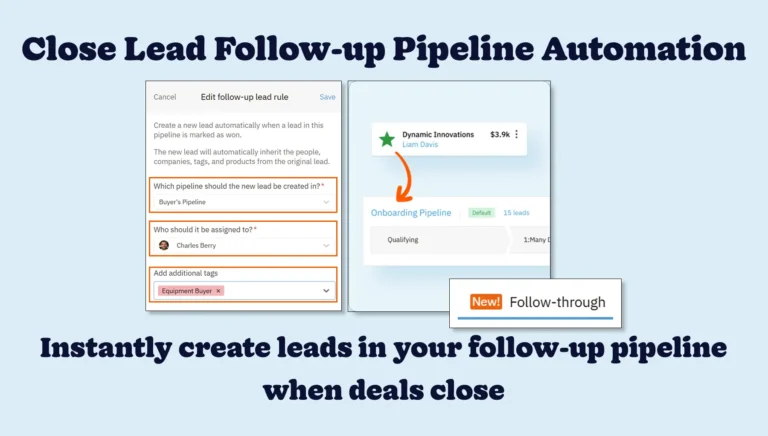
Overcome closed lead management challenges with follow-up pipeline automations
Published on: August 11, 2025

Sales Performance Reviews: 9 Tips to Make Them Valuable
Published on: November 10, 2022Join 30,000+ other sales and marketing professionals. Subscribe to our Sell to Win newsletter!