Competitor analysis isn’t just a marketing exercise—it’s a powerful tool for sales teams to sharpen positioning, anticipate objections, and highlight what truly sets them apart.
By digging into how rivals sell, where they fall short, and what customers actually care about, reps can craft more relevant, confident pitches.
The takeaway? Great sales strategies don’t ignore the competition—they use them as a mirror to clarify and amplify their own value.
Competitor analysis isn’t just a marketing exercise—it’s a powerful tool for sales teams to sharpen positioning, anticipate objections, and highlight what truly sets them apart.
By digging into how rivals sell, where they fall short, and what customers actually care about, reps can craft more relevant, confident pitches. Companies that track competitive win rates are 31% more likely to exceed their revenue targets, and teams with access to competitive intelligence close deals 28% faster than those flying blind.
The takeaway? Great sales strategies don’t ignore the competition—they use them as a mirror to clarify and amplify their own value. And in 2025, the most successful teams aren’t waiting for quarterly reviews to gather insights. They’re tracking competitive data continuously, building it into their CRM, and treating it as a living, breathing strategic advantage.
Competitive market analysis reports involve evaluating the competitive landscape to determine how a business can succeed in the market. Competitive analysis can help a company develop effective overall business strategies and strategies in areas like product, sales, and marketing. These analyses help businesses understand who their competitors are and how they can position themselves for success.
Summarize this content with AI:
Why is it important to conduct a competitor and market analysis when creating your sales strategy?
Competitive analysis reports enable businesses to identify their strengths, weaknesses, and what makes them stand out from the competition. Using this information, companies can determine how best to position themselves to win more sales and which strategies will likely drive the best results.
Beyond sales, competitor market analysis can assist with positioning and targeting for marketing strategies and identifying new market opportunities.
Here’s what competitive analysis actually delivers:
Beyond sales, competitor analysis also assists with:
The competitive landscape has shifted dramatically. In 2025, companies compete across entire ecosystems, not just against direct rivals. Your customers aren’t just comparing you to your obvious competitors—they’re evaluating adjacent solutions, alternative approaches, and emerging technologies that could solve their problems differently.
That’s why the most successful sales teams are moving from quarterly competitive reviews to continuous competitive tracking. According to research from Primary Intelligence, organizations conducting always-on competitive analysis capture insights 73% faster than those relying on project-based reviews. And here’s the bottom line: teams with real-time competitive intelligence report 22% higher win rates within 18 months of implementation.
What changed? Three things:
The bottom line: Competitive analysis in 2025 is less about gathering information and more about making that information actionable in the moment your sales reps need it.
Where can you find information for your competitor and market analysis?
Some information is readily available online. You can, of course, find basic information on your competitors’ websites. Third-party industry analyses and reports are a great source of more impartial details about companies and the market in general. For publicly traded companies, you can also find financial information and reports online.
Another valuable source of competitor information is your sales reps. They have likely talked with leads about competitors and have insights into what your leads think about competitors and how they compare to your business.
If you don’t have a process set up to collect information about which competitors leads are considering, it’s helpful to start tracking that information in your CRM.
In addition to sales reps, support specialists and other client-facing team members likely have insight into how customers think about your competitors. Additionally, you can interview certain customers who considered or moved over from a competitor.
Try Nutshell free for 14 days or let us show you around before you dive in.
How do you conduct competitor and market analysis to help with creating your sales strategy? Here are some steps to follow.
The first thing you’ll need to do is come up with a list of your competitors. You likely know who your main competitors are, but you can create a more complete list by searching online and gathering information from your sales reps about which companies your leads mention.
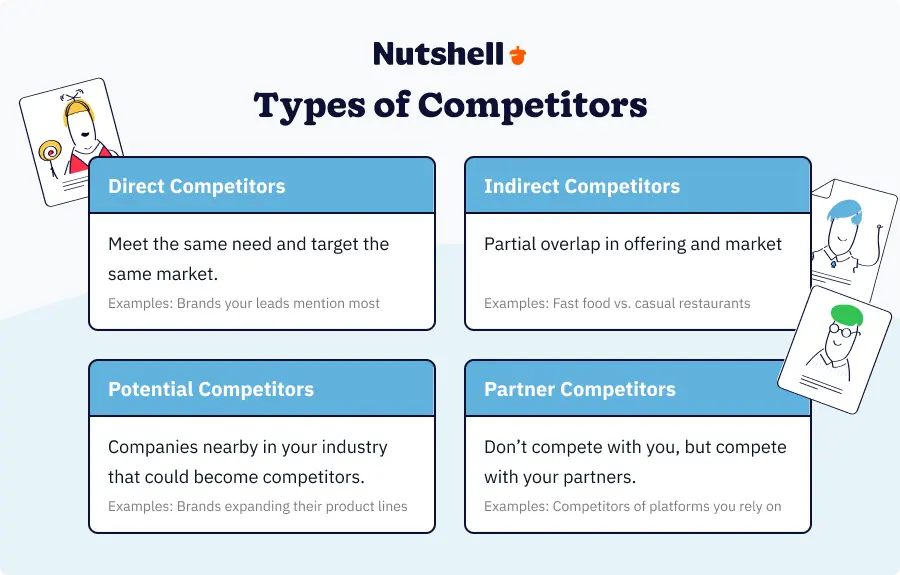
There are several types of competitors to consider:

Assessing your competitive relationships further can also help you uncover the best opportunities for improving your positioning.
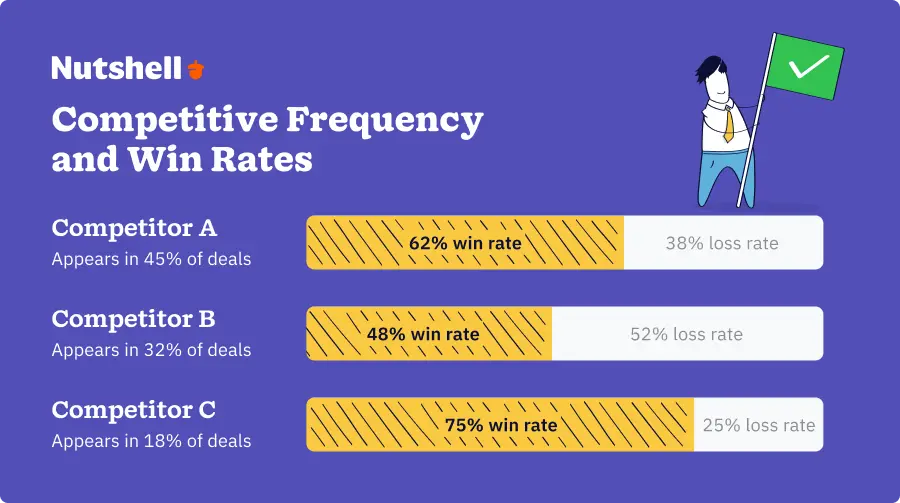
First, you’ll need to assess how often you’re up against each competitor when working with leads. It’s helpful to track this information in your CRM, and your sales reps can provide additional information about it.
You can then assess your win and loss rates against each competitor and the size of those deals. This will help you determine your best opportunities when it comes to positioning yourself against competitors.
Armed with this information, you can prioritize positioning your company against the competitors you face most often and have the most potential revenue to gain from beating more often.

Once you know which companies you want to look at as part of your competitive analysis report, you can begin gathering information about them.
Start with basic information such as their products or services, pricing, and company size. You can use this information to compare your company with competitors and determine how to position yourself.
You can typically find this information online via company websites, profiles, and industry reports.
You can also research your competitors’ sales strategies as part of your analysis. This information can be challenging to find, but even a little bit of insight can be beneficial in creating your sales strategy.
You may be able to find some relevant information on your competitors’ websites, such as whether they have a partner reselling program.
The marketing and sales content and materials—such as blog posts, whitepapers, testimonials, and webinars—that companies have on their website may also provide valuable insights. These materials can give you insight into what information competitors typically focus on and how they position themselves.
Sales representatives can also glean useful insights from talking with leads and customers about their experiences with your competitors.
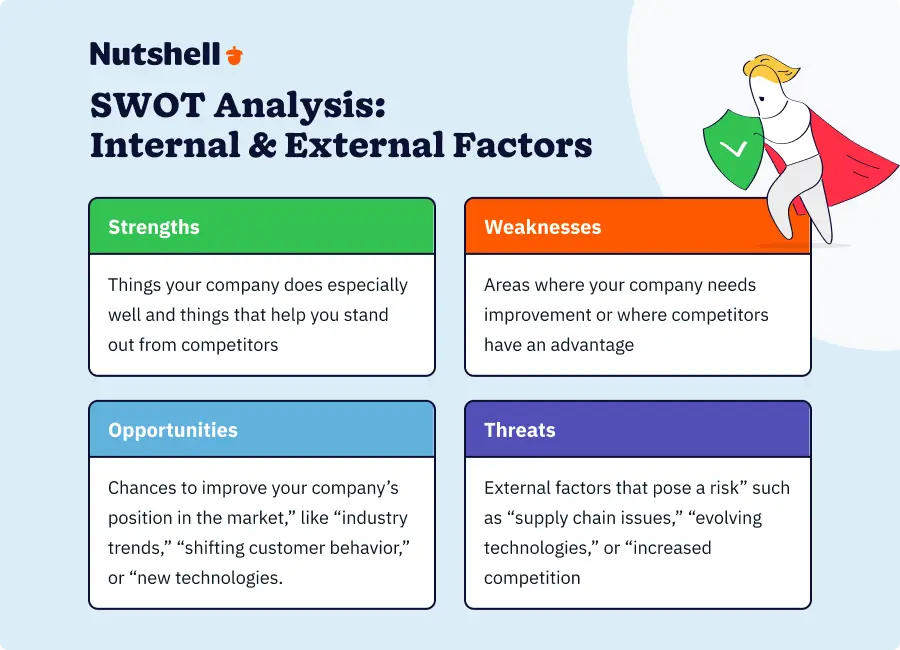
Another helpful step is performing SWOT analyses of both your company and competitors. These analyses are valuable for determining how to position yourself against competitors in your sales strategy.
Performing a SWOT analysis involves evaluating your company’s or competitor’s:
To collect this information, work with a variety of people in your organization and consider information you’ve gathered from customers and your competitive research.

You can then use the information you’ve gathered about your competitors and your assessments of them to determine how best to position yourself. Consider what makes you stand out, who your ideal customers are, and what makes you the right solution for those customers.
You can highlight this positioning in your sales pitches, messaging, and materials and use it to inform sales methods such as which prospects or leads you reach out to and the information you track in your CRM.
Here’s the challenge every sales leader faces: by the time you finish your annual competitive analysis, the market has shifted. Competitors have launched new features. They’ve adjusted pricing. They’ve changed their messaging. Your hard work becomes outdated.
That’s why the most successful teams in 2025 are treating competitive analysis differently. Instead of an annual event, they’re making it a continuous practice—woven into their CRM and their daily workflow.
How to make competitive analysis continuous:
The infrastructure to do this already exists in most modern CRMs. You don’t need a separate tool or a dedicated analyst. You just need process and intention.
Looking for the ideal tool to help you organize, track, and automate your sales process? Consider Nutshell—an easy-to-use CRM with features like flexible pipeline management, customizable reporting, and automatic lead attribution.
To see for yourself how Nutshell can help you grow your business, start a free 14-day trial today.
Conduct a comprehensive competitor analysis annually, with quarterly check-ins to track major changes. For fast-moving industries, review key competitors monthly. Set up automated alerts for pricing changes, product launches, and major announcements to stay informed between formal reviews.
Absolutely. Start with free resources: competitor websites, Google Alerts, social media monitoring, and customer conversations. Your sales reps are goldmine sources—they hear about competitors daily. Use your CRM to track which competitors you’re facing in deals and your win/loss rates against them.
Create simple battlecards highlighting your advantages against each major competitor. Include common objections, competitive differentiators, and talking points. Role-play scenarios where reps practice positioning against competitors. Update these regularly based on win/loss feedback and new competitive intelligence from the field.
Yes. Indirect competitors can steal market share by solving customer problems differently. They often signal emerging trends or alternative solutions your leads might consider. Track them quarterly to spot potential threats early and identify new positioning opportunities before they become direct competition.
Use custom fields in your CRM to log which competitors appear in deals, win/loss outcomes, and reasons. Create reports showing competitive frequency and win rates by competitor. Tools like Nutshell let you track this data automatically, helping you prioritize which competitors to focus on.
Join 30,000+ other sales and marketing professionals. Subscribe to our Sell to Win newsletter!